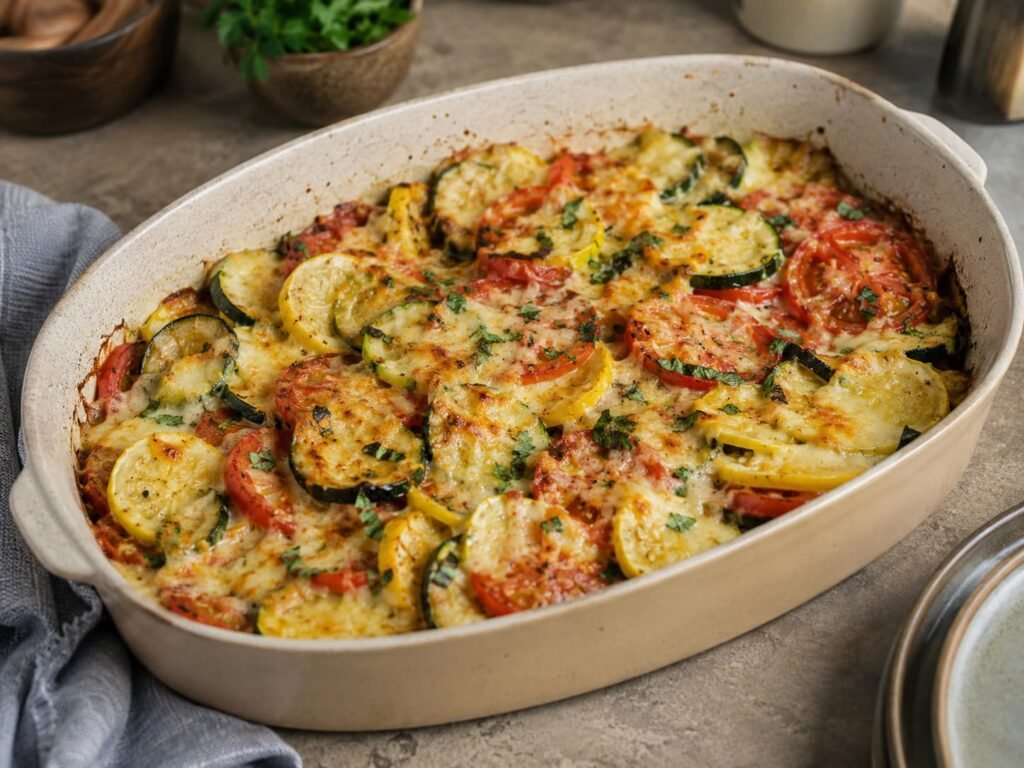
An Italian squash bake is a baked vegetable dish made with zucchini, yellow summer squash, or both, often combined with tomatoes, cheese, garlic, herbs, and olive oil.
There is no single required formula. Some versions arrange sliced vegetables in layers, while others combine them more loosely as a casserole. Ingredient choice and preparation can also affect how much moisture collects in the dish.
What Is an Italian Squash Bake?
An Italian squash bake is generally a summer-squash casserole made with ingredients associated with Italian-style cooking, such as tomatoes, cheese, garlic, olive oil, and herbs.
Zucchini is a common base, but yellow summer squash can also be used. Depending on the preparation, the vegetables may be layered with tomatoes or mixed with cheese, seasonings, onions, breadcrumbs, or other additions.
The name describes a style of baked vegetable dish rather than one standardized recipe.
Is Italian Squash the Same as Zucchini?
Not always. The term Italian squash is sometimes used in cooking to refer to zucchini, but it is not a precise name for every squash used in Italian-style dishes.
Zucchini is a type of summer squash. Yellow squash is another summer-squash option that can serve a similar role in a casserole.
Summer squash should not be confused with winter squash such as butternut or acorn squash. These have different textures and cooking characteristics and are not automatic substitutes for zucchini.
Can Yellow Summer Squash Be Used Instead of Zucchini?
Yes. Yellow summer squash can be used alone or together with zucchini in a baked vegetable dish.
The two can be prepared in similar ways, but their shape, firmness, flavor, seed development, and moisture may vary by variety and maturity. Substituting one for the other can therefore change the finished dish slightly.
What Ingredients Are Commonly Used in an Italian Squash Bake?
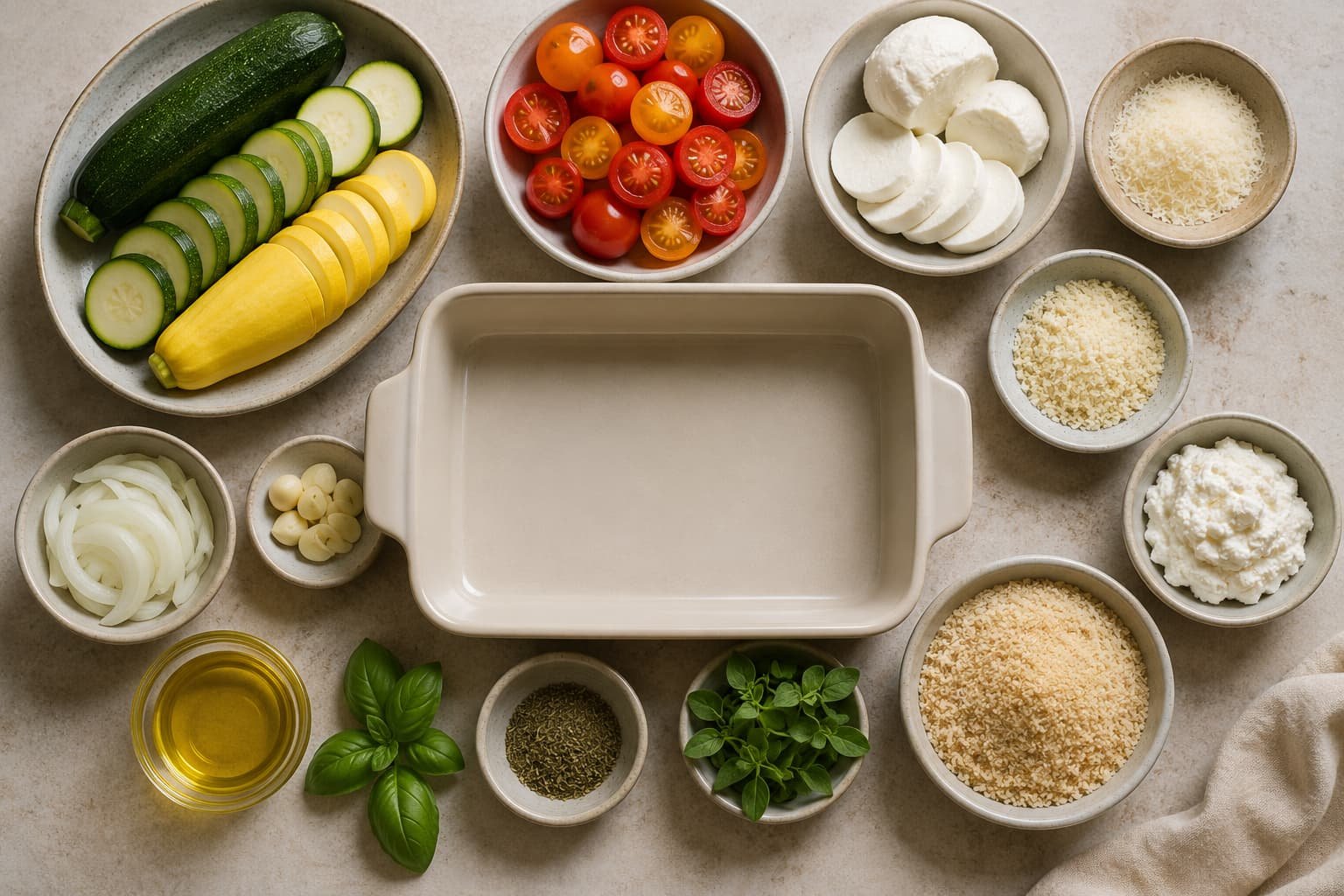
Most versions combine summer squash with tomatoes, cheese, aromatics, herbs, and a small amount of fat such as olive oil.
Common ingredient categories include:
- Zucchini or yellow summer squash as the main vegetable
- Tomatoes for acidity, moisture, color, and tomato flavor
- Mozzarella, Parmesan, Pecorino Romano, or ricotta for different cheese textures and flavors
- Garlic or onion for additional savory flavor
- Olive oil for coating the vegetables and carrying seasonings
- Basil, oregano, parsley, thyme, or Italian-style herb blends
- Breadcrumbs as an optional topping
These are common components rather than a required ingredient list.
What Role Do Tomatoes Play?
Tomatoes add acidity, moisture, color, and flavor to the casserole. The amount of liquid they contribute can vary depending on the type and ripeness of the tomato.
Plum-style tomatoes can be convenient for layered preparations because their shape and firmer flesh make them easy to slice. Larger tomatoes and cherry or grape tomatoes can also be used.
If sliced tomatoes release a noticeable amount of loose juice before assembly, allowing some of that liquid to drain is one possible way to reduce added moisture.
No tomato variety guarantees a particular texture, so the choice can depend on the way the casserole will be assembled.
What Cheeses Can Be Used With Squash and Tomatoes?
Mozzarella, Parmesan, Pecorino Romano, and ricotta can all fit an Italian-style squash casserole, but they contribute different textures, flavors, and amounts of moisture.
Mozzarella provides a mild melted-cheese component. Fresh mozzarella generally contains more moisture than low-moisture mozzarella, so the type chosen may affect the amount of liquid in the dish.
Parmesan is a firm grating cheese with a concentrated savory flavor. It can be used over the vegetables or combined with a softer melting cheese.
Pecorino Romano is another firm grating cheese with its own distinct flavor and should not be treated as identical to Parmesan.
Ricotta creates a softer, creamier cheese component when added in small portions or layers.
There is no required cheese combination. The choice can depend on the flavor, moisture level, and style of casserole wanted.
How Do You Prepare Squash for Baking?
Zucchini and yellow summer squash can be washed, trimmed, and cut into pieces that suit the casserole.
Young, tender squash generally does not need to be peeled because the skin is edible. Older or larger squash may have tougher skin or more developed seeds, so additional trimming can be considered.
Rounds and half-moons both work for baked dishes. Layered casseroles often use slices, while mixed casseroles allow more flexibility in shape.
Keeping the pieces reasonably similar in size can help them cook at a similar rate. Thin pieces generally soften faster than thicker ones, but an exact slice thickness is not necessary for an informational guide.
Does Squash Need to Be Cooked Before Baking?
Not necessarily. Some casseroles use raw squash, while others briefly sauté, steam, roast, or otherwise pre-cook it before assembly.
Raw squash begins firmer and releases moisture as it cooks. Pre-cooked squash starts softer, and some cooking methods may remove part of its moisture before it enters the casserole.
Neither method is universally better. The choice can depend on the size of the squash pieces, the other ingredients, and the texture wanted.
Why Can a Squash and Tomato Bake Become Watery?
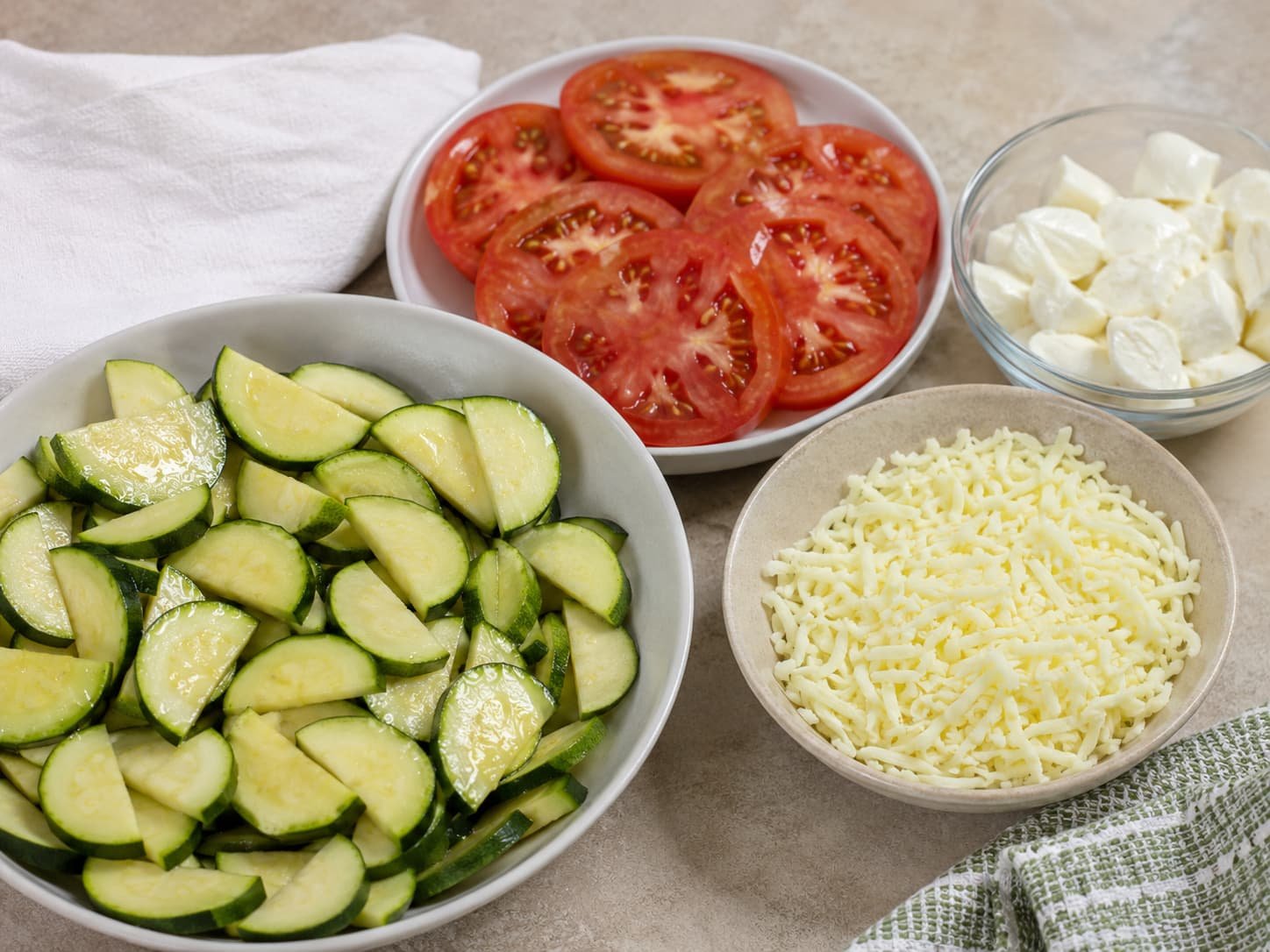
Fresh mozzarella, tomato sauce, and other wet ingredients can add more moisture. The shape of the casserole also matters: tightly packed vegetables and covered cooking can retain more steam, while a larger exposed surface allows more evaporation.
Some moisture is normal. A softer casserole may contain more liquid than a layered bake intended to keep the vegetables more distinct.
How Can You Reduce Excess Moisture?
Several preparation choices may help limit excess liquid, but none guarantees a completely dry casserole.
Salt and drain sliced squash if appropriate. Salt can draw some water toward the surface, allowing it to be removed before assembly.
Pat the squash dry. This can remove surface water after washing, salting, or draining.
Drain very juicy tomatoes. Removing loose tomato liquid before assembly can reduce the amount entering the dish.
Consider other wet ingredients. Fresh tomatoes, moisture-rich cheese, and sauce all contribute liquid, so adding all of them heavily can change the consistency.
Avoid unnecessarily tight packing. A deep, crowded casserole may retain moisture differently from a shallower arrangement with more exposed surface area.
The final texture can still vary with the vegetables, cheese, assembly method, and cooking conditions.
How Can an Italian Squash Bake Be Assembled?
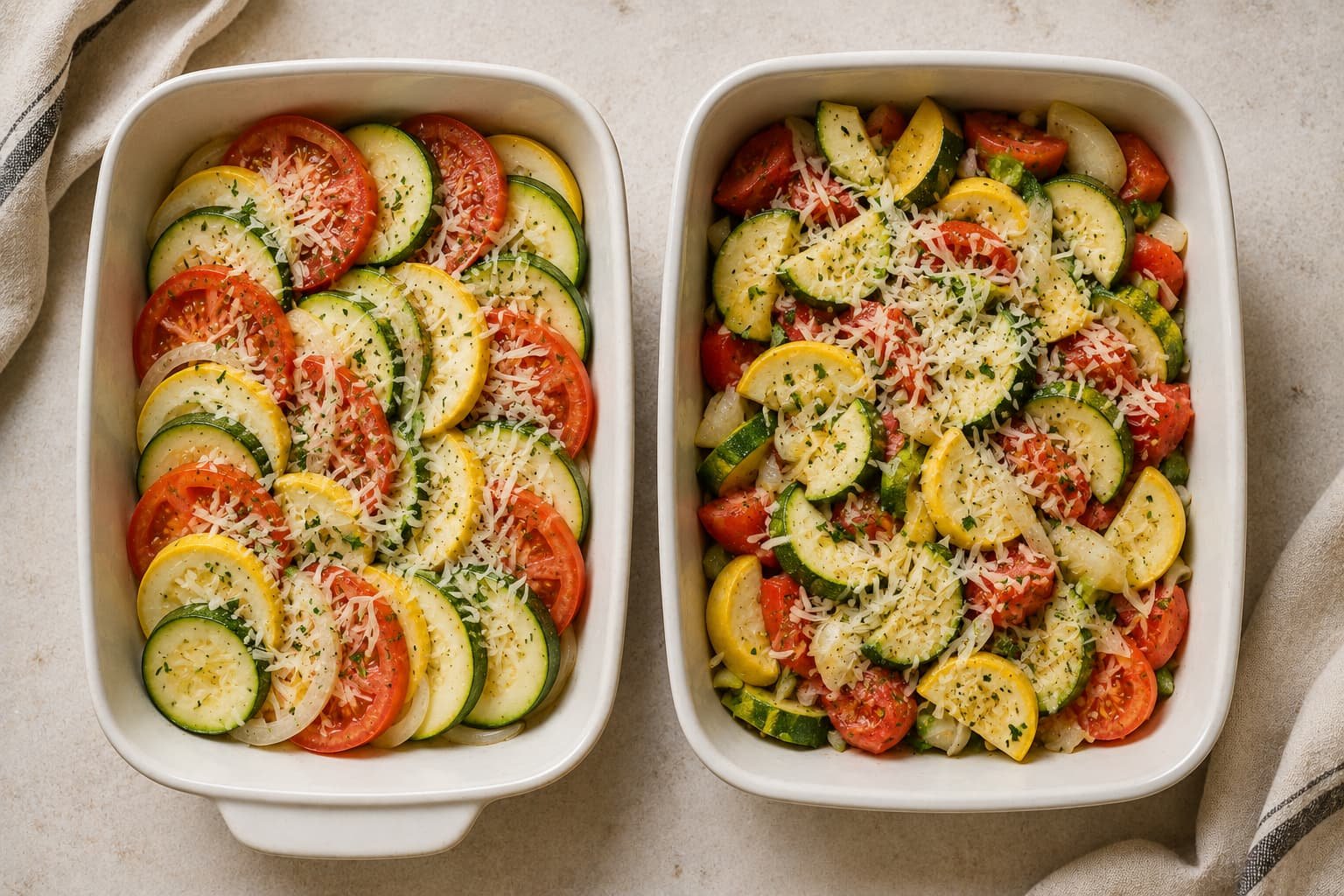
Two practical options are a layered bake and a mixed casserole.
In a layered bake, sliced squash and tomatoes are arranged in rows or overlapping layers. This keeps the individual vegetables more visible and allows cheese and seasonings to be distributed between them.
A mixed casserole combines the vegetables more loosely before baking. The squash and tomatoes may be sliced or chopped and then combined with cheese, herbs, or other ingredients.
Cheese can be added mainly on top or distributed through the vegetables. Breadcrumbs can also be used as an optional surface topping when additional texture is wanted.
Should the Casserole Be Covered or Uncovered?
Covering the baking dish reduces moisture loss by keeping more steam around the vegetables. This can encourage softening while limiting evaporation.
Leaving the dish uncovered allows more moisture to escape from the surface and exposes the cheese or breadcrumb topping more directly to oven heat.
Some preparations use both approaches at different stages. There is no single covered or uncovered method that is required for every squash casserole.
What Variations Can Be Made?
The basic squash-and-tomato combination can be adjusted without turning it into a completely different dish.
Zucchini and Yellow Squash Together
Using green zucchini and yellow summer squash together adds color variation and can create slight differences in texture.
Because both are summer squashes, they can generally be prepared in similar ways, although they should not be expected to behave identically in every casserole.
Ricotta or Additional Cheese
Ricotta can be added in small portions or layers for a softer, creamier cheese component.
Mozzarella, Parmesan, Pecorino Romano, or other suitable cheeses may also be combined. Adding more cheese can change the flavor, richness, melting behavior, and moisture of the casserole.
Breadcrumb-Topped Version
Breadcrumbs can be added to the surface when extra texture is wanted.
They may be combined with grated cheese, herbs, or seasonings. How dry, crisp, or browned the topping becomes depends on the ingredients and cooking conditions.
Additional Vegetables or Protein
Onion or bell pepper can be added for a more varied vegetable mixture. Beans can also fit some casserole variations.
An appropriately prepared protein can make the dish more substantial, but meat, poultry, seafood, and other ingredients with specific food-safety requirements should be handled according to reliable safety guidance rather than an assumed casserole method.
What Can You Serve With Italian Squash Bake?
A squash and tomato bake can be served as a vegetable side dish or as part of a larger meal.
For an Italian-inspired combination, it can be paired with cavatelli and broccoli or another pasta dish.
Chicken or fish can serve as the main course when the casserole is used as a side. Grilled chicken bites with creamy garlic sauce are one possible pairing.
Beans, grains, or bread can work in meat-free meals. A crisp salad can also provide a contrasting texture; cabbage crunch salad is one option.
The pairing can depend on how rich or substantial the casserole already is.
How Should Leftover Squash Bake Be Stored and Reheated?
Cooked summer squash can become softer during refrigeration and reheating, and some liquid may collect around the vegetables. The texture of leftovers can therefore differ from the freshly baked dish.
USDA guidance says cooked leftovers should generally be refrigerated within two hours and used within three to four days when properly refrigerated.
When reheating leftovers, USDA guidance recommends heating them thoroughly to an internal temperature of 165°F (about 74°C).
An oven exposes more of the casserole to dry heat, while microwave reheating may produce a softer texture. The exact result can vary with the amount of squash, tomatoes, cheese, and liquid in the dish.
Can Italian Squash Bake Be Frozen?
Yes, a cooked summer-squash casserole can be frozen, but its texture may change after thawing.
Zucchini contains a large amount of water. Freezing can damage its cell structure, which may make it softer or more watery after thawing.
The other ingredients also matter, so not every casserole will respond to freezing in exactly the same way.
Because this specific dish has not been personally tested for freezing, it should not be described as retaining a particular texture after thawing.
Final Overview
A cheesy squash bake with tomatoes is a flexible vegetable casserole rather than one standardized recipe.
The main considerations are the type of summer squash used, the moisture contributed by tomatoes and cheese, the way the vegetables are cut and assembled, and whether excess liquid needs to be managed.
Understanding those factors is more useful than relying on one unverified set of measurements, baking times, temperatures, or ingredient ratios.