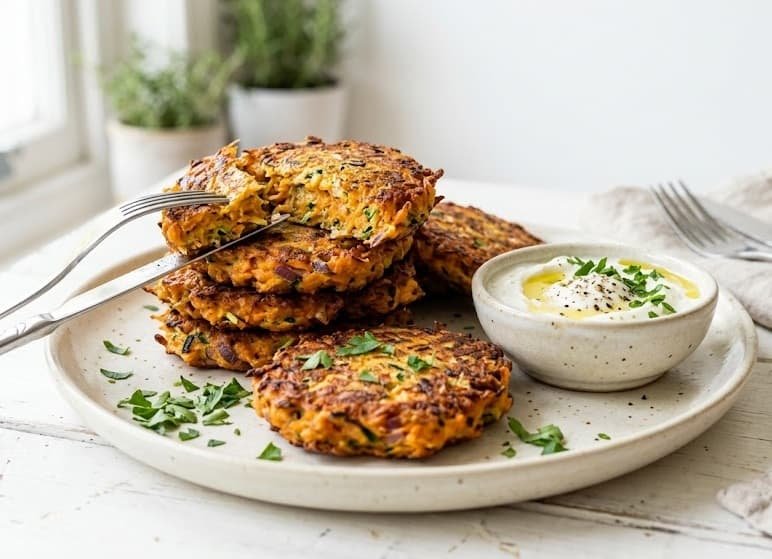
Sweet potato zucchini fritters are vegetable patties made from grated sweet potato and zucchini combined with ingredients that help the mixture hold together. They can be pan-cooked, baked, or prepared in an air fryer.
Zucchini moisture, binder choice, fritter thickness, and airflow can all affect how the patties cook. Understanding these factors is more useful than relying on one fixed formula, especially because vegetable moisture and air-fryer performance can vary.
What Are Sweet Potato Zucchini Fritters?
Sweet potato zucchini fritters combine grated vegetables with a binder and seasonings before the mixture is shaped into patties.
Sweet potato provides vegetable solids and starch, while zucchini contains a high amount of water. That difference makes moisture control especially important when grated zucchini is used.
An air fryer cooks by rapidly circulating hot air around food. This differs from pan-cooking, where the fritter has more direct contact with a heated pan and cooking fat. Air frying can encourage surface drying and browning, although the final texture still depends on the mixture and cooking conditions.
What Ingredients Are Commonly Used?
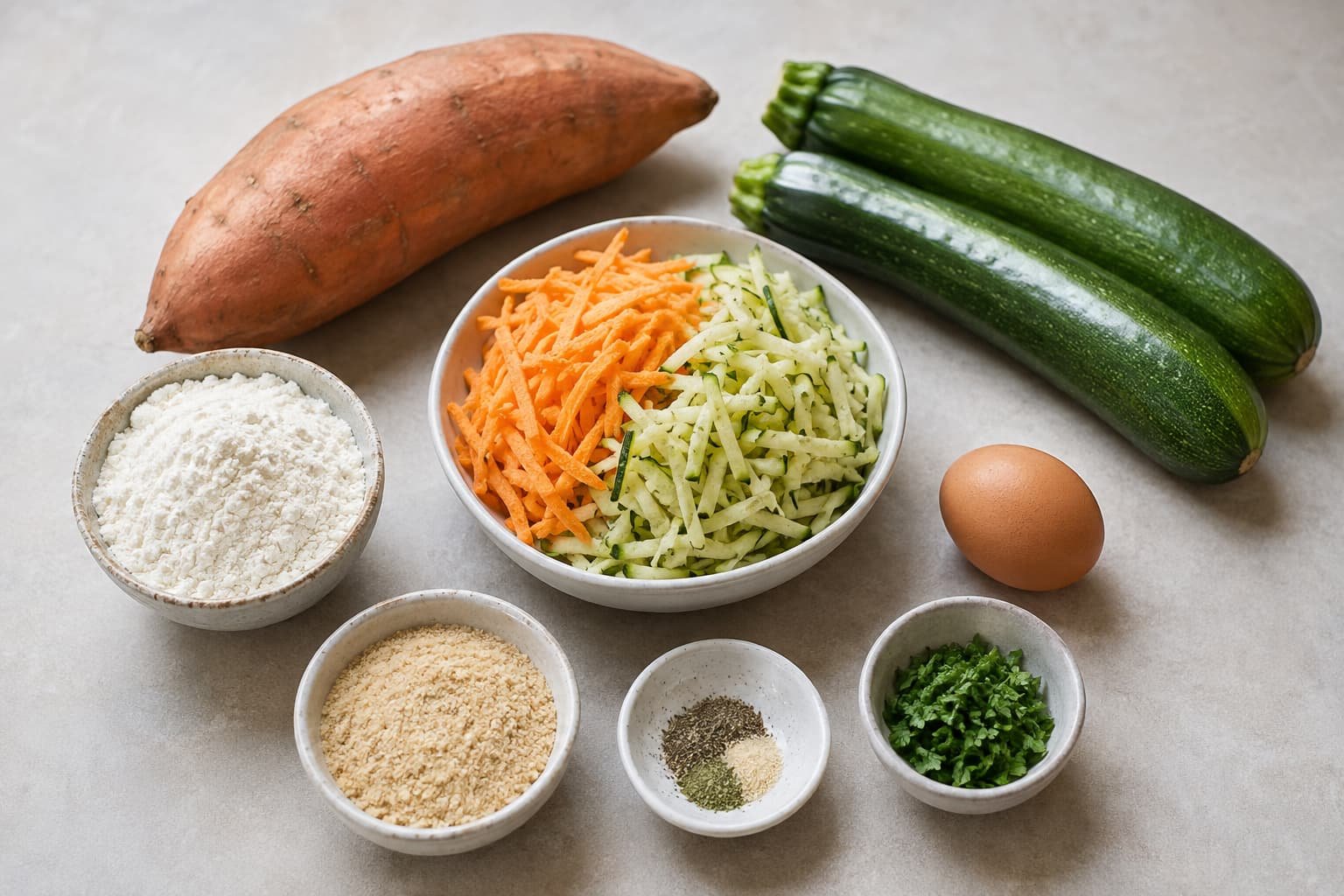
Most versions contain grated sweet potato and zucchini, a binder, a dry ingredient, and seasonings. Cheese, herbs, or other additions may also be used.
There is no single ingredient combination that applies to every version.
Sweet Potato and Zucchini
The vegetables form the main body of the fritter.
Grating them into reasonably consistent pieces helps distribute them throughout the mixture. Zucchini needs particular attention because grated zucchini can release considerable liquid.
University of Georgia Extension specifically recommends draining and squeezing grated zucchini when preparing zucchini fritters because excess water can contribute to a wet result.
Some fritter preparations use raw grated sweet potato directly in the mixture. Preparation can vary, so there is no need to assume that sweet potato always requires the same moisture-removal step as zucchini.
Binders and Dry Ingredients
Binders help the grated vegetables stay together during shaping and cooking.
Egg is commonly used because its proteins firm when heated. Flour, breadcrumbs, starches, and alternative binders may also contribute structure or help manage moisture.
These ingredients are not automatically interchangeable. Changing the binder can affect how the mixture handles and may change the final texture.
Seasonings and Optional Additions
Possible seasonings include garlic, onion, black pepper, paprika, cumin, chili, and fresh or dried herbs.
Some preparations also include cheese, green onion, parsley, cilantro, or dill. These are optional additions rather than essential parts of the basic fritter structure.
Why Does Removing Excess Zucchini Moisture Matter?
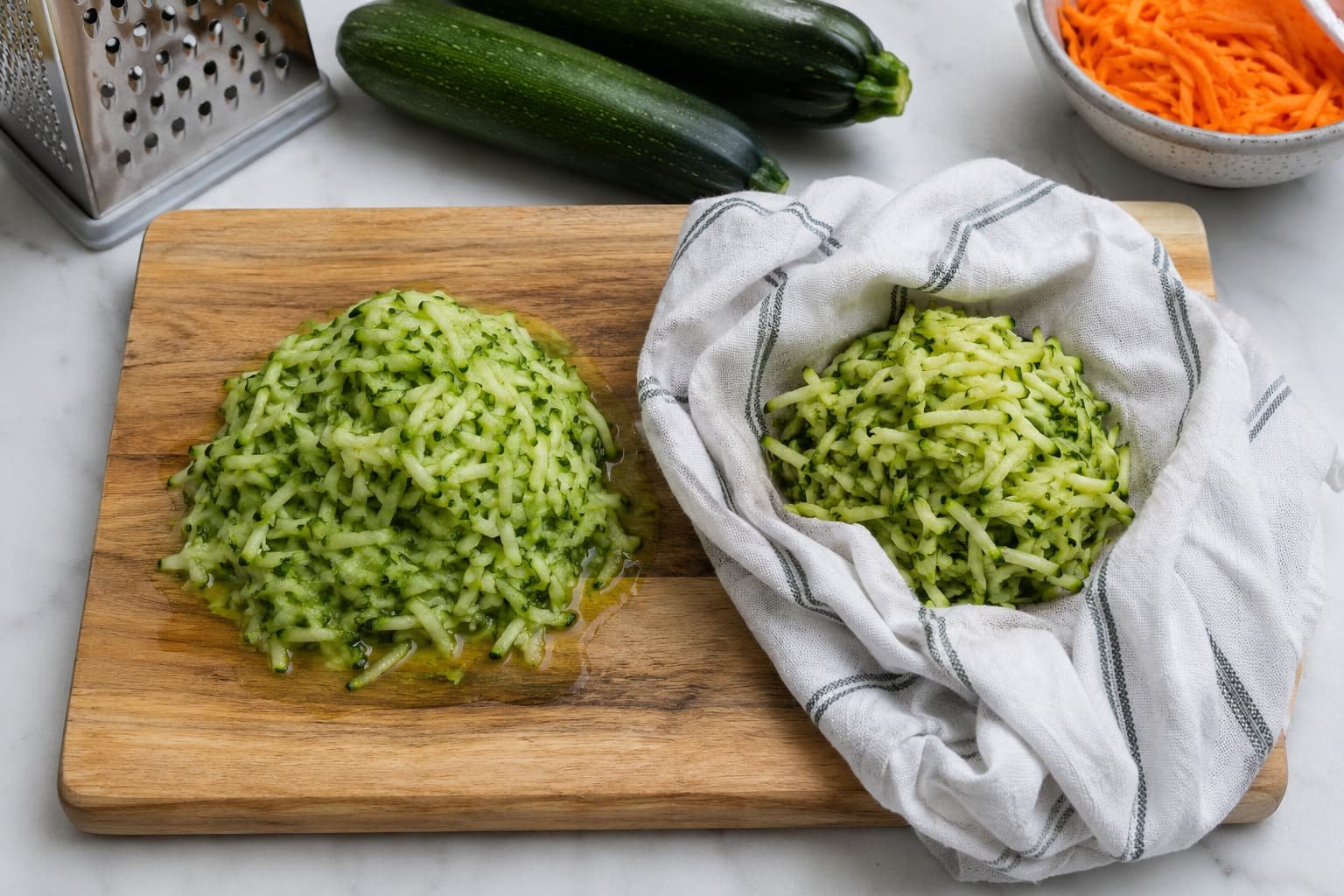
Removing excess liquid can make a zucchini-based fritter mixture easier to shape and may reduce the chance of an overly wet result.
After grating, zucchini can be pressed with a clean kitchen towel, cheesecloth, or another suitable method. The aim is to remove excess free liquid, not necessarily to make the vegetable completely dry. Extension guidance for zucchini fritters supports squeezing out excess water before mixing.
This is also why adding more flour is not always the first adjustment to make when a mixture looks watery. Extra dry ingredients change the balance between the vegetables and binder and may also change the texture.
If the mixture appears unusually loose, checking the zucchini moisture is a useful first step.
How Does Binding Affect Fritter Structure?
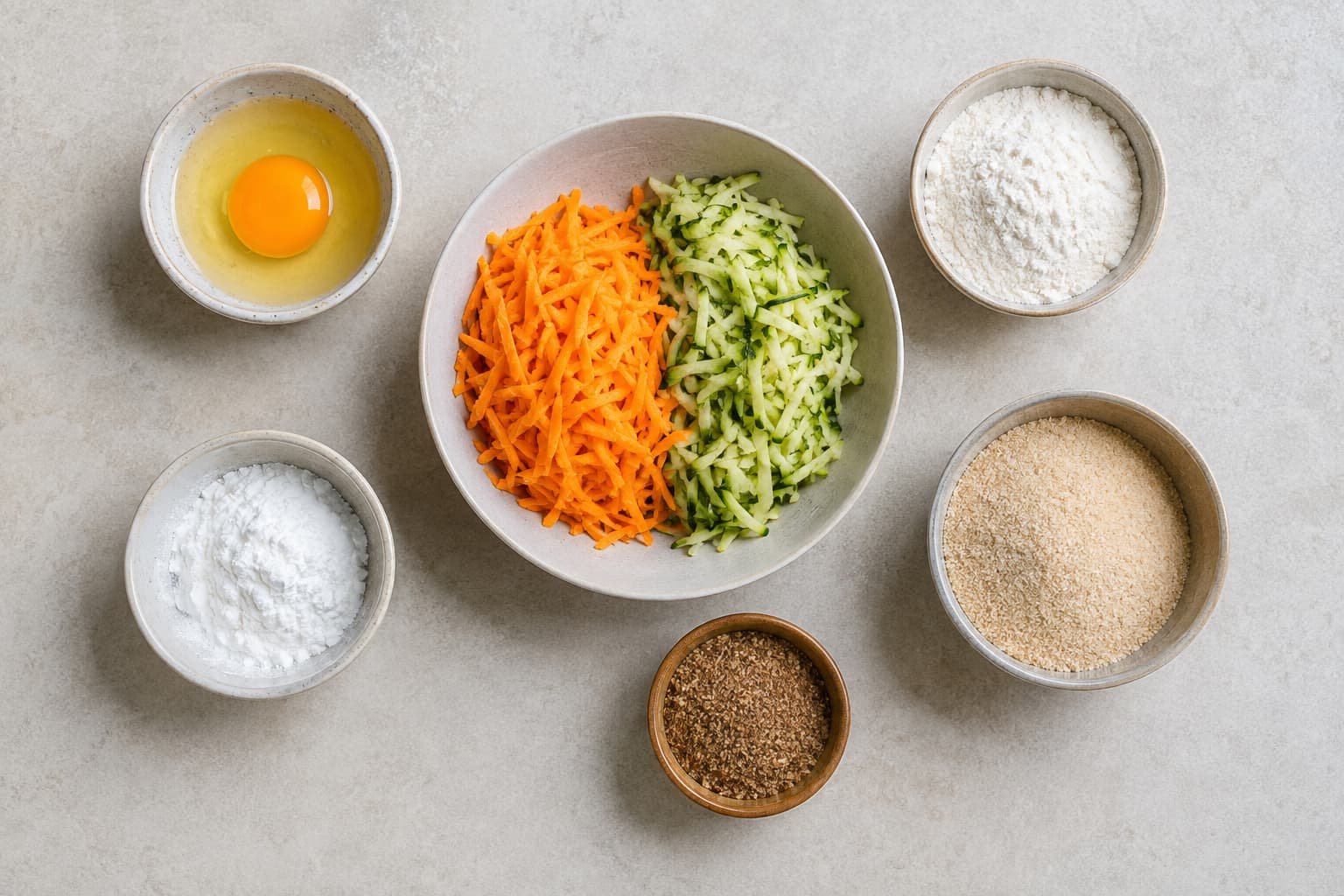
A fritter needs enough binding structure to stay together while it is shaped, moved, and cooked.
The vegetables provide most of the mixture. Egg or another wet binder may help connect the ingredients, while flour, breadcrumbs, or starch can provide additional structure.
A mixture may be more likely to break apart when it contains excess liquid or does not have enough binding support. Adding a large amount of dry binder, however, may produce a denser result.
There is no single flour, starch, or egg alternative that should be treated as the best option for every preparation. Different binders can behave differently depending on the rest of the mixture.
How Should the Fritters Be Prepared for Air Frying?
The main preparation considerations are controlling excess zucchini moisture, distributing the ingredients evenly, and shaping patties of reasonably similar size.
Because this is an informational guide rather than a tested recipe formula, exact quantities are not provided.
Grating and Mixing
Grate the sweet potato and zucchini into reasonably consistent pieces so they can be distributed throughout the mixture.
Press excess liquid from the zucchini before combining the vegetables with the chosen binder, dry ingredients, and seasonings.
The mixture needs enough cohesion to be shaped, but there is no universal description such as “sticky” or “firm” that guarantees the correct consistency for every formulation.
If shaping is difficult because the mixture appears very wet, check for remaining zucchini liquid before automatically increasing the flour or another dry ingredient.
Shaping and Thickness
Fritters of similar size and thickness are more likely to cook under comparable conditions.
A thicker patty has more material in the center for heat to move through, while a thinner patty exposes more surface area to circulating air. Very thin fritters may also be more delicate depending on the binder and vegetable mixture.
There is no need to specify one exact thickness without a tested formulation. Keeping the patties reasonably consistent within the same batch is the more useful general principle.
How Does Air Frying Affect the Fritters?
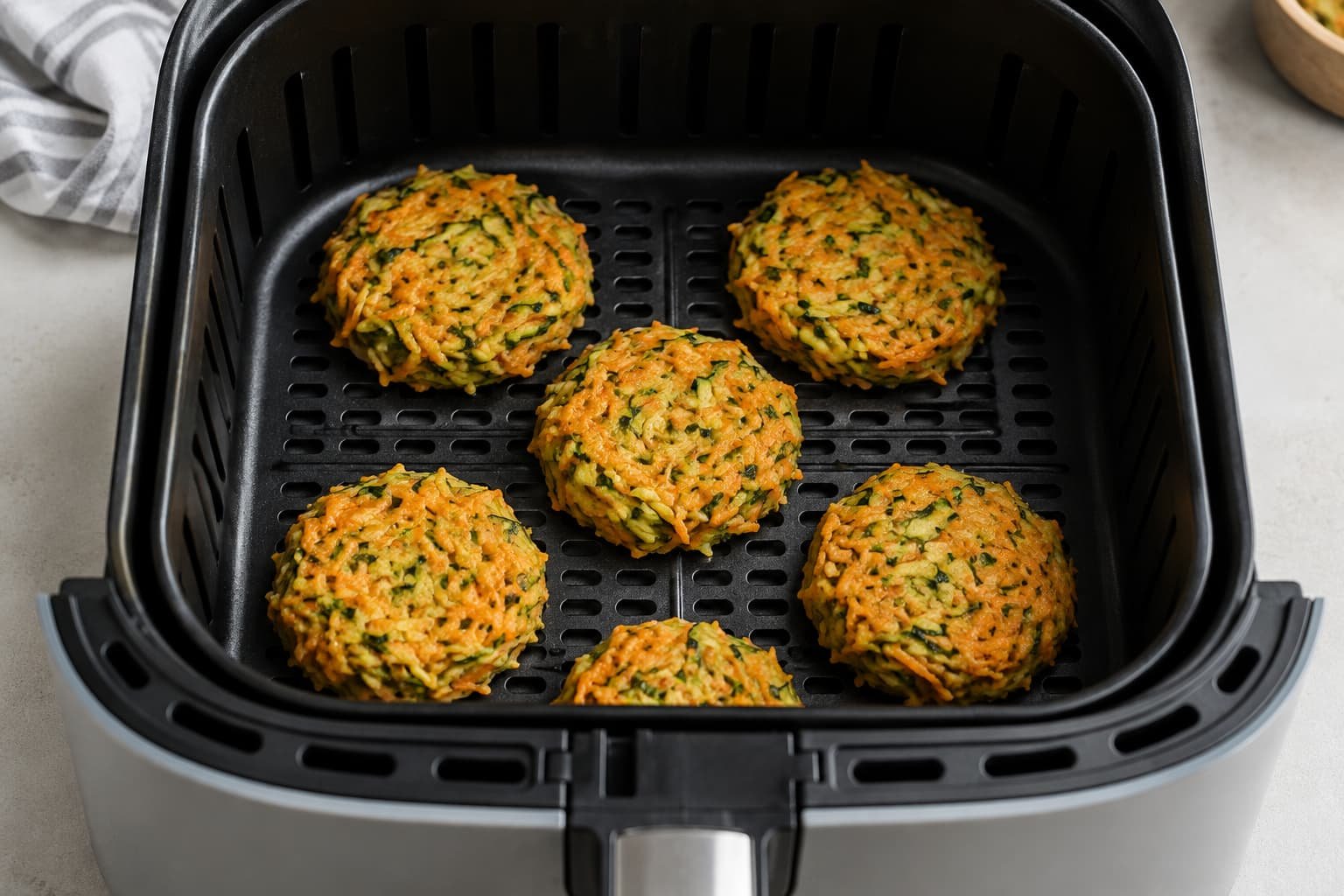
Air fryers rely on rapidly circulating hot air, which makes airflow and basket spacing important.
Air frying does not guarantee a crisp exterior. Vegetable moisture, fritter thickness, binder choice, basket load, and appliance design can all affect the result.
Basket Spacing and Airflow
Leaving space between the fritters gives circulating air better access to their surfaces.
USDA advises against overfilling an air-fryer basket because overcrowding can prevent sufficient air circulation and contribute to uneven cooking.
Arranging the patties in a single layer without overlapping is therefore a reasonable approach. When the basket cannot hold the full batch this way, cooking in separate batches may provide better airflow.
Flipping and Even Cooking
Turning the fritters during cooking may expose the second side more directly to circulating heat.
Flipping is not necessarily required with every appliance. Airflow and basket design differ between air fryers.
If the fritters are turned, gentle handling may reduce the chance of breaking patties that are still developing structure.
Cooking Time and Temperature
There is no universal air-fryer time or temperature for sweet potato zucchini fritters.
USDA notes that air-fryer cooking times vary because appliances differ in size and power. The mixture itself can also affect cooking.
Important variables include:
- fritter size and thickness
- vegetable moisture
- shred size
- basket load
- air-fryer size, power, and design
Because no specific formulation has been personally tested for this article, one exact cooking setting should not be presented as reliable for every batch.
If raw egg is included in the mixture, USDA guidance states that egg mixtures should reach 160°F (71.1°C) for food safety. A food thermometer can be used to check the temperature.
Why Do Fritters Become Soggy or Fall Apart?
Excess moisture, insufficient binding, uneven shaping, and restricted airflow are useful areas to check when fritters remain soft or are difficult to handle.
If the mixture is difficult to shape before cooking, excess zucchini liquid may be contributing.
If a patty breaks during handling, the mixture may not have enough structure for the amount of vegetables and moisture present.
If the outside and center cook differently, fritter thickness or uneven shaping may be factors.
If some patties cook differently from others across the basket, overcrowding or restricted airflow may be involved.
More than one issue can occur at the same time. Large changes to the binder are therefore not always the first or only solution.
Can the Ingredients or Cooking Method Be Changed?
Yes, but substitutions can change moisture, structure, and texture. They should be treated as adaptations rather than guaranteed one-to-one replacements.
Egg-Free and Gluten-Free Options
An egg-free version requires another approach to binding. Plant-based binders, starches, or combinations of other ingredients are used in different preparations, but there is no universal replacement ratio that applies to every fritter mixture.
For a gluten-free version, wheat flour or standard breadcrumbs would need to be replaced with suitable gluten-free alternatives. Options may include gluten-free flour blends, starches, or gluten-free breadcrumbs, depending on the preparation.
Anyone who needs to avoid gluten should check all packaged ingredients rather than assuming the finished dish is gluten-free based only on the vegetables.
Can They Be Baked or Pan-Cooked Instead?
Yes. Baking and pan-cooking are possible alternatives, but they create different cooking conditions.
Pan-cooking gives the fritter direct contact with a heated surface and any cooking fat being used. Baking cooks the patties in a larger heated oven, while an air fryer relies more heavily on rapidly circulating hot air.
These differences may affect browning, moisture loss, and texture. Air-fryer times and temperatures should not simply be copied to another cooking method.
How Should Leftover Fritters Be Stored and Reheated?
Cooked fritters should be refrigerated promptly.
USDA advises refrigerating perishable leftovers within 2 hours, or within 1 hour when the surrounding temperature is above 90°F (32°C). Most properly refrigerated cooked leftovers should be used within 3 to 4 days.
Leftovers can also be frozen. USDA gives 3 to 4 months as a general quality guideline for frozen leftovers. This is a quality recommendation rather than a safety deadline. Food kept continuously frozen can remain safe longer, although quality may decline.
When reheating leftovers, USDA recommends reaching 165°F (73.9°C) throughout and checking with a food thermometer.
An air fryer can be used as a reheating method, but exterior browning or dryness is separate from food safety. A browned surface does not confirm that the center has reached a safe reheating temperature.
Frequently Asked Questions
Do You Need to Cook Sweet Potato Before Making Fritters?
Not always. Some fritter preparations use raw grated sweet potato directly in the mixture.
Whether the sweet potato softens as intended can depend on shred size, fritter thickness, cooking method, and the other ingredients. Instructions developed for one formulation should not automatically be assumed to work the same way for another.
What Can You Serve With Sweet Potato Zucchini Fritters?
Possible accompaniments include yogurt-based dips, herb sauces, salsa, avocado, salads, roasted vegetables, eggs, beans, or another protein source.
The choice depends on the meal and preferred flavors. If maintaining a drier exterior matters, wet sauces can be added when serving rather than before cooking.