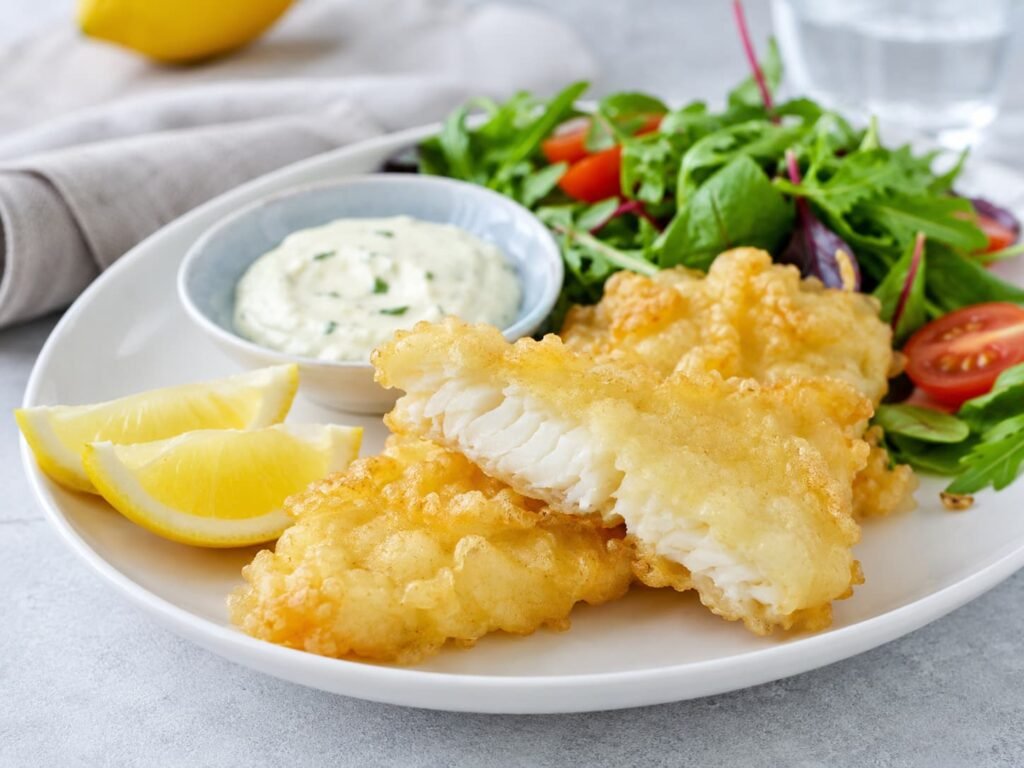
What Is Tempura Fish?
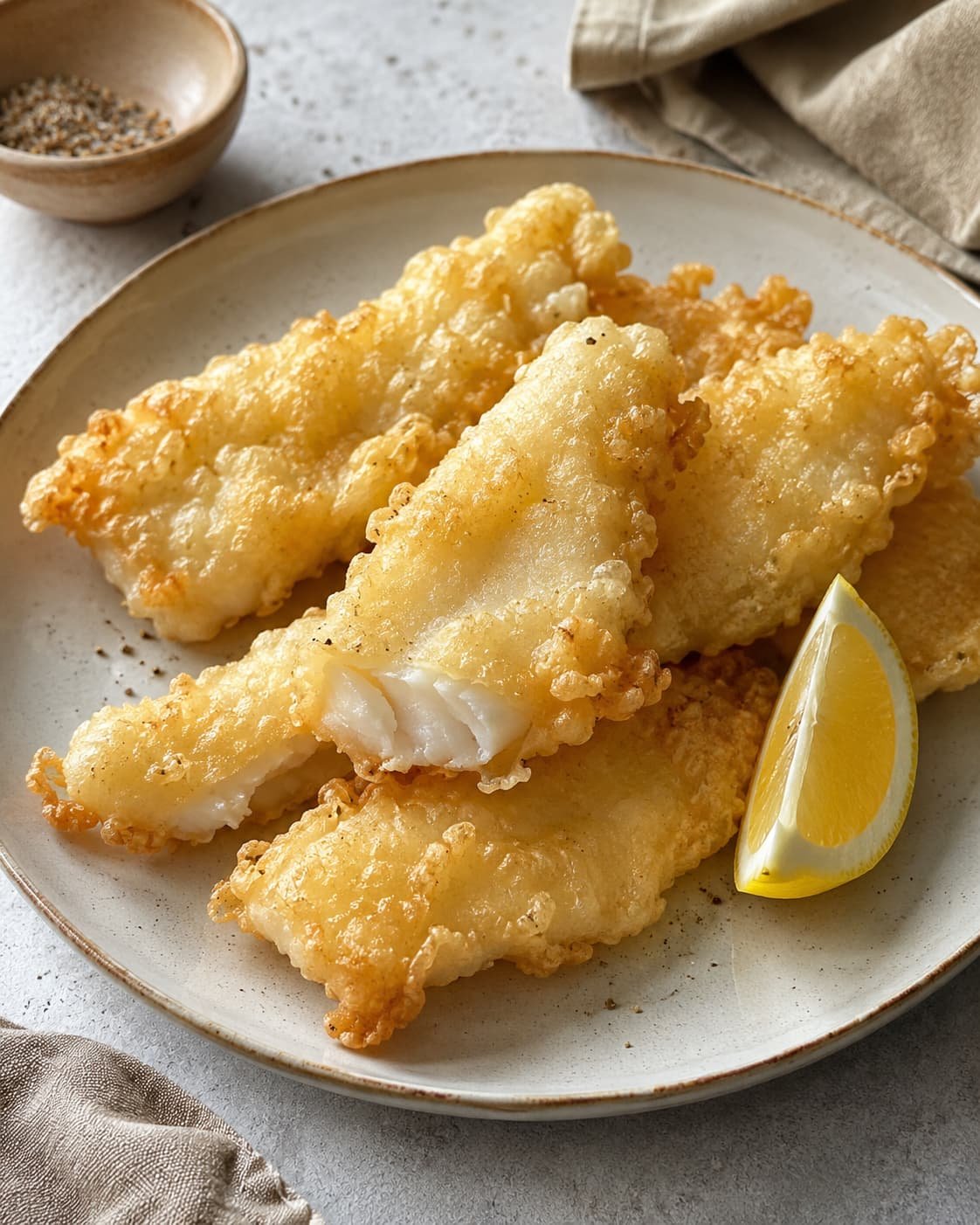
Tempura fish is fish coated in a relatively light batter and fried in hot oil. Compared with many heavier battered or breaded preparations, tempura is generally associated with a thinner, more delicate coating.
There is no single batter formula used in every preparation. Wheat flour and cold water are common components, while some versions also contain egg, starch, rice flour, or other ingredients.
The finished coating depends on more than the ingredient list. Batter consistency, mixing, moisture on the fish, fillet thickness, and frying conditions can all affect how the crust develops.
How Is Tempura Fish Different From Regular Battered Fish?
Tempura is mainly distinguished by its battering and frying style rather than one specific ingredient.
The coating is generally kept relatively light and may have an irregular surface after frying. Other battered-fish preparations can use thicker mixtures or additional ingredients that form a denser coating. Breaded fish differs further because breadcrumbs, panko, or another dry coating create much of the outer crust.
Fish and chips can also involve battered fish, but the batter may be thicker or beer-based. The categories can overlap, so appearance alone does not always clearly identify the batter style.
Beer batter is not the same as traditional tempura batter. Beer changes the liquid mixture and adds its own components, while tempura does not require beer.
What Goes Into Tempura Fish Batter?
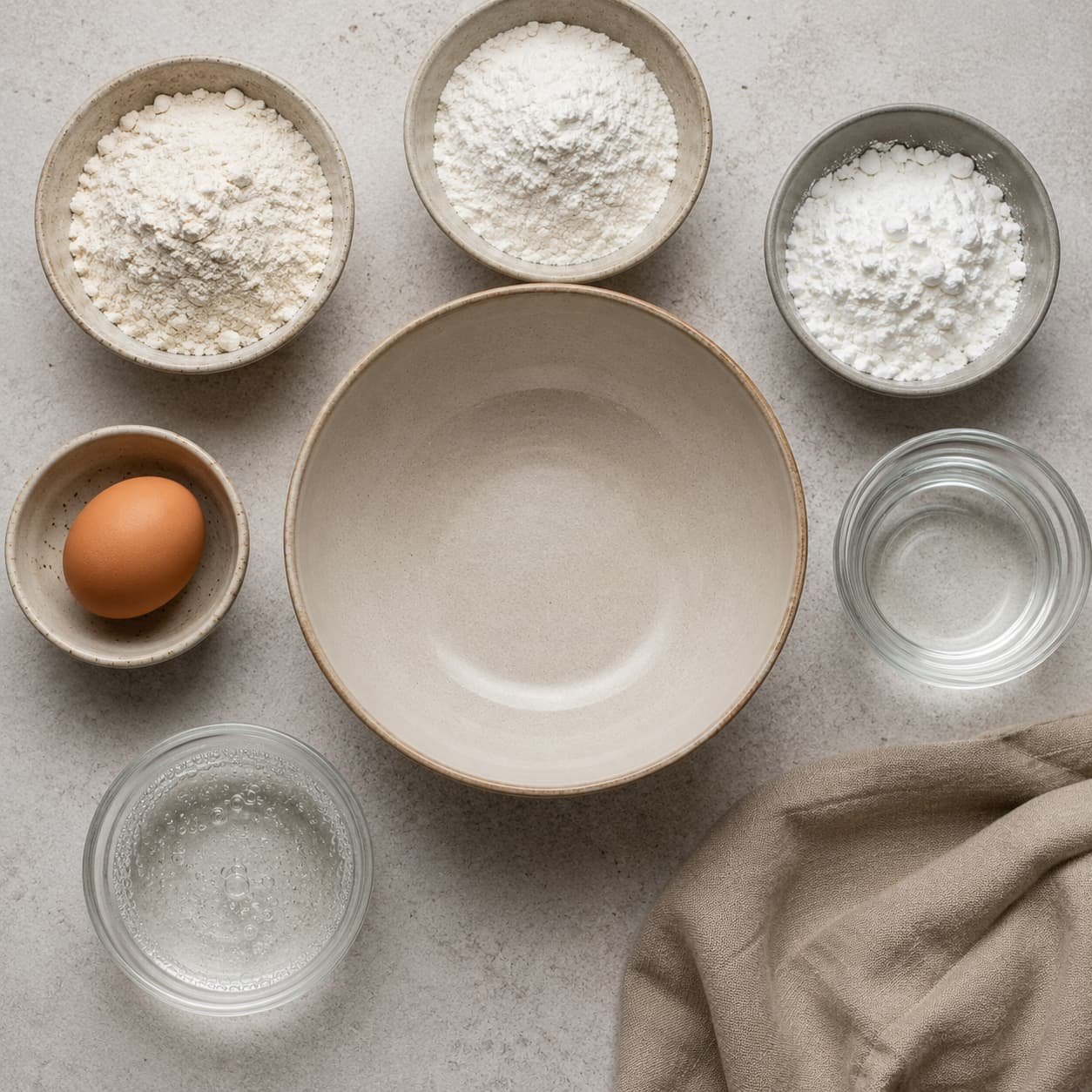
There is no universal ingredient list for tempura batter. The main components can vary according to the style being prepared.
Common possibilities include:
- Wheat flour, which commonly forms the structural base of the batter
- Cold water, which hydrates the flour and creates a fluid coating
- Egg, which appears in many formulations but is not required in every version
- Cornstarch or potato starch, which may be combined with flour
- Rice flour, which may be used alongside or instead of wheat flour in some batters
- Sparkling water, which appears in some variations but is not essential
Changing the flour, starch, egg, or liquid can change how the coating behaves during frying. Research on battered foods shows that formulation can influence texture, crust structure, moisture movement, and oil uptake.
These effects depend on the complete batter and frying conditions. No single ingredient should be treated as a guaranteed way to produce a lighter or crispier coating.
Why Is Tempura Batter Usually Kept Cold?
Cold water is commonly used in wheat-based tempura batter partly because batter temperature and mixing conditions can affect gluten development.
When wheat flour is hydrated and mixed, gluten-formforming proteins can develop a network. Extensive development can make the batter more elastic or sticky, which is generally not the texture associated with a light tempura coating.
Keeping the liquid cold and preparing the batter close to frying time are common ways to limit unnecessary gluten development.
Cold batter does not guarantee crispness. Batter thickness, fish moisture, ingredient proportions, oil temperature, and frying conditions also affect the finished crust.
Why Is Tempura Batter Mixed Lightly?
Wheat-based tempura batter is usually mixed briefly rather than beaten until completely smooth.
More extensive mixing can encourage greater gluten development. For this reason, small amounts of unmixed flour may remain in some tempura batters without being a problem.
The goal is not to create lumps deliberately. It is simply to avoid unnecessary mixing.
Batter consistency also matters. A thick batter may leave a heavier coating, while an extremely thin mixture may provide less coverage. There is no single visual consistency that can be guaranteed to work for every formulation.
Are Egg, Starch, Rice Flour, or Sparkling Water Required?
No. These ingredients are possible components or variations rather than requirements.
Egg appears in many tempura preparations, while other batters omit it. Cornstarch and potato starch can be combined with flour, and rice flour may be used in some formulations.
Rice flour behaves differently from wheat flour because it does not form the same gluten network. Studies comparing specific rice-flour and wheat-flour tempura batters have found differences in properties such as crispness and oil uptake, but those findings do not mean every rice-flour batter will behave the same way.
Sparkling water is also optional. Some preparations use carbonated water, while others use plain cold water.
The overall formulation matters more than any supposed secret ingredient.
What Type of Fish Can Be Used for Tempura?
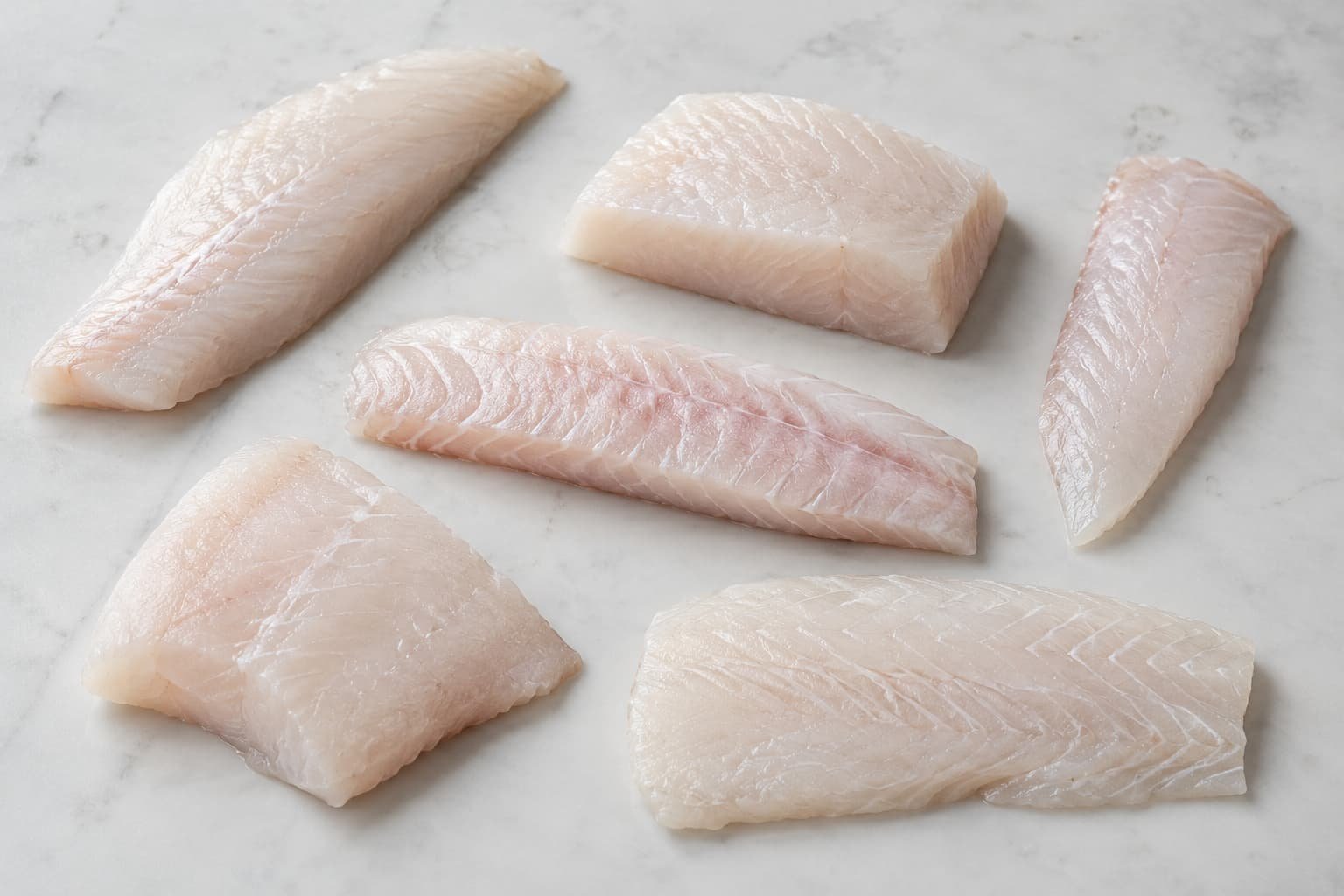
Several types of fish can be used. Instead of treating one species as universally best, consider the thickness, firmness, surface moisture, and flavor of the fillet.
Cod, haddock, pollock, halibut, tilapia, and other white fish are possible choices.
Thickness affects cooking. Heat takes longer to reach the center of a thicker piece than a thinner one. Portions with a similar thickness may therefore cook at a more similar rate.
Firmness affects handling. Firmer fillets may be easier to coat and move without breaking. Delicate fish can also be used but may require gentler handling.
Surface moisture affects preparation. Excess water on the outside can interact with the batter and increase splattering when it reaches hot oil.
Flavor is a matter of preference. Mild white fish is commonly used, but other fish may also suit the dish.
The size and condition of the fillet can matter as much as the species itself.
Can Frozen Fish Be Used for Tempura?
Yes. Frozen fish can be used when it is thawed safely before preparation, if thawing is required.
FDA guidance identifies refrigerator thawing as a safe method. For faster thawing, sealed seafood can be placed in cold water. Microwave defrosting can also be used when the fish will be cooked immediately afterward.
Seafood should not be thawed on the counter at room temperature.
Liquid may collect on the surface as frozen fish thaws. Removing visible excess moisture before battering can reduce the amount of free water coming into contact with the batter and hot oil.
Fresh and previously frozen fish should not be expected to behave identically. Freezing, thawing, species, thickness, and handling can all affect the condition of the fillet before cooking.
How Does Fish Preparation Affect the Batter?
The condition of the fish surface can influence how a wet batter coats it.
Excess surface water can mix with the batter where the two meet. Water also turns rapidly to steam in hot oil, which can contribute to splattering.
Removing visible moisture before battering is therefore a useful preparation step. The goal is not to dry out the inside of the fillet, but simply to avoid unnecessary water on the surface.
Some methods also apply a light coating of flour or starch before the wet batter. This may help with adhesion in certain preparations, but it is optional rather than essential.
Its effect can vary with the fish, batter formulation, and amount applied.
How Does Frying Affect Tempura Fish?
Frying cooks the batter while transferring heat toward the center of the fish.
When battered fish enters hot oil, the coating begins to set and moisture moves out of the food and batter. Batter composition, oil temperature, fish thickness, and the amount of food being fried can all influence crust development.
A thicker fillet generally takes longer for heat to reach its center than a thin piece, even though the exterior begins cooking immediately.
Because these factors interact, one fixed frying time should not be assumed to work for every fillet.
Why Does Oil Temperature Matter?
Oil temperature affects how the coating cooks, loses moisture, and develops color.
If the temperature falls substantially after food is added, the batter cooks under different conditions and may take longer to set and brown.
If the oil becomes excessively hot, the outside can darken quickly. With a thick piece of fish, the coating may develop considerable color while the center is still heating.
There is no single temperature that should be described as universally perfect for every preparation. Suitable conditions can vary with fish thickness, batter composition, quantity of food, amount of oil, and cooking equipment.
A frying thermometer can make temperature changes easier to monitor than relying only on the appearance of the oil or coating.
Why Is Tempura Usually Fried in Small Batches?
Small batches can make temperature and spacing easier to manage.
Adding food to hot oil lowers the oil temperature. Adding a larger amount at once can cause a greater temperature change and make consistent cooking more difficult.
Crowding can also create cooking and safety problems. USDA guidance warns that overcrowding a deep fryer can contribute to uneven cooking, undercooking, and overflowing oil.
There is no universal number of fish pieces for one batch. The appropriate amount depends on the size of the pieces, quantity of oil, and dimensions of the cooking vessel.
What Creates a Light Golden Tempura Crust?
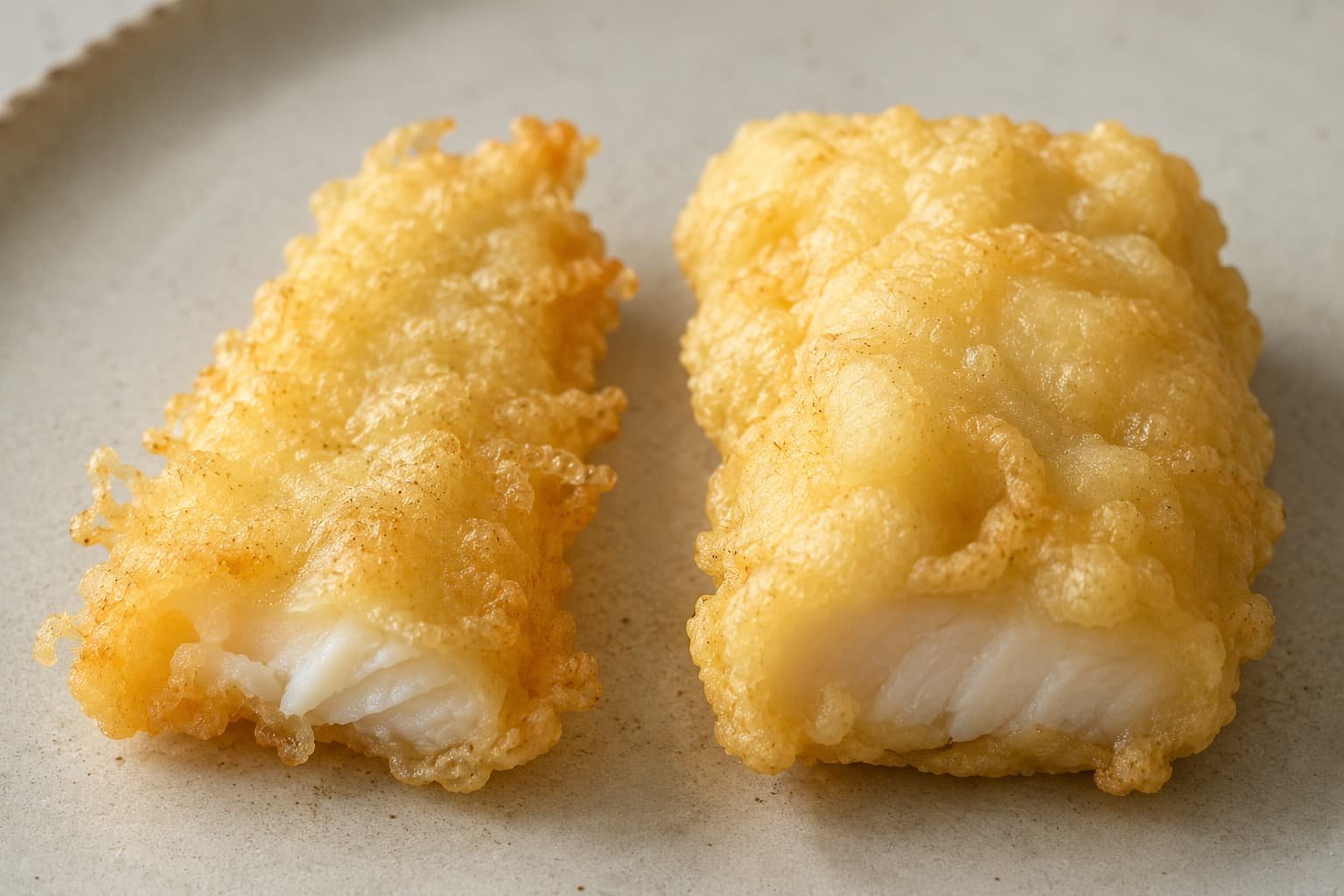
A light golden crust develops as the batter heats, loses moisture, sets, and gradually browns.
When battered fish enters hot oil, moisture in the coating heats rapidly and some of it turns to steam. As moisture leaves, the wet batter develops a firmer outer structure.
Batter thickness changes how much coating surrounds the fish. A thin layer behaves differently from a heavy coating because the amount of moisture and batter solids is different.
Composition matters too. Wheat flour, starch, rice flour, egg, and liquid can affect the structure and behavior of the fried coating. Frying temperature and cooking duration also influence how quickly the surface develops color.
Golden color alone does not show whether the fish is safely cooked. The coating and the center of the fillet do not necessarily heat at the same rate.
Why Does Tempura Fish Become Soggy, Heavy, or Uneven?
Coating problems often have several possible causes. Batter consistency, surface moisture, frying temperature, crowding, fish thickness, and handling can all contribute.
Looking at these factors together is more useful than assuming one ingredient or step is always responsible.
Why Does the Coating Become Soggy or Greasy?
A soft or oily-feeling coating can develop under different conditions.
A substantial drop in oil temperature can change how quickly the batter sets and loses moisture. Adding too much food at once can contribute to that temperature drop.
Excess surface moisture and a very thick batter may also affect the finished coating.
Texture can continue changing after frying. If hot pieces are stacked or enclosed while releasing steam, moisture may collect around the crust and contribute to softening.
Oil uptake during frying is complex, so a greasy coating should not automatically be blamed on one factor such as low oil temperature.
Why Does the Batter Fall Off the Fish?
Batter may separate for several reasons.
Excess surface moisture may interfere with the coating in some preparations. A very thin batter may provide limited coverage, while repeated handling can disturb the coating before it has set.
Delicate fillets may also be more difficult to move without damaging the batter. Pieces that touch during frying can stick together and pull at the coating when separated.
There is no single step that guarantees perfect adhesion.
Why Can Tempura Batter Become Thick or Chewy?
A heavy or chewy coating may be related to mixing, batter consistency, formulation, or frying conditions.
With wheat-based batter, prolonged mixing can encourage greater gluten development and make the mixture more elastic.
A very thick batter can also leave a heavier layer around the fish. The proportions and types of flour, starch, and liquid can further influence texture.
Consider the complete batter and frying process rather than assuming one ingredient caused the problem.
Why Does the Crust Darken Too Quickly?
Rapid darkening means the outside is developing color faster than intended.
High oil temperature is one possible cause. Batter composition and longer cooking can also increase browning.
Fish thickness adds another factor. The coating begins cooking immediately, while heat takes longer to reach the center of a thick piece.
If the crust repeatedly becomes very dark before the center is safely cooked, the frying conditions, portion thickness, batter formulation, or cooking duration may need adjustment.
How Do You Know When Tempura Fish Is Safely Cooked?
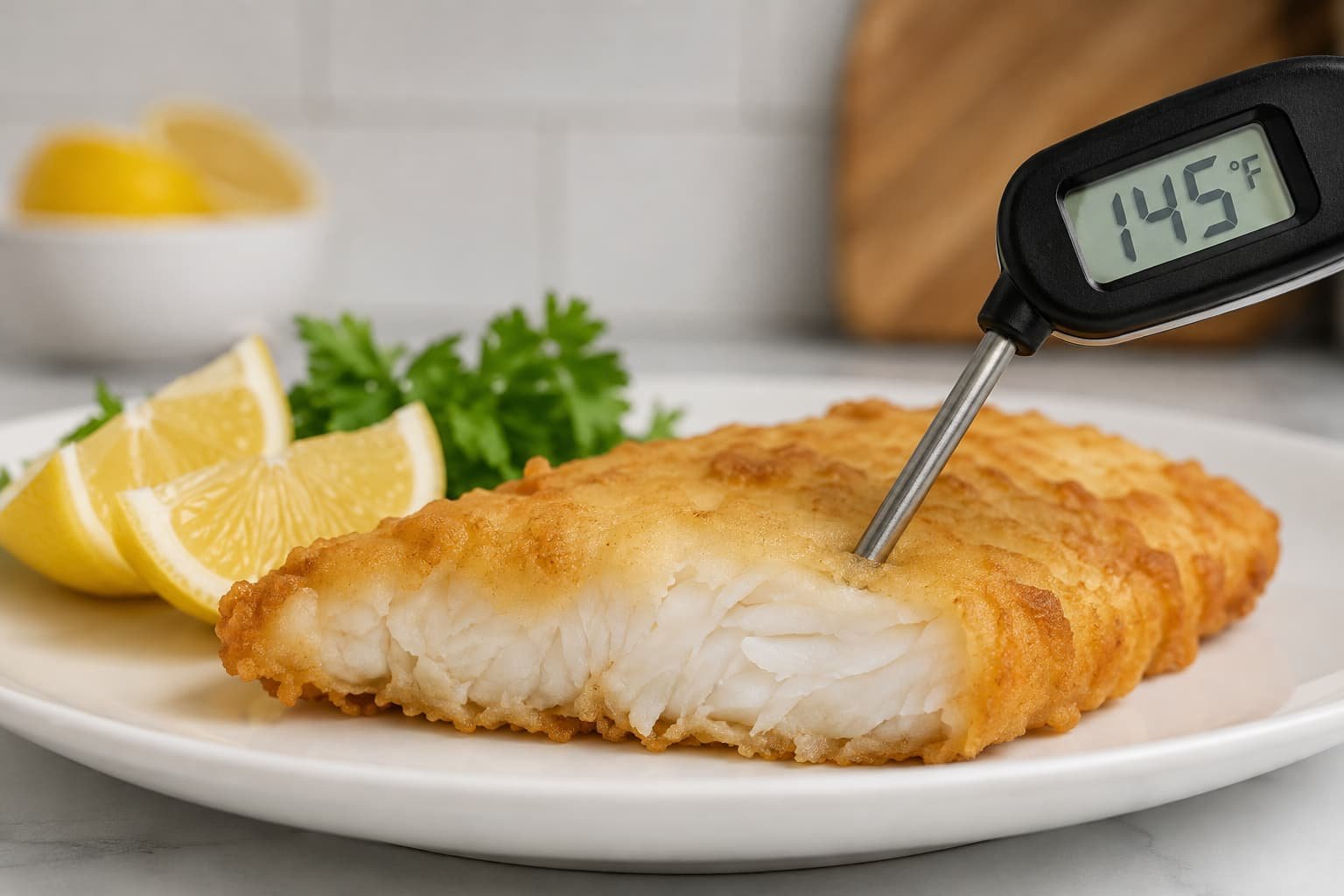
For food safety, finfish should reach an internal temperature of 145°F (63°C) according to FDA guidance.
A food thermometer provides a direct way to check the temperature. When practical, measure the thickest part of the fish.
Do not rely on the color of the coating alone. A light golden crust can form while the center of a thick fillet is still heating, and a dark coating does not automatically prove that the fish has reached a safe internal temperature.
What Can Be Served With Tempura Fish?
Tempura fish can be paired with rice, noodles, vegetables, or fresh slaw.
Lemon can add acidity, while dipping sauces can provide savory, salty, sweet, or tangy flavors. Garlic butter rice is another possible side if a richer rice accompaniment suits the meal.
There is no required side dish. The choice mainly depends on personal preference and the other flavors being served.
How Should Leftover Tempura Fish Be Stored and Reheated?
Cooked fish should be refrigerated promptly. USDA guidance says perishable leftovers should be refrigerated within 2 hours, or within 1 hour when the surrounding temperature is above 90°F (32°C). A refrigerator should be kept at 40°F (4°C) or below.
Properly refrigerated cooked fish and seafood can generally be stored for 3 to 4 days.
Food safety and crust quality are different issues. The fish may remain within the recommended storage period even though the batter has softened. Refrigerated tempura should therefore not be expected to have exactly the same texture as freshly fried fish.
When reheating leftovers, USDA guidance recommends an internal temperature of 165°F (74°C).
There is no single oven or air-fryer reheating time that should be assumed to work for every piece. Thickness, size, starting temperature, coating, and appliance can all affect reheating time.
Can Tempura Fish Be Made in an Air Fryer?
Fish can be cooked in an air fryer, but a loose wet tempura batter behaves differently in circulating hot air than it does when immersed in hot oil.
A wet coating may drip or lose coverage before it has time to set. Air-fryer adaptations may therefore use a modified batter or a different coating method.
For that reason, air-fried versions are better treated as a variation rather than a direct reproduction of oil-fried tempura. The final texture can differ.