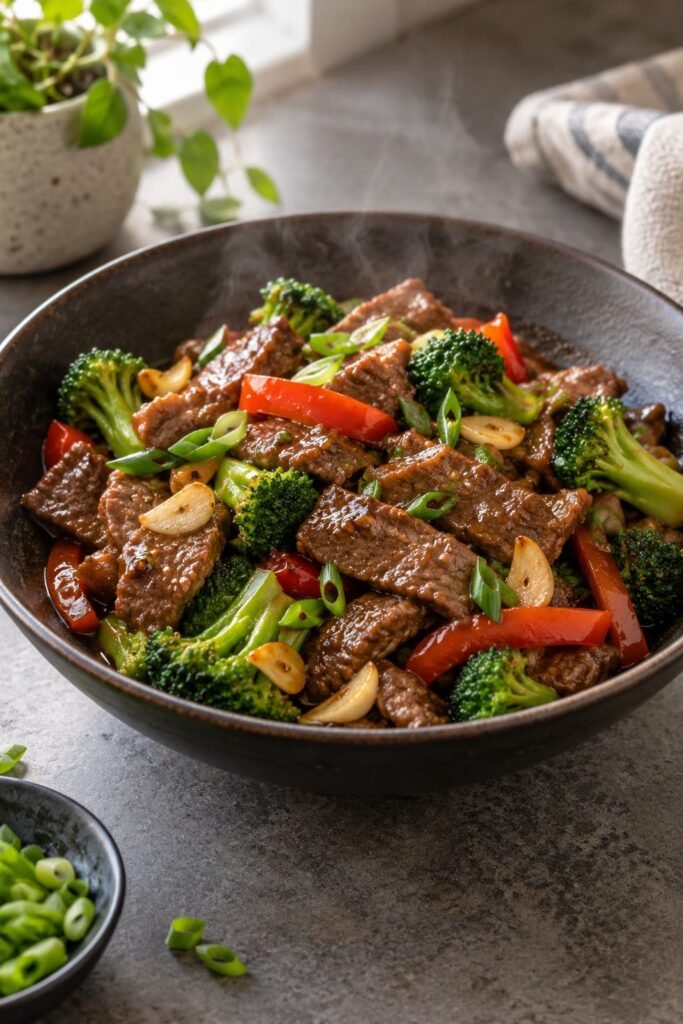
What Is Beef with Garlic Sauce?
Beef with garlic sauce generally refers to a dish made with sliced beef and a savory sauce in which garlic is a prominent flavor. Many versions use stir-fry-style cooking and may include vegetables such as broccoli, bell peppers, onions, or mushrooms.
There is no single formula that defines every version. Restaurant, takeout-style, and home preparations can differ in the cut of beef, amount of garlic, vegetables, sauce ingredients, thickness, sweetness, acidity, and level of chili heat.
Some preparations use a soy-sauce-based mixture, while others combine garlic with ingredients such as ginger, oyster sauce, vinegar, sesame oil, sweetener, broth, or starch. The exact combination depends on the particular recipe or cooking style.
For that reason, beef with garlic sauce is better understood as a broad type of garlic-forward beef dish rather than one standardized formula.
What Does Beef with Garlic Sauce Usually Taste Like?
Beef with garlic sauce is commonly savory and garlic-forward, but the exact flavor varies according to the sauce.
Soy sauce can contribute saltiness and savory flavor, while garlic provides the characteristic aromatic and pungent notes. Ginger or scallions may add additional aromatic qualities when they are included.
Some preparations also contain a sweetener, which can add sweetness or help balance salty and acidic ingredients. Vinegar may provide acidity, while oyster sauce can contribute its own savory and sweet characteristics depending on the product and amount used.
Beef with garlic sauce is not necessarily spicy. Garlic can taste sharp or pungent, but this is different from chili heat. Mild versions may contain no hot pepper ingredients, while other versions use chili flakes, fresh chilies, chili oil, or prepared chili sauces.
As a result, the flavor can range from primarily savory and garlicky to combinations that are sweeter, more acidic, or noticeably spicy.
What Ingredients Are Commonly Used in Garlic Sauce for Beef?
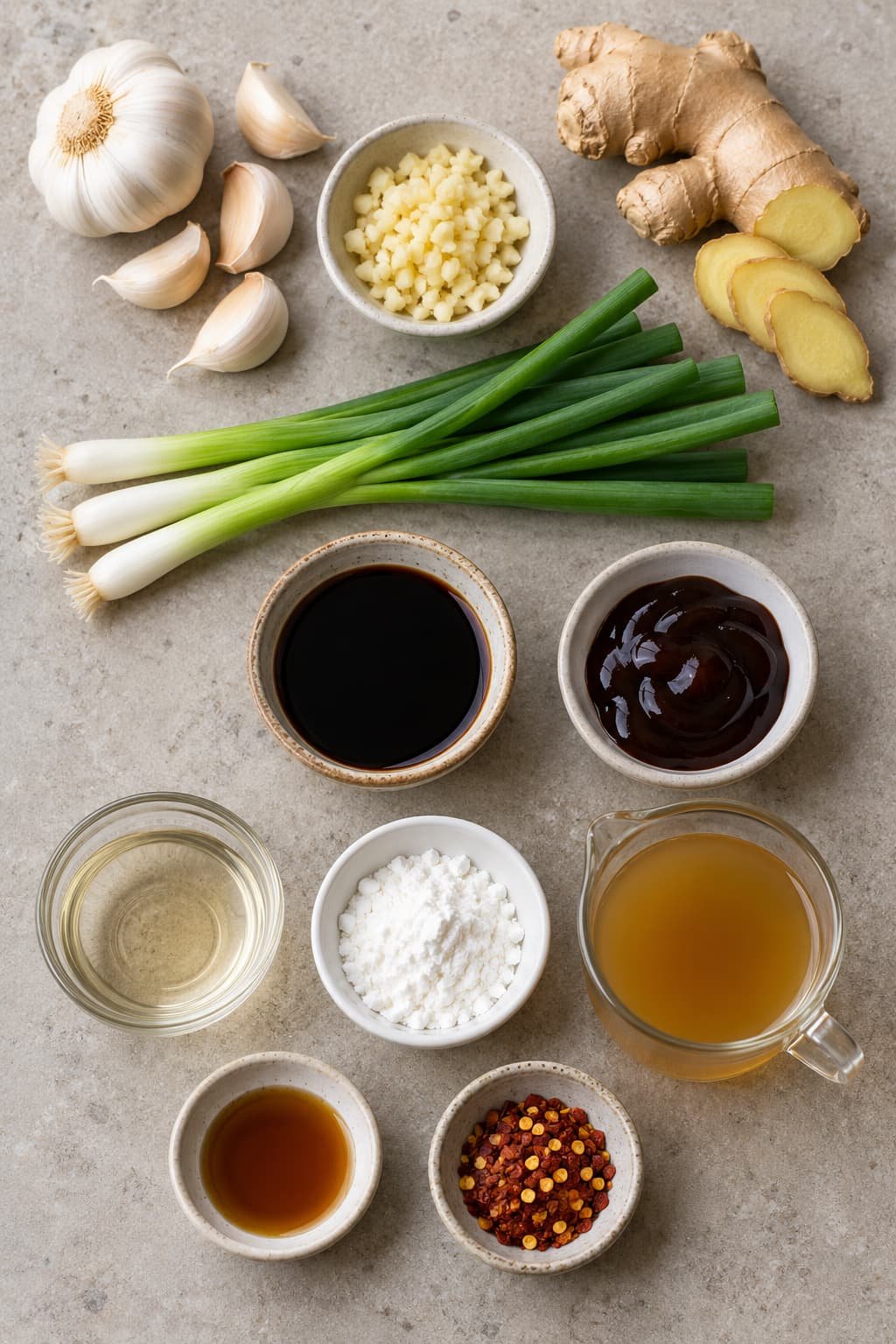
There is no universal ingredient list for garlic sauce used with beef. However, many versions combine ingredients that provide aroma, saltiness, sweetness, acidity, liquid, or thickening.
Garlic and Other Aromatics
Garlic is usually the main aromatic associated with the dish.
It may be minced, chopped, sliced, or crushed depending on the preparation. Finely cut garlic has a large amount of exposed surface area and can brown quickly during high-heat cooking. If it burns, it can develop bitter flavors, so cooking order and heat control may matter.
Ginger is also used in many stir-fry-style preparations. It provides a different sharp, aromatic character that can complement garlic.
Scallions are another possible addition. These ingredients are common in some versions, but neither ginger nor scallions should be treated as required components of every beef-with-garlic-sauce preparation.
Savory, Sweet, and Acidic Ingredients
Soy sauce is commonly used as part of the savory and salty base.
Formulations vary by product. For example, Kikkoman states that its traditionally brewed soy sauce is made from water, wheat, soybeans, and salt; some commercial versions may also contain additional ingredients such as preservatives. This is one reason ingredient labels should be checked rather than assuming every soy sauce has the same formulation.
The presence of wheat in some soy sauces is particularly relevant for people who need to avoid gluten. A product should not be considered gluten-free simply because it is labeled soy sauce; the individual ingredient list and gluten-free labeling should be checked.
Oyster sauce appears in some versions and can contribute savory character, sweetness, and body. It is not required in every preparation, and individual products can differ in formulation.
Broth or water may supply part of the liquid in the sauce. Broth can add additional flavor, while water provides liquid without the same added seasonings.
Sugar or another sweetener may also be included. The amount varies, so sweetness should not be presented as a defining feature of all garlic sauces.
Rice vinegar or another acidic ingredient may be used to add acidity and change the balance of the sauce. Some versions contain little or no added vinegar.
Sesame oil may also be included for aroma and flavor. Its presence is optional rather than essential.
Chili ingredients can be added when a hotter version is wanted. The type and amount vary by preparation.
What Role Does Cornstarch Play?
Cornstarch can be used as a sauce thickener and may also appear in coatings used on sliced beef.
When starch is dispersed in liquid and heated with sufficient water, its granules absorb water and swell. These changes increase the viscosity of the mixture, which is why cornstarch can thicken sauces and gravies. Food-science research describes starch swelling and pasting as important mechanisms behind this increase in viscosity, while University of Illinois Extension also identifies cornstarch as a common starch-based thickener that gelatinizes when heated with liquid.
For sauce thickening, cornstarch is commonly dispersed in cool liquid before being added to a hot mixture. Pre-dispersing starch can help reduce clumping compared with adding dry starch directly to hot liquid.
The amount needed is not universal. The quantity of liquid, moisture released by other ingredients, heating conditions, and desired consistency can all influence the result. A fixed starch-to-liquid ratio therefore should not be treated as appropriate for every beef-with-garlic-sauce preparation.
Cornstarch may also be included in some preparations as part of a coating on the beef before cooking. That use is different from adding starch specifically to thicken the sauce.
Not every version uses cornstarch. Preparations that use another thickener or no added thickener may have a different sauce consistency.
Which Cuts of Beef Are Commonly Used?
Several beef cuts can be used in stir-fry preparations rather than there being one universally preferred choice.
Flank steak is commonly suited to thin slicing and stir-frying. Skirt steak can also be stir-fried, and top sirloin appears frequently in beef stir-fry guidance. Beef. It’s What’s For Dinner specifically describes flank and skirt cuts as suitable for stir-frying and uses top sirloin in multiple stir-fry preparations.
The cut is only one factor. Slice thickness, grain direction, heat, and cooking duration can also influence how the beef cooks and how easy it is to chew.
Why Does Thin Slicing Matter?
Thinly sliced beef suits quick stir-fry cooking because smaller pieces heat through more quickly than thick steak portions under similar cooking conditions.
Beef stir-fry guidance commonly calls for meat to be cut into thin strips or small pieces before it enters the pan.
Thickness also affects consistency. If some pieces are much thinner than others, they may cook at different rates. This does not guarantee a particular texture, but more even slicing can make cooking behavior more predictable.
Why Is Beef Often Sliced Against the Grain?
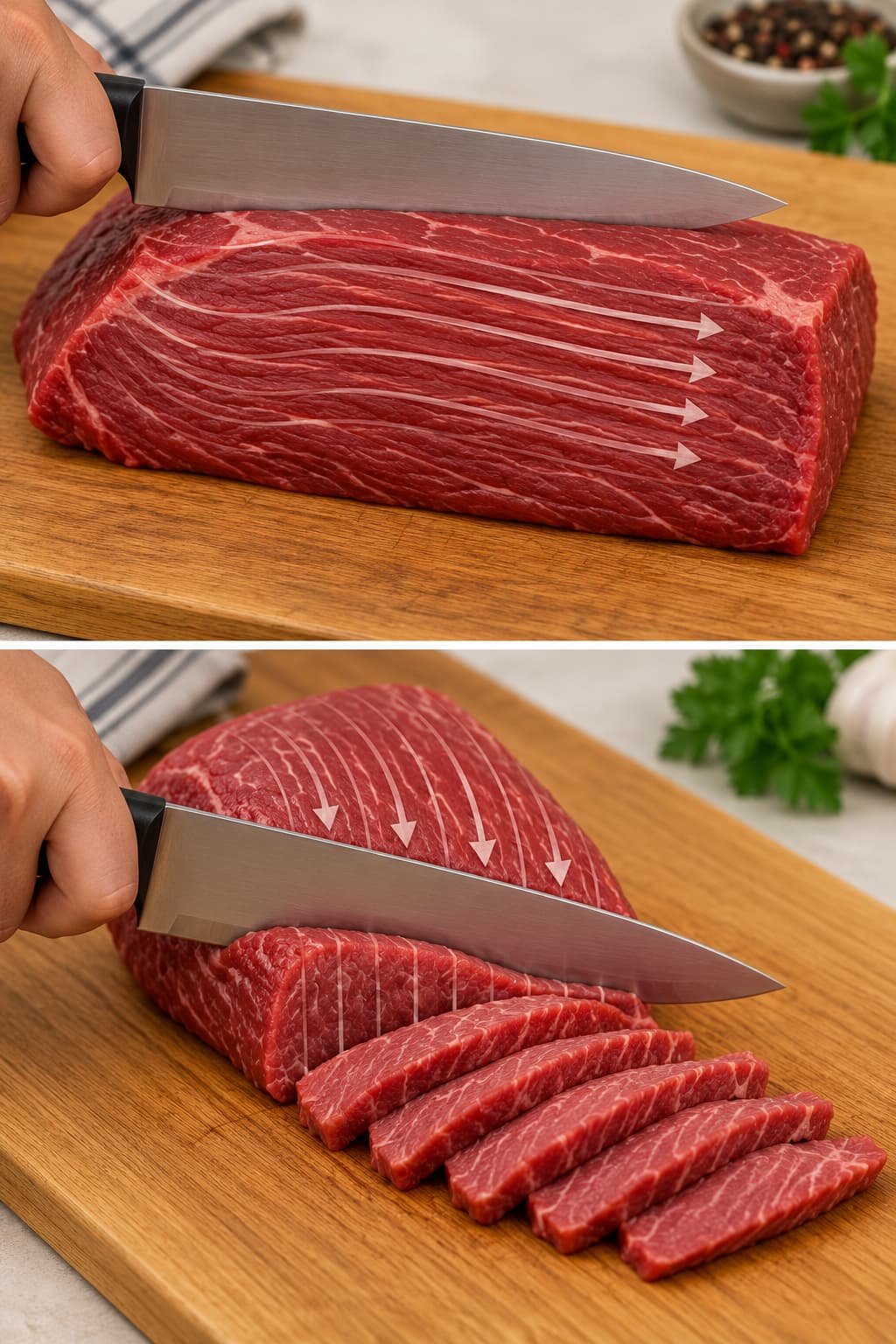
The grain is the visible direction of the muscle fibers in a piece of beef.
Slicing against the grain means cutting across those fibers rather than parallel to them. This shortens the muscle fibers within each slice, which can make the meat easier to chew.
University of Minnesota Extension specifically recommends slicing against the grain, noting that this is especially important for coarse-grained cuts such as skirt steak. Similar guidance is given for flank and skirt cuts by Beef. It’s What’s For Dinner.
Slicing direction is not the only factor that affects texture. The cut, thickness of the pieces, preparation method, and cooking conditions can also matter.
What Is Velveting, and Is It Necessary?
Velveting is a culinary term used for techniques intended to prepare meat for quick stir-frying and influence its surface texture and moisture retention. The exact method is not standardized across all sources.
Some approaches use starch and seasonings as a coating. Other versions may briefly pre-cook coated meat in oil or water before the final stir-fry. Because the term is used for several related techniques, velveting should not be treated as one fixed procedure.
Baking soda is also used in some stir-fry beef preparations. Canada Beef describes an alkaline baking-soda treatment as a velveting technique. Research on beef has also found that bicarbonate treatment can increase meat pH and water-holding capacity, although those findings do not establish one universal household velveting method.
The effect depends on factors such as concentration, treatment method, type of meat, and cooking conditions. For that reason, this article does not prescribe a baking-soda amount or treatment time.
Velveting is also optional. Beef with garlic sauce can be prepared without using a formal velveting technique.
How Is Beef with Garlic Sauce Commonly Cooked?
Beef with garlic sauce is commonly prepared using a stir-fry-style method in which the beef, vegetables, aromatics, and sauce may be cooked separately or in stages.
There is no single required sequence, so this section describes general cooking principles rather than a fixed recipe.
Preparing the Beef and Sauce
The beef is commonly cut into thin strips or small pieces before cooking. Depending on the preparation, it may also be seasoned, marinated, or lightly coated.
Sauce ingredients are often prepared before the pan is heated. This can be practical because stir-frying moves quickly once cooking begins.
Utah State University Extension recommends preparing ingredients in advance for stir-frying, while beef stir-fry guidance also treats preparation as an important part of the method.
Having the ingredients ready can reduce the need to stop and measure while beef, garlic, or vegetables are already cooking.
Cooking the Beef and Vegetables
A wok or skillet is commonly heated before the main ingredients are cooked. Some methods cook the beef first and remove it temporarily before cooking the vegetables, then return it to the pan later.
Cooking in stages can be useful because different ingredients do not necessarily need the same amount of heat exposure. Dense vegetables and thinly cut aromatics, for example, behave differently in a hot pan.
Pan capacity can also affect cooking. Utah State University Extension recommends cooking protein in batches to help keep the pan hot and advises against overcrowding a stir-fry pan because crowding encourages steaming.
In practical terms, adding a large amount of relatively cool or moist food at once can lower the temperature of the pan and increase the amount of moisture present. This may reduce browning compared with cooking smaller batches.
Adding and Thickening the Sauce
Sauce is commonly incorporated toward the later part of stir-frying, once the beef and vegetables have been cooked or are close to their intended texture. Utah State University’s general stir-fry method, for example, returns the protein to the pan before adding the sauce and starch-based glaze.
If cornstarch is included, heating it with liquid causes the starch to gelatinize and increase the viscosity of the sauce. University of Illinois Extension identifies cornstarch as a common thickening agent that gelatinizes when heated with liquid.
The resulting thickness can vary with the amount of starch and liquid, heating conditions, and moisture contributed by the other ingredients.
For that reason, this article does not provide a universal starch-to-liquid ratio or promise one specific sauce consistency.
What Vegetables Are Commonly Paired with Beef and Garlic Sauce?
There is no fixed vegetable combination for beef with garlic sauce. Depending on the preparation, it may include broccoli, bell peppers, onions, mushrooms, snow peas, carrots, scallions, or other vegetables commonly used in stir-fries.
The vegetable choice can also affect how the dish cooks. Vegetables contain water, and some of that moisture may enter the pan during cooking. How much this matters depends on the type of vegetable, its condition, the amount being cooked, and the cooking method.
Extra moisture may make browning more difficult or contribute to a thinner sauce, particularly when the pan is crowded or several moist ingredients are cooked together. This is a general cooking consideration rather than a guarantee that any particular vegetable will make the dish watery.
The vegetable component is therefore flexible rather than a defining feature of every version.
What Affects the Texture of the Beef and Sauce?
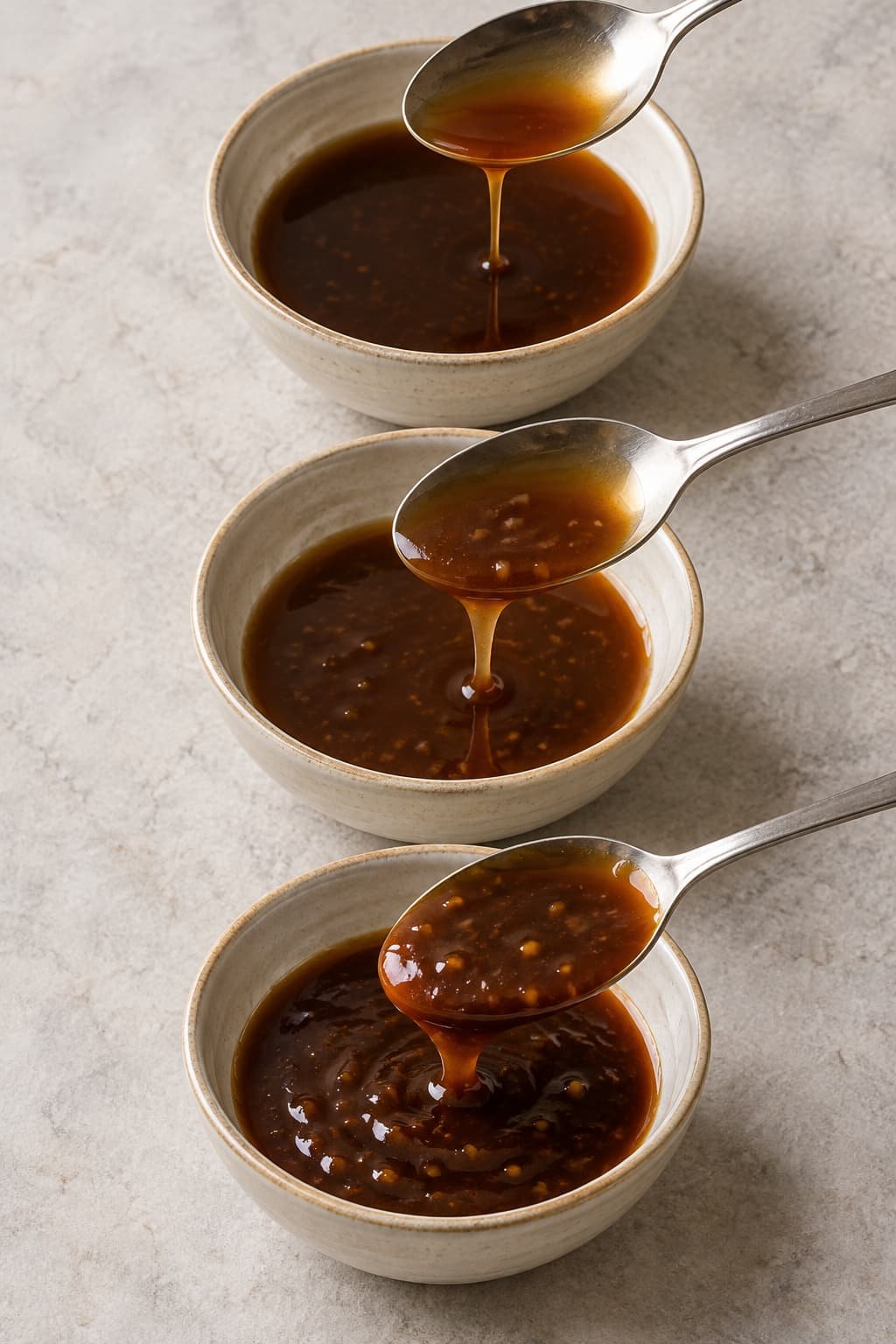
Several factors can influence beef texture and sauce consistency at the same time. These include the cut of beef, slice thickness, grain direction, heat exposure, moisture in the pan, and the balance between starch and liquid.
A texture problem should therefore not automatically be attributed to one ingredient or one cooking step.
Why Can Stir-Fried Beef Become Tough?
Stir-fried beef may be difficult to chew because of the cut, grain direction, slice thickness, or cooking conditions.
Slicing direction is one established factor. University of Minnesota Extension recommends cutting beef against the grain for easier eating and notes that this is especially important with coarse-grained cuts such as skirt steak. Cutting across the grain shortens the long muscle fibers within each slice.
Thickness can matter as well. Thin pieces generally heat through more quickly than thick pieces under similar conditions. If the slices vary considerably in thickness, they may cook at different rates.
Cooking time and temperature may also affect texture. Thin beef used for stir-frying is exposed to relatively rapid cooking, so extended heating can change the amount of moisture retained in the meat and its final texture.
No single factor explains every tough result. The cut, slice thickness, grain direction, and cooking method should be considered together.
Why Can Garlic Sauce Become Watery?
A garlic sauce may remain thin when there is a relatively large amount of liquid compared with the thickening ingredients.
Vegetables can contribute moisture to the pan as they cook. The amount varies by ingredient and cooking conditions, so this should not be treated as identical for every vegetable.
Pan crowding can also contribute to a wetter cooking environment. A large quantity of food can lower the temperature of the cooking surface and make moisture evaporation less efficient, which may encourage more steaming and less browning.
If cornstarch is used, heating is also important. Illinois Extension explains that cornstarch and other cereal starches gelatinize when mixed with liquid and heated, increasing the thickness of the mixture.
The final sauce consistency therefore depends on several interacting factors, including added liquid, moisture from other ingredients, starch concentration, and heating conditions.
Why Can a Sauce Become Too Thick?
A starch-thickened sauce may become very thick when there is a high proportion of starch relative to the available liquid.
Water loss can also make a sauce more concentrated. Illinois Extension notes that sauces can be thickened by evaporating water, which reduces the liquid volume while leaving the other components behind.
However, it would be misleading to say that a cornstarch sauce always becomes thicker the longer it cooks. Illinois Extension also notes that cornstarch-thickened mixtures can begin to thin if they are cooked too long or stirred too vigorously.
Sauce thickness therefore depends on the amount of starch and liquid as well as the heating and stirring conditions.
Why Can Garlic Taste Bitter?
Excessive browning or burning is one possible reason garlic develops a bitter flavor.
Finely cut garlic can scorch quickly under strong heat because more of its surface is exposed to the pan. Serious Eats specifically identifies burned garlic as a cause of bitterness and notes that minced, grated, or thinly sliced garlic can burn particularly easily.
This matters in stir-frying because the beef or dense vegetables may tolerate longer heat exposure than finely chopped garlic.
A bitter flavor does not prove that the entire sauce formulation is incorrect. Over-browned or scorched garlic is simply one possible cause to consider.
How Can Beef with Garlic Sauce Vary?
There is no single standardized formula for the dish. The vegetables, sauce ingredients, sweetness, acidity, and amount of chili heat can vary between preparations.
Some versions contain a large amount of broccoli, while others may include mushrooms, onions, bell peppers, carrots, snow peas, or a mixture of vegetables.
Spicy versions may use fresh chilies, dried chili flakes, chili oil, or another chili-based ingredient. Other preparations may contain little or no chili heat.
The balance of the sauce can vary as well. Depending on the ingredients, it may be predominantly savory or include noticeable sweetness or acidity.
These differences are best understood as variations rather than fixed versions. Broccoli, mushrooms, chili, and particular sweeteners are not required ingredients in every preparation.
How Is Beef with Garlic Sauce Different from Beef and Broccoli?
The two dishes can overlap, but their names generally emphasize different elements.
Beef with garlic sauce places the garlic-forward sauce at the center of the description, while the vegetable combination can vary. Broccoli may be included, but it is not required.
Beef and broccoli specifically centers the pairing of beef and broccoli. Its sauce can still contain garlic and other ingredients commonly used in stir-fry sauces.
The distinction is not absolute. Restaurant and home preparations vary, so a beef-and-broccoli dish may have a strong garlic flavor, while a garlic-beef dish may contain a substantial amount of broccoli.
It is therefore more useful to view the distinction as a difference in emphasis rather than as a strict culinary rule.
What Should You Consider Before Making Substitutions?
A substitution can change more than one characteristic of the dish. Replacing a sauce ingredient may affect saltiness, sweetness, acidity, aroma, or consistency. Changing vegetables can also alter texture and the amount of moisture released during cooking.
For this reason, different ingredients should not automatically be treated as interchangeable at a fixed ratio.
Can Oyster Sauce Be Omitted?
Yes. Oyster sauce appears in some versions, but it is not required in every preparation.
Removing it can change the sauce’s flavor and consistency, depending on what other ingredients are present and on the formulation of the oyster sauce being replaced.
A mushroom-based stir-fry sauce is one possible alternative when oyster sauce is being avoided. It should not, however, be considered an exact replacement because commercial products can differ in flavor, sweetness, saltiness, ingredients, and consistency.
For anyone managing a food allergy or another dietary restriction, FDA guidance supports checking the complete ingredient information on packaged foods rather than relying only on the product name.
Can Beef with Garlic Sauce Be Made Gluten-Free?
Potentially, but every packaged ingredient needs to be checked.
Soy sauce requires particular attention. The FDA states that soy sauce is ordinarily produced by fermenting soybeans and wheat, although some soy sauces are made without wheat or otherwise meet the requirements for a gluten-free claim.
Other packaged ingredients, such as bottled stir-fry sauces and broths, can also differ by manufacturer. A product should not be assumed to be gluten-free simply because another product in the same category is suitable.
The same caution applies to tamari. Formulations vary, so the label and any gluten-free claim should be checked for the specific product being used.
In the United States, foods voluntarily labeled “gluten-free” must meet FDA requirements, including having less than 20 parts per million of gluten and meeting restrictions concerning gluten-containing ingredients.
What Should You Know About Food Safety and Leftovers?
Raw beef should be kept separate from cooked foods and foods that will be eaten without further cooking. USDA/FSIS recommends following the basic Clean, Separate, Cook, and Chill food-safety practices to reduce cross-contamination and other food-safety risks.
USDA lists different minimum internal temperatures depending on the form of beef:
- Beef steaks, chops, and roasts: 145°F (62.8°C) followed by at least a 3-minute rest
- Ground beef: 160°F (71.1°C)
These temperatures should be measured with a food thermometer.
USDA’s consumer temperature chart does not list thin stir-fry beef strips as a separate category. For that reason, this article does not assign a separate unverified temperature specifically to stir-fry strips. USDA does advise using a food thermometer for meat, including inserting the thermometer from the side when checking thin pieces where necessary.
After cooking, perishable leftovers should be refrigerated within 2 hours, or within 1 hour when the surrounding temperature is above 90°F (32.2°C). Refrigerated foods should be kept at 40°F (4.4°C) or below.
USDA recommends using most cooked leftovers, including cooked beef, within 3 to 4 days when properly refrigerated.
When leftovers are reheated, USDA recommends heating them to 165°F (73.9°C) as measured with a food thermometer.
These temperatures and storage periods come from USDA food-safety guidance. They are not estimates based on this particular dish or on personal testing.
What Should You Consider Before Adapting Beef with Garlic Sauce?
Changes to one part of the dish can affect several others, so substitutions should not automatically be treated as equivalent.
Different beef cuts can behave differently during quick cooking. A cut that works well when sliced thinly may not respond the same way if it is cut into thicker pieces. Slice thickness can also affect how quickly the beef cooks and how easy it is to manage alongside vegetables and sauce.
Vegetables can change both texture and moisture. Ingredients such as mushrooms, zucchini, or frozen vegetables may release additional liquid, while firmer vegetables may need more cooking time. This can affect browning and sauce consistency.
Soy sauces also vary in saltiness, color, and formulation. Replacing one product with another can therefore change the balance of the sauce even when the same quantity is used.
Omitting oyster sauce may reduce some of the savory, sweet, or full-bodied character it contributes in recipes that use it. A substitute may provide some similar functions, but it should not be assumed to taste or behave exactly the same.
Changing the amount or type of starch can affect sauce thickness. More starch can create a thicker consistency, while less starch may produce a thinner sauce. The amount of liquid and moisture released by other ingredients also matters.
Garlic quantity can affect both flavor and cooking behavior. Increasing the amount of finely chopped garlic also increases the amount of garlic exposed to the hot pan, which may raise the chance of excessive browning or scorching if the cooking method is not adjusted.
Liquid quantity matters for similar reasons. Adding more broth, water, or another liquid can thin the sauce, while reducing liquid can make the sauce more concentrated.
The main point is that substitutions are connected. Changing one ingredient may alter flavor, moisture, texture, cooking time, or sauce consistency, so a replacement should not be assumed to produce the same result.
Frequently Asked Questions
Is Beef with Garlic Sauce Always Spicy?
No. Chili heat depends on the preparation.
Some versions include fresh chilies, dried chili flakes, chili oil, or another spicy ingredient, while others rely mainly on garlic, soy sauce, ginger, and other savory seasonings.
Garlic can taste pungent, but that is different from chili heat.
Can Ground Beef Be Used Instead of Sliced Beef?
Ground beef can be combined with a garlic-based sauce, but the result will differ from a dish made with thin strips of steak.
Ground beef breaks into smaller pieces as it cooks and can release fat and moisture differently from sliced beef. It also requires different food-safety handling; USDA guidance lists 160°F (71.1°C) as the minimum internal temperature for ground beef.
Using ground beef therefore creates a different style of dish rather than a direct texture match for sliced garlic beef.
Does Beef with Garlic Sauce Have to Contain Broccoli?
No. Broccoli is common in some versions, but it is not required.
Other preparations may use bell peppers, onions, mushrooms, carrots, snow peas, scallions, or a combination of vegetables.
The garlic-forward sauce is more central to the identity of the dish than any one vegetable.