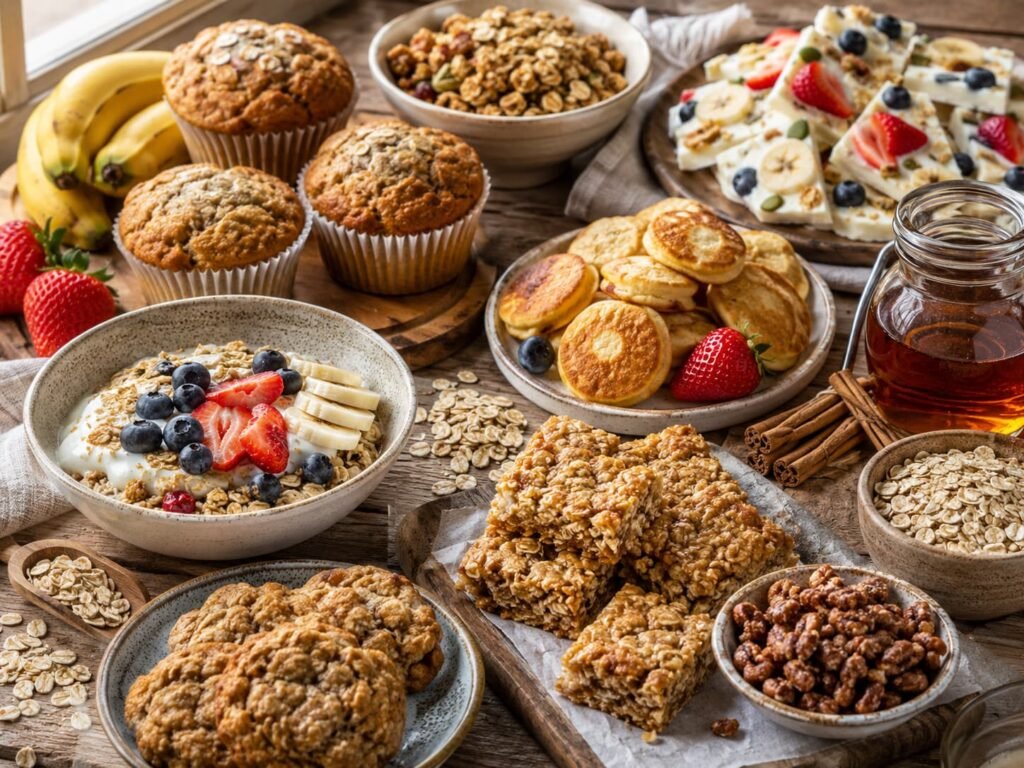
Maple treats are sweet foods flavored with maple syrup, maple sugar, or another maple-based ingredient. They can include cookies, bars, cakes, no-bake snacks, candies, glazes, coated nuts, and other desserts.
The ingredients and preparation method depend on the type of treat. A baked cookie has different structural needs from a no-bake oat bite or maple candy, so maple-based sweets should not all be prepared in the same way.
What Are Maple Treats?
The term “maple treats” describes a broad group of sweets rather than one specific recipe.
Some use pure maple syrup for both sweetness and flavor. Others may use maple sugar or maple flavoring, depending on the type of dessert and how much additional liquid the recipe can support.
Preparation methods also vary. Cookies, muffins, cakes, and many bars are baked. Some snack bites and clusters can be made without baking, while maple candy, fudge, and taffy use candy-making methods in which heating and sugar concentration can be important.
What Types of Maple Treats Can You Make?
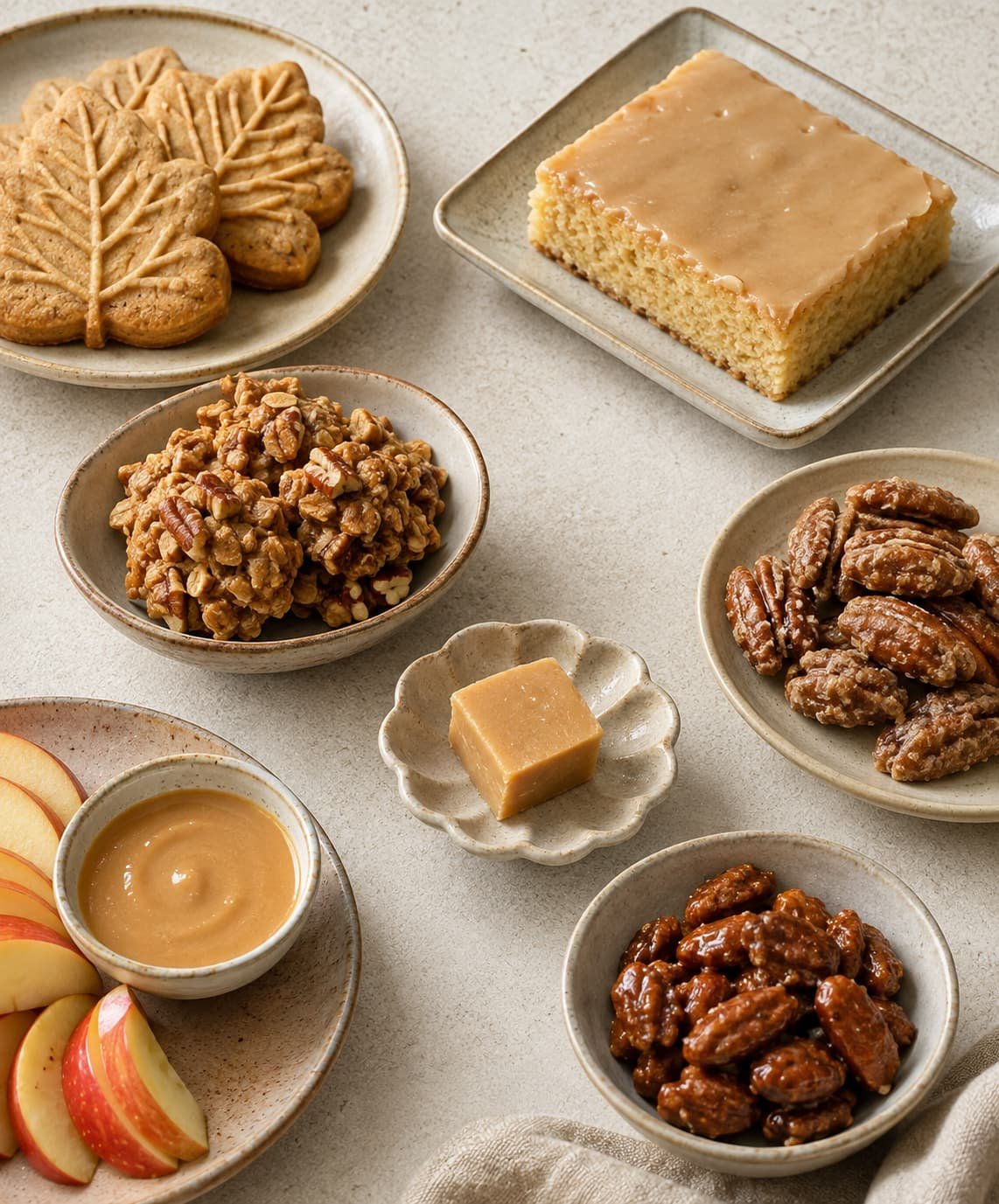
Maple can be used in baked desserts, no-bake snacks, candies, coatings, and toppings. The main differences are the ingredients, structure, and preparation method.
Maple Cookies, Bars, and Baked Treats
Cookies, bars, muffins, cakes, and quick breads are common baked formats for maple flavor.
Depending on the recipe, they may use maple syrup, maple sugar, or maple flavoring along with ingredients such as flour, oats, fats, eggs, nuts, chocolate, fruit, vanilla, or spices.
If maple syrup is used, its liquid content needs to be considered as part of the overall formula. A recipe designed around maple syrup may behave differently from one in which a dry sweetener has simply been replaced.
No-Bake Maple Treats
No-bake options can include oat bites, nut-based mixtures, chocolate clusters, chilled bars, and similar snacks.
Ingredients such as oats, nut butter, ground nuts, seeds, coconut, dried fruit, or chocolate may provide bulk or help the mixture hold together.
Consistency depends on the complete combination of ingredients. A mixture with relatively more liquid may be softer or stickier, while one with more dry ingredients may become firmer or more crumbly.
There is no universal correction that works for every no-bake mixture, so exact proportions should come from a specific recipe rather than guesswork.
Maple Candy, Fudge, and Taffy
Maple candy, fudge, and taffy differ from ordinary baked or no-bake sweets because their preparation can depend on controlled heating, concentration, cooling, and crystallization.
Maple taffy is traditionally associated with Québec and other maple-producing regions. It is made from concentrated maple syrup that is cooled rapidly, traditionally on packed snow or crushed ice.
These preparations are better followed from candy-specific instructions rather than adapted from general baking methods. Exact temperatures, cooking times, and ratios depend on the particular candy being made.
Maple Glazes, Coated Nuts, and Dessert Toppings
Maple flavor can also be added without preparing a complete cake, cookie, or candy.
A maple glaze may be used on muffins, cakes, quick breads, cookies, and other baked goods. Its thickness depends on the other ingredients and the amount of liquid in the formula.
Nuts can also be combined with a maple-based coating, sometimes with spices or chocolate.
Pure maple syrup may also be used as a topping for fruit, yogurt, ice cream, pancakes, or baked desserts. These uses differ from candy making because they do not necessarily require the same sugar-concentration techniques.
What Ingredients Are Commonly Used in Maple Treats?
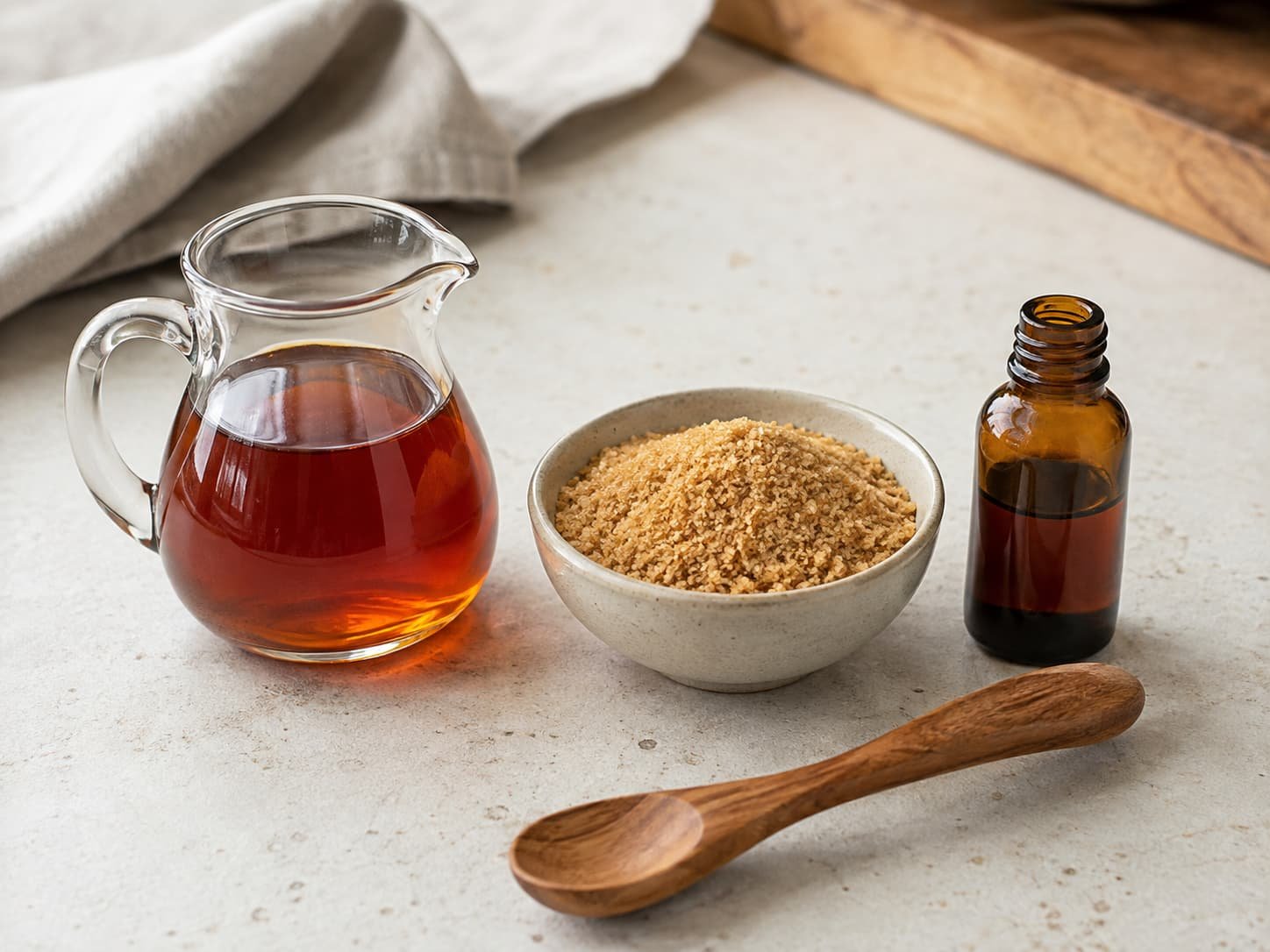
There is no single ingredient list for all maple-flavored sweets. The ingredients depend on whether the preparation is baked, no-bake, candy-based, or used as a topping.
Pure Maple Syrup, Maple Sugar, and Maple Flavoring
Pure maple syrup is a liquid sweetener made by concentrating maple sap. It can contribute both sweetness and maple flavor.
Because it is liquid, it can also affect the wet-to-dry balance of a recipe when used in place of a dry sweetener.
Maple sugar is a dry maple-based sweetener. It provides maple flavor without adding liquid in the same way syrup does.
Maple extract or flavoring may be used to add maple character without relying entirely on syrup. Concentration varies by product, so the amount should follow the recipe or manufacturer directions.
These ingredients should not automatically be treated as interchangeable. Syrup adds liquid, maple sugar is dry, and concentrated flavorings are generally used in much smaller amounts.
Common Supporting Ingredients
Other ingredients may provide structure, texture, richness, or complementary flavor.
Common examples include:
- Flour and oats for structure or bulk in baked goods and snack mixtures.
- Butter or other fats for richness and texture.
- Eggs for binding and structure in many baked desserts.
- Pecans or walnuts for texture and nutty flavor.
- Chocolate in cookies, bars, clusters, coatings, or candies.
- Apple or banana for added flavor and, depending on the preparation, moisture.
- Cinnamon and vanilla as complementary flavors.
The role of each ingredient changes with the recipe. Oats, for example, may provide bulk in a no-bake mixture but serve a different purpose in a baked cookie or bar.
How Does Maple Syrup Affect Baking and Dessert Texture?
Maple syrup can affect a recipe because it contributes both sweetness and liquid.
When it replaces a dry sweetener, the added liquid may change the consistency of a batter or dough. The effect depends on the complete formula, including flour, fat, eggs, other sweeteners, and additional liquids.
Maple syrup can also influence browning during baking. However, there is no single temperature adjustment or texture outcome that applies to every maple-based dessert.
Its liquid form may make some batters looser or some doughs less firm, but it would be unreliable to claim that maple syrup always makes a finished dessert softer, chewier, moister, or denser.
Those characteristics depend on the full recipe and preparation method.
Can Maple Syrup Replace Granulated Sugar?
Maple syrup can replace granulated sugar in some recipes, but it is not automatically a one-to-one substitution.
Granulated sugar is dry, while maple syrup adds liquid. Replacing one with the other can therefore affect moisture balance, batter or dough consistency, browning, and structure.
The necessary adjustments depend on the recipe. A cookie, muffin, cake, and candy formula may not respond to the substitution in the same way.
A recipe already developed for maple syrup is generally a more reliable starting point than replacing granulated sugar by guesswork.
How Do You Choose Maple Syrup for Desserts?
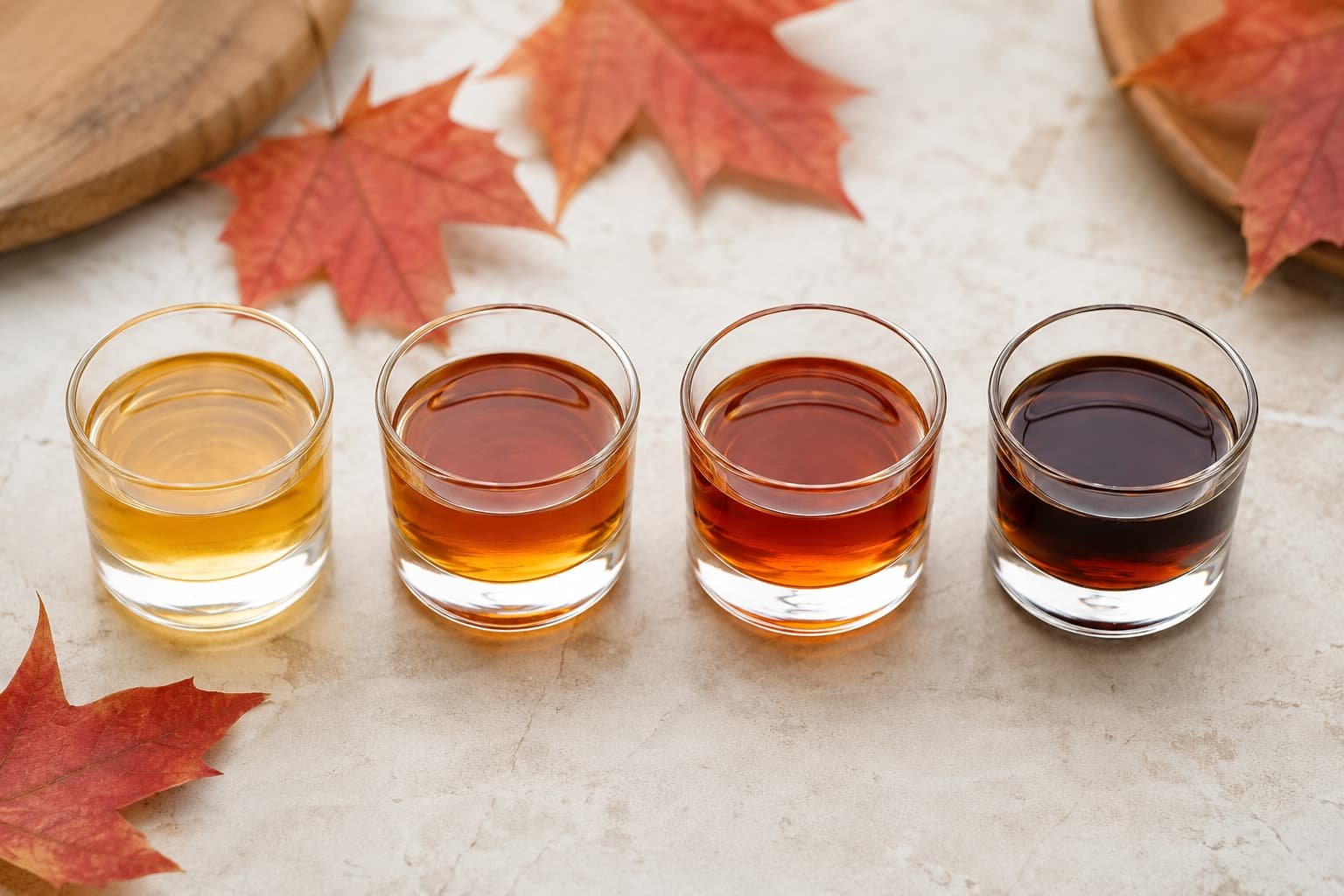
Two useful factors are the intensity of the maple flavor and whether the product is pure maple syrup or another type of table syrup.
Lighter vs. Stronger Maple Flavors
Grade A maple syrup is classified into four color and flavor groups:
- Golden, Delicate Taste
- Amber, Rich Taste
- Dark, Robust Taste
- Very Dark, Strong Taste
Lighter syrup has a more delicate maple character, while darker syrup has a stronger flavor.
A lighter option may suit a dessert where maple is intended to remain subtle. A darker syrup may be easier to notice when other ingredients have stronger flavors.
There is no single grade that is automatically better for every dessert. The choice depends on the recipe and how prominent the maple flavor is intended to be.
Pure Maple Syrup vs. Maple-Flavored Pancake Syrup
Pure maple syrup and pancake syrup should not automatically be treated as the same ingredient.
Pure maple syrup comes from concentrated maple sap. Commercial pancake or table syrups may contain other sweeteners, flavorings, or additional ingredients.
Because formulations vary, flavor, sweetness, thickness, and recipe behavior may also differ.
Checking the ingredient label is the clearest way to identify what type of syrup is being used. If a recipe specifically calls for pure maple syrup, replacing it with another syrup may change the result.
What Flavors Pair Well with Maple?
Maple can be combined with many dessert ingredients. The most suitable pairing depends on how prominent the maple flavor should be.
Common options include:
- Pecans and walnuts for nutty flavor and texture.
- Chocolate for a stronger contrasting flavor.
- Apple and banana in cakes, muffins, bars, and other baked goods.
- Cinnamon for a warm spice note.
- Vanilla as a milder complementary flavor.
These are pairing ideas rather than fixed rules. Strong chocolate, heavily flavored nut butter, or large amounts of spice may make maple less noticeable, while milder ingredients may allow it to stand out more clearly.
What Should You Consider Before Making Maple Treats?
Start with the preparation method and the form of maple being used.
A baked dessert depends on the balance of flour, fat, eggs, sweeteners, and liquids. If maple syrup is part of the recipe, its liquid content needs to be included in that balance.
A no-bake treat may depend more on oats, nuts, nut butter, chocolate, or other ingredients for structure. In this type of preparation, the amount of liquid can influence whether the mixture is firm, soft, sticky, or crumbly.
Flavor intensity also matters. A delicate maple syrup may suit a lightly flavored dessert, while a stronger syrup may remain more noticeable alongside chocolate, spices, or other pronounced flavors.
A practical approach is to choose a recipe that already accounts for the type of maple ingredient being used rather than assuming maple syrup, maple sugar, and other sweeteners can be exchanged freely.
Why Can Maple Treats Become Too Sticky, Dry, or Mild in Flavor?
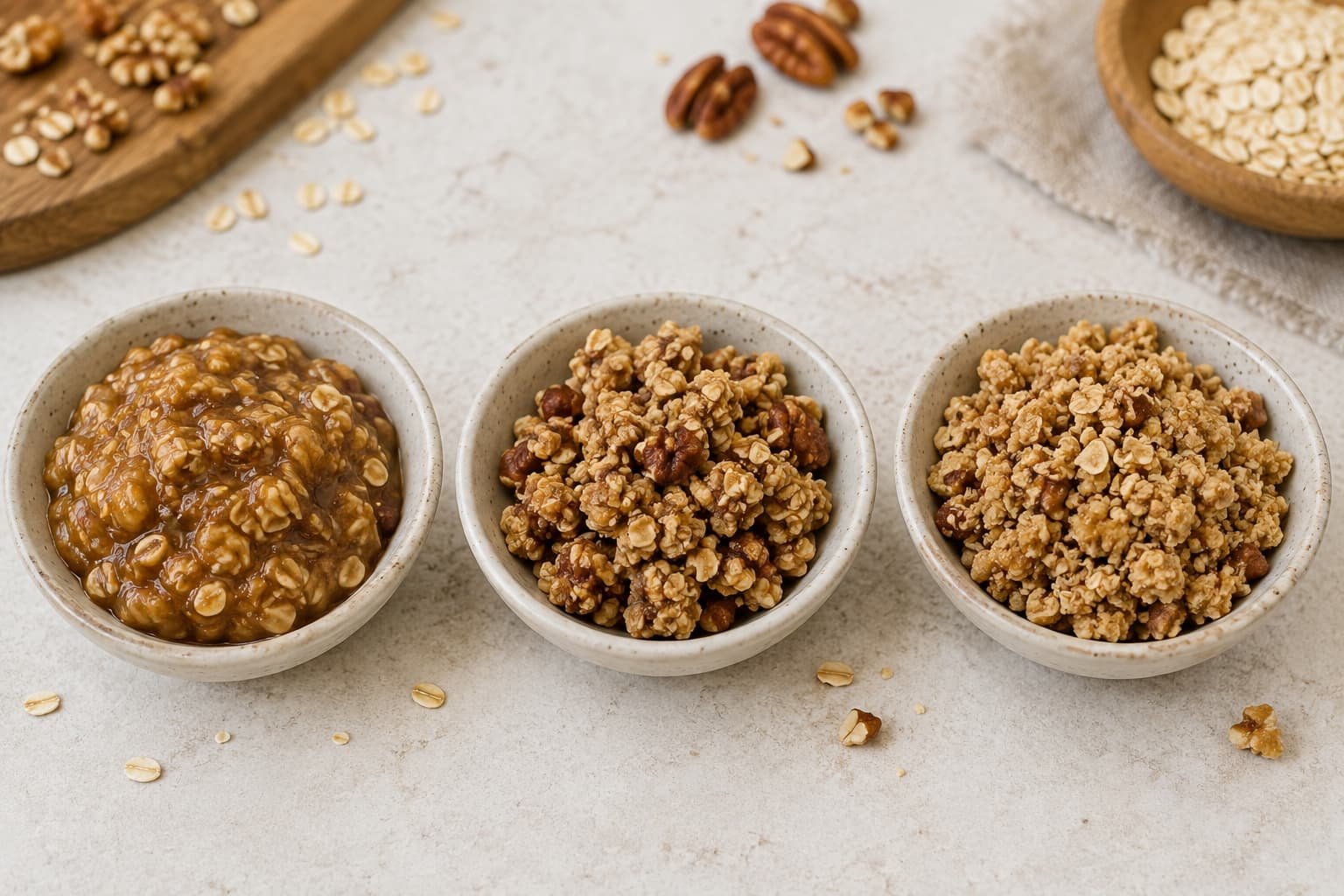
These problems usually involve the overall ingredient balance rather than maple syrup alone.
Too Much or Too Little Liquid
Because maple syrup adds liquid, the amount used can affect consistency.
A mixture with relatively more liquid may become looser or stickier. A mixture with a higher proportion of dry ingredients may become firmer or more crumbly.
The correct balance varies by recipe, so there is no reliable universal fix such as adding a fixed amount of flour, oats, or syrup.
Ingredient Balance
Flour, oats, fats, eggs, nut butter, nuts, and other ingredients contribute differently to structure and consistency.
In baked goods, flour helps provide structure, eggs may contribute binding and structure, and fats can affect tenderness and mouthfeel.
No-bake preparations work differently. Oats, nuts, nut butter, or chocolate may help provide bulk or structure, but the final consistency depends on the complete mixture.
A dry or sticky result should therefore not automatically be blamed on one ingredient.
Other Flavors Overpowering Maple
Maple flavor may become less noticeable when stronger ingredients are used in large amounts.
Chocolate, nut butter, and spices can all work with maple, but they may compete with it depending on the proportions.
If maple is intended to be the main flavor, using strongly flavored additions more moderately may help it remain noticeable. If the goal is a more complex flavor combination, stronger ingredients may be appropriate.
Frequently Asked Questions About Maple Treats
Do Maple Treats Have to Be Baked?
No. Maple-flavored sweets can be baked, made without baking, or prepared using candy-making methods.
Cookies, muffins, cakes, quick breads, and many bars are baked. No-bake options can include oat bites, nut mixtures, chocolate clusters, and chilled snacks.
Candy-style sweets such as maple taffy use heating and concentration rather than oven baking.
What Are Traditional Maple Treats?
Traditional maple sweets can include maple taffy, maple candy, maple cream, maple sugar, and maple fudge.
Maple taffy is particularly associated with Québec maple traditions and is traditionally cooled on compacted snow or crushed ice after the syrup has been further concentrated.
Candy-style maple products differ from ordinary cookies and cakes because temperature, concentration, cooling, and crystallization may play a larger role in their preparation.
Can Chocolate and Maple Be Used Together?
Yes. Chocolate and maple can be combined in bars, clusters, coatings, candies, cookies, and other baked goods.
The balance depends on the type and amount of chocolate used. A strong chocolate flavor may make maple less noticeable, while a smaller amount may allow both flavors to remain distinct.
There is no universal ideal ratio.
What Are Some Simple Maple Treat Ideas With Few Ingredients?
Simple maple-flavored ideas may include:
- maple syrup with nuts
- maple syrup with oats and nut butter
- maple with chocolate and nuts
- a maple-based glaze
- maple syrup with fruit or yogurt
- maple-flavored oat or nut clusters
These are general ideas rather than tested recipes. Exact quantities and preparation methods depend on the specific treat being made.