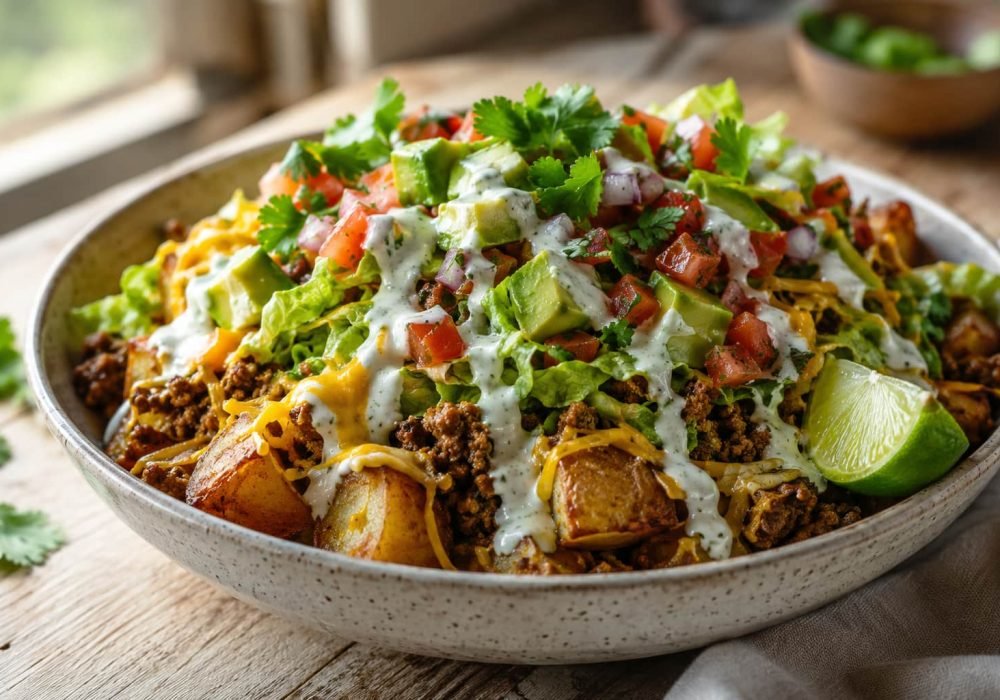
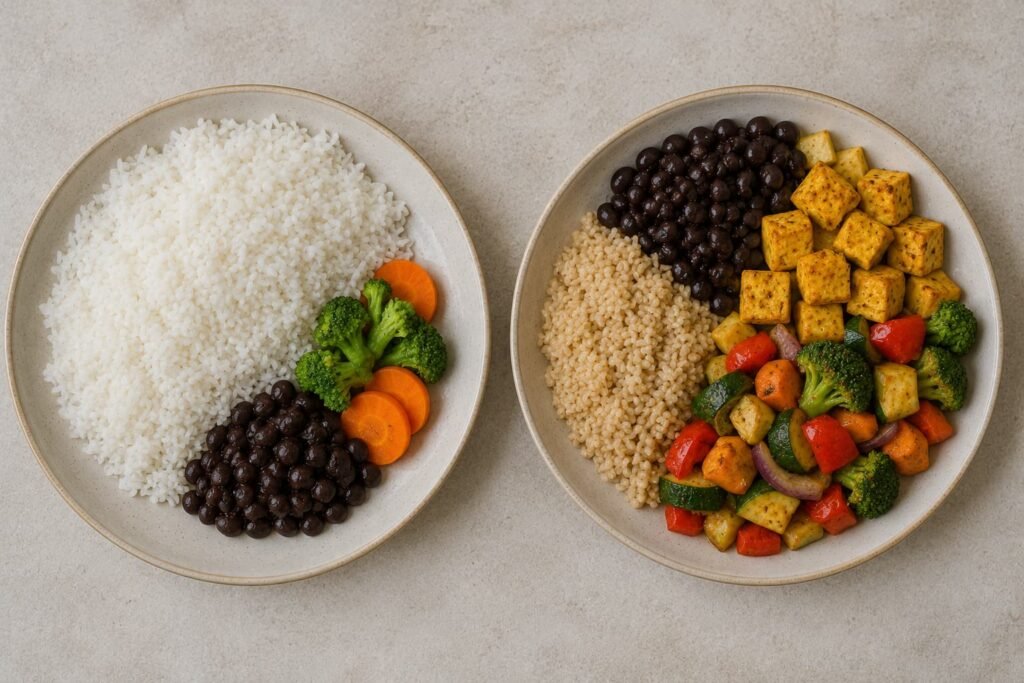
High-protein vegetarian meals do not need to rely on protein powder, premium meat substitutes, or expensive specialty products. Affordable staples such as lentils, beans, tofu, eggs, cottage cheese, and Greek yogurt can provide substantial protein, while oats, brown rice, potatoes, and whole-wheat pasta help turn them into complete, satisfying meals.
To keep the comparisons consistent, a meal qualifies for this collection only when its finished recipe provides at least 15 grams of protein per measured serving. Estimated costs are calculated from the amount of each ingredient used, based on regular U.S. supermarket prices recorded for this guide rather than temporary discounts. Actual costs will vary by store, brand, season, and location.
In this article, “vegetarian” means that the meals contain no meat, poultry, or seafood, but some use eggs or dairy. Practical vegan substitutions are identified where appropriate, along with any likely changes to protein, price, flavor, or texture.
Quick Answer: What Are the Best Cheap High-Protein Vegetarian Meals?
Practical budget choices combine two affordable protein sources, such as lentils with eggs, beans with cottage cheese, or tofu with edamame. Good options include three-bean textured vegetable protein (TVP) chili, white bean shakshuka, tofu-lentil curry, and cottage cheese pasta bake. Each provides at least 15 grams of protein per measured serving without protein powder.
Cheap High-Protein Vegetarian Meals at a Glance
The comparison table below helps readers choose a meal according to protein, cost, cooking time, dietary needs, and freezer suitability. Protein and cost are shown for one measured serving, not for the entire recipe. Because ingredient prices vary between stores and locations, the figures should be treated as consistent estimates rather than guaranteed prices.
Editorial instruction: Do not publish the table until every cell contains a verified value. Remove this instruction before publication.
| Meal | Serving size | Protein | Cost per serving | Total time | Main protein | Vegan option | Freezer-friendly |
| Three-Bean TVP Chili | Verify | Calculate | Calculate | Test | Beans and textured vegetable protein | Yes | Test |
| Red Lentil Bolognese | Verify | Calculate | Calculate | Test | Lentils and whole-wheat pasta | Yes | Test |
| Lentil and Egg Curry | Verify | Calculate | Calculate | Test | Lentils and eggs | No | Test |
| Split Pea Soup with Cottage Cheese Toast | Verify | Calculate | Calculate | Test | Split peas and cottage cheese | Test a vegan variation | Soup only |
| Black Bean Enchilada Casserole | Verify | Calculate | Calculate | Test | Black beans and cottage cheese | Test a vegan variation | Test |
| White Bean Shakshuka | Verify | Calculate | Calculate | Test | White beans and eggs | Test with tofu | Freeze sauce separately |
| Chickpea Flour Vegetable Pancakes | Verify | Calculate | Calculate | Test | Chickpea flour and yogurt | Use tested dairy-free sauce | Test |
| Lentil Shepherd’s Pie | Verify | Calculate | Calculate | Test | Lentils | Yes | Test |
| Peanut Tofu Cabbage Rice Bowls | Verify | Calculate | Calculate | Test | Tofu and peanuts | Yes | Refrigerate |
| Tofu and Lentil Curry | Verify | Calculate | Calculate | Test | Tofu and lentils | Yes | Test |
| Tofu Black Bean Taco Casserole | Verify | Calculate | Calculate | Test | Tofu and black beans | Yes | Test |
| Edamame Tofu Noodle Soup | Verify | Calculate | Calculate | Test | Edamame and tofu | Yes | Freeze without noodles |
| TVP Sloppy Joes | Verify | Calculate | Calculate | Test | Textured vegetable protein | Yes | Freeze filling only |
| Cottage Cheese Spinach Pasta Bake | Verify | Calculate | Calculate | Test | Cottage cheese | No | Test |
| Egg and Cottage Cheese Potato Frittata | Verify | Calculate | Calculate | Test | Eggs and cottage cheese | No | Test |
| Black Bean and Egg Breakfast Burritos | Verify | Calculate | Calculate | Test | Black beans and eggs | No | Test |
| Greek Yogurt Chickpea Stuffed Potatoes | Verify | Calculate | Calculate | Test | Chickpeas and Greek yogurt | Test a dairy-free filling | Freeze filling only |
| Broccoli Cheddar Lentil Soup | Verify | Calculate | Calculate | Test | Lentils and cheese | Test a vegan variation | Test |
| Lentil Mushroom Meatballs with Spaghetti | Verify | Calculate | Calculate | Test | Lentils and whole-wheat pasta | Yes if made without eggs | Test |
| Creamy Chickpea and Green Pea Pasta | Verify | Calculate | Calculate | Test | Chickpeas and peas | Test a dairy-free sauce | Refrigerate |
| Bean and Cheese Quesadillas | Verify | Calculate | Calculate | Test | Beans and cheese | Test a vegan variation | Freeze filling only |
How We Defined Cheap and High Protein
A meal is included only when its final formulation satisfies both standards. It must meet the article’s maximum cost per serving and provide at least 15 grams of protein in one measured serving. A dish should not be labelled cheap or high protein merely because it contains beans, lentils, tofu, or eggs. The complete quantity, yield, and serving size determine whether the claim is accurate.
What Counts as a Cheap Meal?
For this guide, cost is measured per serving rather than by the amount paid at checkout. When a recipe uses only part of a package, the calculation includes only the quantity used. For example, if one cup of rice is taken from a larger bag, the recipe receives the cost of that cup instead of the price of the entire bag.
All prices must be collected from the same national US supermarket, using one ZIP code and one research date. Regular prices should be used instead of sales, digital coupons, introductory offers, membership discounts, or bulk-club pricing. Temporary promotions might make a meal appear cheaper, but readers in another location or shopping week may not receive the same price.
Pantry ingredients must also be counted. Oil, flour, spices, dried herbs, salt, sauces, and condiments may contribute only a small amount individually, but treating them as free across 21 meals would produce misleading serving costs.
What Counts as High Protein?
There is no single universal protein cutoff for a complete meal. For this guide, a recipe qualifies as a high-protein vegetarian meal only when it provides at least 15 grams of protein in one measured main-meal serving. Most recipes are intended to fall within the more substantial range of approximately 20 to 30 grams per serving.
Protein is calculated from the exact quantity of every ingredient in the finished recipe and then divided by the confirmed yield. Suggested toppings, optional ingredients, and side dishes are excluded unless they are included in the stated serving. This prevents a lower-protein dish from appearing higher in protein because of extras the reader may not use.
The 15-gram minimum is the editorial standard for this collection, not a universal dietary recommendation. Nutrition estimates are calculated using USDA FoodData Central and relevant manufacturer labels. Values may differ between brands, particularly for tofu, cottage cheese, Greek yogurt, bread, pasta, and vegetarian meat substitutes.
Changing an ingredient, quantity, yield, or serving size can change the final protein value. Any modified version must therefore be calculated again before it is described as high protein.
What Does Vegetarian Mean in This Guide?
In this guide, vegetarian refers to lacto-ovo vegetarian meals. The recipes contain no meat, poultry, fish, or seafood, but some include eggs and dairy products such as cottage cheese, Greek yogurt, milk, and cheddar.
Ingredient labels still need careful checking. Meat-based broth, gelatin, cheese made with animal-derived rennet, and some varieties of Worcestershire sauce are not suitable for every vegetarian diet. The finished recipes should use vegetarian-certified versions or clearly named alternatives where these ingredients are relevant.
Meals that are naturally vegan are identified separately. A vegan variation is included only when a specific replacement can preserve the basic flavor, structure, and purpose of the original meal. Simply removing eggs, yogurt, or cheese may lower the protein content or leave the dish dry, loose, or incomplete.
Every vegan substitution must be calculated separately because it can change the protein, price, moisture, cooking behavior, and serving size. Readers with food allergies should also check product labels carefully, as several meals may contain soy, dairy, eggs, gluten, peanuts, or other common allergens.
Affordable High-Protein Vegetarian Ingredients
Lentils, black beans, split peas, tofu, eggs, cottage cheese, Greek yogurt, textured vegetable protein, and edamame are often practical choices for budget vegetarian meals. Their real value depends on local prices, package size, edible yield, and the protein provided by the amount used. A lower package price does not necessarily mean a lower cost per serving or per gram of protein.
The figures below represent practical ingredient portions rather than complete meals. Legumes and edamame are listed in their cooked form, TVP is measured dry, and tofu, eggs, and dairy are measured as purchased. Approximate values are based on generic entries from USDA FoodData Central. The package label should take priority for tofu, TVP, cottage cheese, and Greek yogurt because protein content can vary considerably between products.
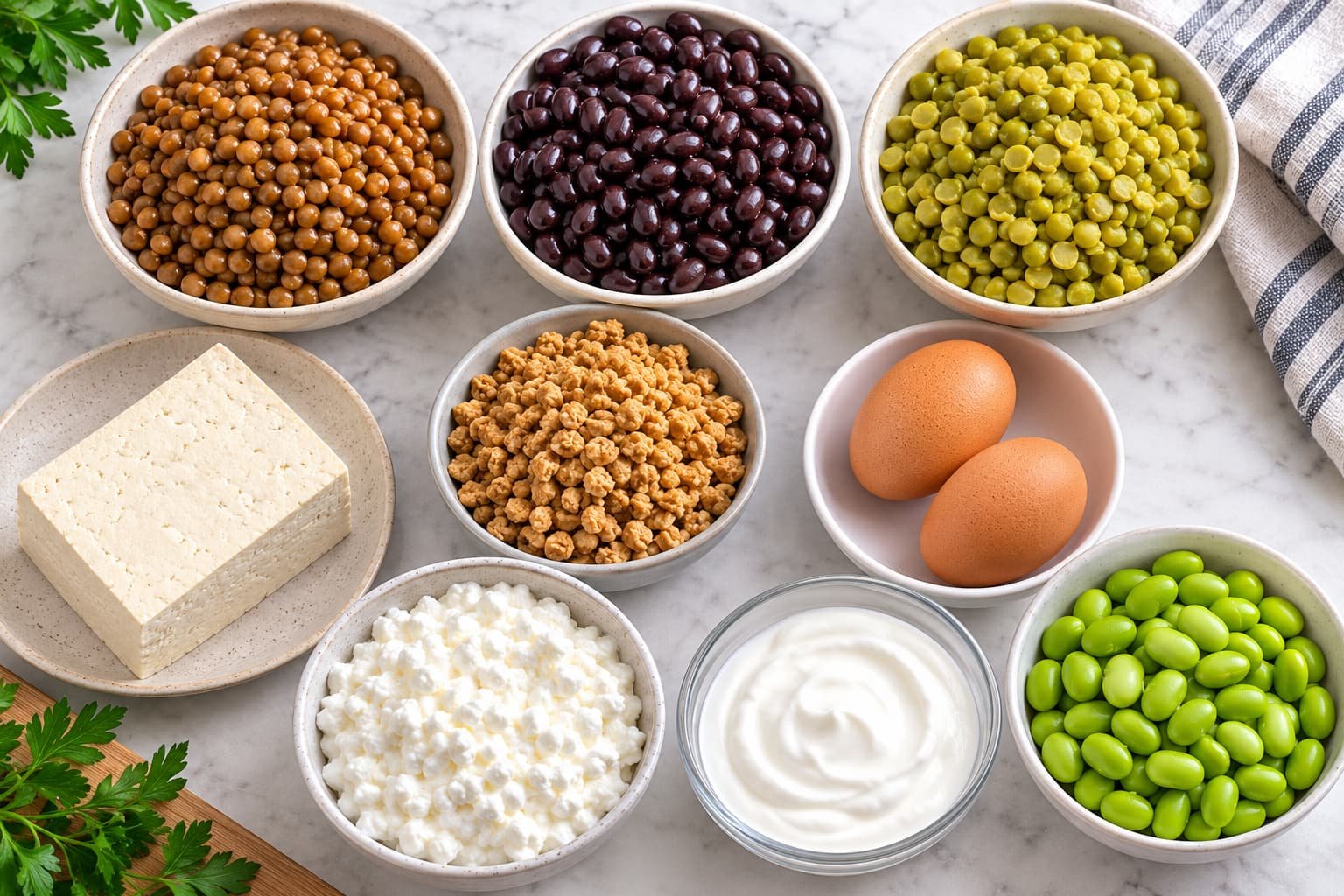
| Ingredient | Practical serving | Approximate protein | Best uses | Budget note |
| Lentils cooked from dry | ½ cup cooked, about 99 g | About 9 g | Curries, soups, chili and pasta sauce | Dried lentils frequently cost less per cooked portion than canned lentils |
| Black beans | ½ cup cooked or drained, about 86 g | About 7–8 g | Chili, casseroles, stuffed potatoes and burritos | Canned beans save time; dried beans may cost less after cooking |
| Split peas | ½ cup cooked, about 98 g | About 8 g | Thick soups, stews and vegetable patties | Shelf-stable and generally require no overnight soaking |
| Firm or extra-firm tofu | 3 oz, about 85 g | Approximately 8–15 g | Curries, rice bowls, casseroles and stir-fries | Compare both the nutrition label and price per ounce |
| Textured vegetable protein (TVP) | ¼ cup dry, about 24 g | Approximately 12–13 g | Chili, taco filling, pasta sauce and sloppy joes | Shelf-stable, but availability and price vary between stores |
| Eggs | 2 large eggs | About 12–13 g | Frittatas, curries, fried rice and breakfast bakes | Often economical, although egg prices can fluctuate sharply |
| Cottage cheese | ½ cup, about 113 g | Approximately 12–14 g | Pasta bakes, casseroles, fillings and creamy sauces | Larger store-brand containers may offer a lower unit price |
| Plain Greek yogurt | ¾ cup, about 170 g | Approximately 15–18 g | Savory sauces, stuffed potatoes, dressings and toppings | Large plain tubs usually cost less per ounce than individual cups |
| Shelled edamame | ½ cup cooked, about 78 g | About 9 g | Rice bowls, noodle dishes, salads and soups | Frozen shelled edamame avoids the weight and waste of discarded pods |
Most of these portions do not provide enough protein to meet the guide’s preferred 20–30 gram range on their own. Combining affordable sources can produce a more substantial meal without requiring an oversized portion of one ingredient. Half a cup of lentils with two eggs provides roughly 21–22 grams of protein, while black beans with cottage cheese or tofu with edamame can also move a meal beyond the 15-gram minimum.
These combinations are examples, not final nutrition calculations. The protein value of each completed recipe must be calculated from its exact quantities, cooked or drained weights, confirmed yield, and measured serving size. Optional toppings and side dishes should not be counted unless they are included in the stated serving.
Readers should also check allergen labels. Tofu, TVP, and edamame contain soy, while other ingredients in the table may contain dairy or eggs. Cross-contact warnings and formulations can differ between manufacturers.
Bean and Lentil Meals
Beans and lentils provide an economical base for filling vegetarian meals. Because one modest serving may not always reach the 15-gram protein standard used in this guide, each recipe combines legumes with another useful protein source, such as TVP, eggs, cottage cheese, tofu, or whole-wheat pasta.
The quantities below are working formulations. Confirm the finished yield, protein per serving, cost, cooking time, texture, and storage performance through recipe testing before publishing the final figures.
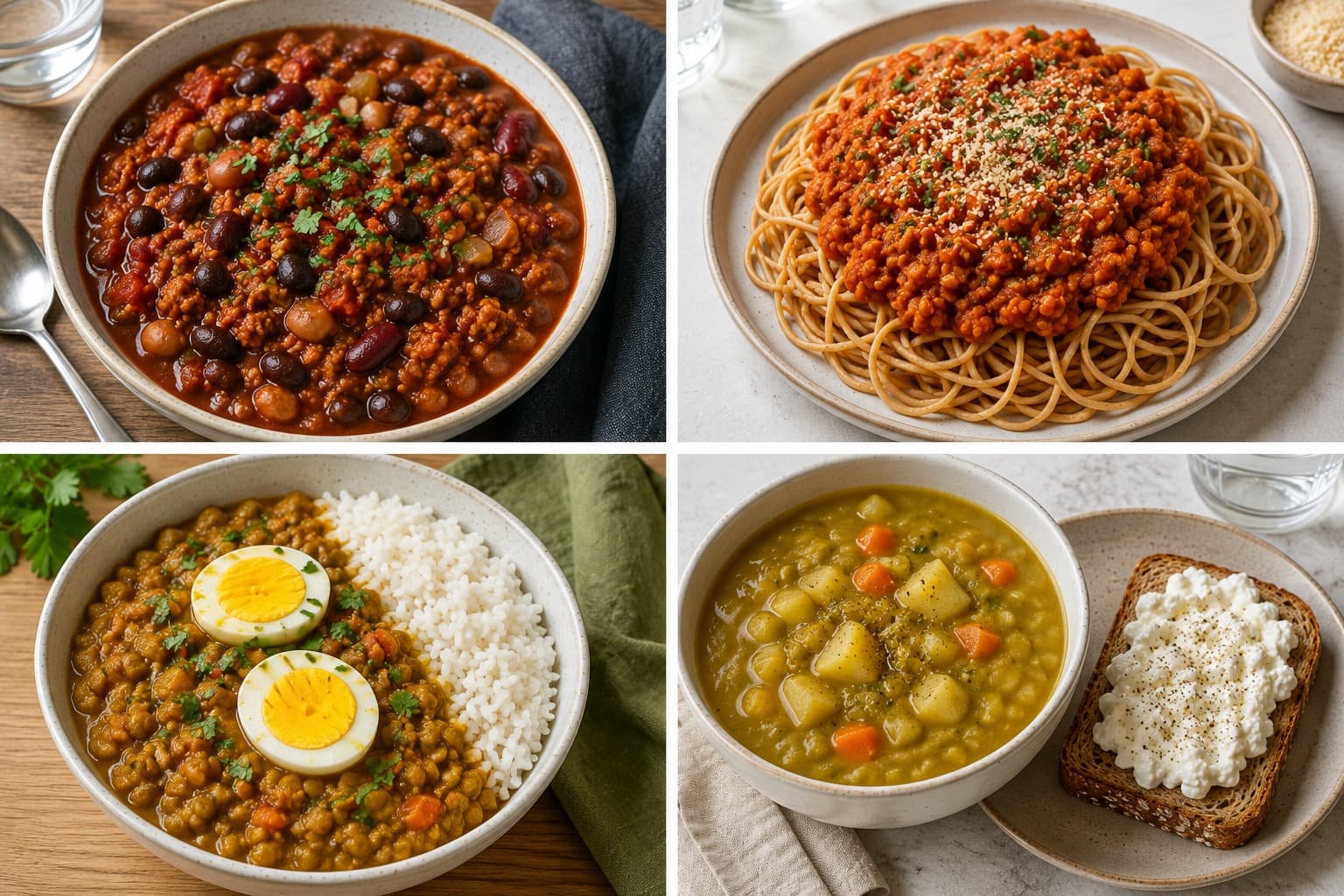
1. Three-Bean TVP Chili
This three-bean chili uses textured vegetable protein to add substance and protein without relying on refrigerated meat substitutes. TVP absorbs the seasoned broth as it cooks, giving the chili a thicker, more cohesive texture.
For six servings, use one 15-ounce can each of black beans, kidney beans, and pinto beans, drained and rinsed. Cover 1¼ cups dry TVP with 1¼ cups hot vegetable broth and let it hydrate for 10 minutes.
Meanwhile, heat 1 tablespoon of oil in a large pot. Cook one diced onion and one diced bell pepper for 6 to 8 minutes, until softened. Add three minced garlic cloves, 2 tablespoons chili powder, 2 teaspoons cumin, 1 teaspoon smoked paprika, and ½ teaspoon oregano. Cook for another 30 seconds.
Stir in one 28-ounce can of crushed tomatoes, 2 tablespoons tomato paste, 1½ cups vegetable broth, the beans, and the hydrated TVP. Simmer uncovered for 25 to 30 minutes, stirring occasionally. Add a small amount of broth if it becomes too thick.
A reasonable serving target is about 1½ cups, but measure the final yield before fixing the portion size. The estimated protein range is approximately 20 to 23 grams per serving.
2. Red Lentil Bolognese With Whole-Wheat Spaghetti
Red lentils soften into the tomato sauce, while mushrooms add savory flavor and a more substantial texture. Whole-wheat spaghetti contributes additional protein and fiber, helping the complete meal reach the article’s high-protein standard.
For four servings, use 1 cup rinsed red lentils, 8 ounces whole-wheat spaghetti, one 28-ounce can of crushed tomatoes, 8 ounces finely chopped mushrooms, one diced onion, one diced carrot, three minced garlic cloves, and 2 tablespoons tomato paste.
Cook the onion, carrot, and mushrooms in 1 tablespoon olive oil for 8 to 10 minutes. Allow the mushrooms to release most of their moisture before adding the garlic and tomato paste. Cook for one minute.
Add the crushed tomatoes, lentils, 1½ cups vegetable broth, 1 teaspoon Italian seasoning, and ½ teaspoon salt. Simmer gently for 22 to 30 minutes. Keep another cup of broth nearby and add only as needed because different lentils absorb different amounts of liquid.
Cook the spaghetti separately and reserve about ½ cup of pasta water before draining. Combine the pasta and sauce, using a little pasta water if the mixture needs loosening.
Divide the finished recipe into four equal portions. The preliminary protein estimate is approximately 19 to 21 grams per serving, subject to the pasta label and confirmed yield.
3. Lentil and Egg Curry With Rice
Lentils and eggs provide the main protein in this economical vegetarian curry. The eggs are added near the end so they absorb some of the sauce without becoming tough.
For four servings, use 1 cup dry brown or green lentils, eight large eggs, 2 cups cooked rice, one diced onion, two minced garlic cloves, 1 tablespoon grated ginger, and one 14.5-ounce can of diced tomatoes.
Cook the onion in 1 tablespoon of oil for 7 to 8 minutes. Add the garlic, ginger, 1 tablespoon curry powder, 1 teaspoon cumin, ½ teaspoon turmeric, and a pinch of cayenne if desired. Cook for one minute.
Add the lentils, tomatoes, and approximately 3 cups of water or vegetable broth. Simmer gently for 25 to 35 minutes, or until the lentils are tender. Check the package instructions because cooking times vary by lentil type.
Cook the eggs separately until the yolks are set, then cool and peel them. Halve the eggs and warm them gently in the finished curry for 2 to 3 minutes.
Each serving contains one-quarter of the lentil curry, two eggs, and ½ cup cooked rice. The expected protein range is approximately 25 to 27 grams per serving, but it must be recalculated using the final yield and selected rice.
4. Split Pea and Potato Soup With Cottage Cheese Toast
Split pea soup is naturally hearty, but the cottage cheese toast is an important part of this complete high-protein meal. It adds protein and a cool, creamy contrast to the thick soup.
For four meals, cook one diced onion, two diced carrots, and two diced celery stalks in 1 tablespoon oil for 7 to 8 minutes. Add two minced garlic cloves and cook for another 30 seconds.
Stir in 1 1⁄2 cups rinsed dry split peas, 12 ounces diced potatoes, 6 cups vegetable broth, 1 teaspoon dried thyme, and one bay leaf. Bring the mixture to a boil, then reduce the heat and simmer partly covered for 50 to 60 minutes. Stir occasionally because split peas can settle on the bottom of the pot.
Remove the bay leaf once the peas and potatoes are tender. Add more broth if the soup is thicker than preferred. The recipe should produce approximately 8 cups, giving each person about 2 cups of soup.
Serve each portion with one slice of whole-grain toast topped with ¼ cup cottage cheese. The combined meal is expected to provide approximately 27 to 30 grams of protein. The exact figure will depend heavily on the bread and cottage cheese labels.
5. Black Bean and Cottage Cheese Enchilada Casserole
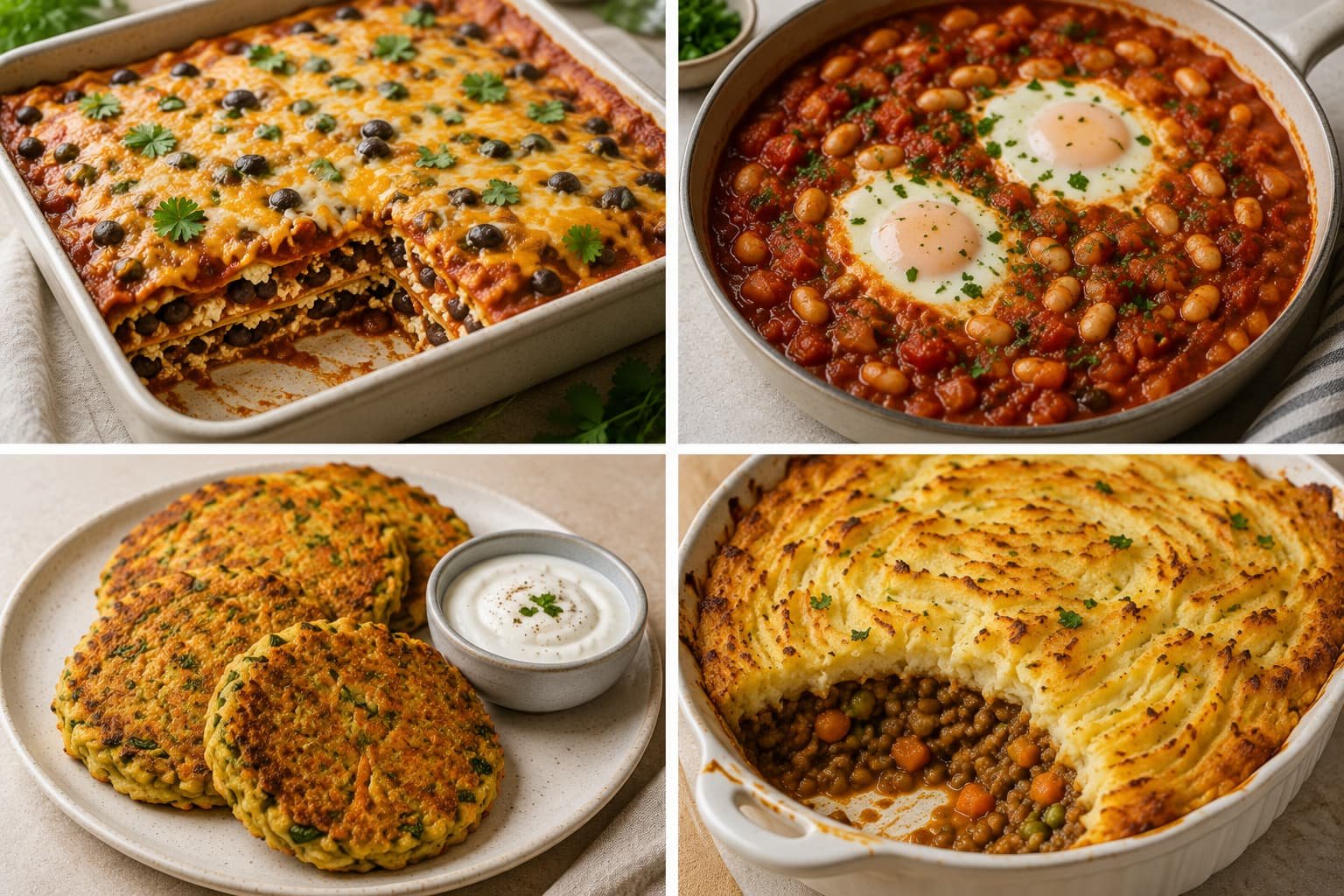
This vegetarian enchilada casserole uses a cottage cheese and egg mixture to create a creamy filling without requiring a large quantity of shredded cheese. Draining the beans, corn, and cottage cheese prevents excess moisture from making the casserole watery.
For six servings, use two 15-ounce cans of black beans, drained and rinsed; 2 cups cottage cheese; one large egg; 12 six-inch corn tortillas; 2¼ cups enchilada sauce; 1 cup thawed and drained corn; and 1 cup shredded cheddar or Mexican-style cheese.
Blend or whisk the cottage cheese with the egg until mostly smooth. Season the beans with 1 teaspoon cumin and ½ teaspoon smoked paprika.
Spread about ½ cup enchilada sauce in a deep 9-by-13-inch baking dish. Build three layers using four tortillas per layer, distributing the beans, corn, cottage cheese mixture, sauce, and shredded cheese evenly.
Cover the casserole and bake at 375°F (190°C) for 25 minutes. Uncover and bake for another 10 to 15 minutes, until the center is hot and the sauce is bubbling. Rest the casserole for at least 15 minutes before cutting it into six portions.
The preliminary estimate is approximately 23 to 26 grams of protein per serving. Confirm both the texture and serving yield before publishing this amount.
6. White Bean Shakshuka With Eggs
Adding white beans turns shakshuka into a more substantial vegetarian meal. Use a deep 12-inch skillet or wide sauté pan so the sauce has enough room for eight eggs.
Heat 1 tablespoon olive oil and cook one diced onion and one diced red bell pepper for 7 to 8 minutes. Add three minced garlic cloves, 1 teaspoon cumin, 1 teaspoon smoked paprika, and a pinch of red pepper flakes. Cook for 30 seconds.
Add one 14.5-ounce can of crushed or diced tomatoes and simmer for 10 minutes. Stir in two 15-ounce cans of drained and rinsed white beans. If the sauce is unusually thick, add up to ½ cup vegetable broth.
Make eight shallow wells and crack one egg into each opening. Cover the pan and cook gently for 6 to 10 minutes, until the egg whites are completely set. Cooking time will depend on the skillet, heat level, and preferred yolk texture.
Divide the pan into four servings, with two eggs in each portion. The expected protein content is approximately 22 to 24 grams per serving. Bread may be served alongside, but its protein should not be included unless it is part of the defined serving.
7. Chickpea Flour Vegetable Pancakes With Yogurt Sauce
Chickpea flour may also be labelled gram flour or besan. These products are related, but differences in grind and chickpea variety may affect how much water the batter needs.
For four servings, whisk together 2 cups chickpea flour, two large eggs, 1¼ cups water, 1 teaspoon ground cumin, ½ teaspoon turmeric, ½ teaspoon salt, and black pepper. Add up to another ¼ cup water if the batter is too thick to spread.
Fold in one cup grated zucchini that has been squeezed thoroughly, one grated carrot, and four sliced scallions. Let the batter rest for 10 minutes before cooking.
Use approximately ⅓ cup batter for each pancake. Cook in a lightly oiled skillet over medium heat for 3 to 4 minutes on the first side and 2 to 3 minutes on the second. The working target is 12 pancakes, although the actual yield must be confirmed during testing.
For the sauce, combine 1½ cups plain Greek yogurt with lemon juice, minced garlic, chopped herbs, and a pinch of salt. Divide the pancakes and sauce into four equal portions.
Based on four servings, the estimated protein range is approximately 21 to 23 grams per serving. Recalculate it if the batter produces a different number of pancakes.
8. Lentil Shepherd’s Pie With Peas
Lentils create the savory base of this meatless shepherd’s pie, while cottage cheese increases the protein in the potato topping. Thickening the filling before assembly prevents liquid from collecting beneath the mashed potatoes.
Cook 1½ cups dry brown or green lentils separately until tender, then drain them well. The cooked lentils should hold their shape rather than becoming mushy.
For the filling, cook one diced onion, two diced carrots, and 8 ounces chopped mushrooms in 1 tablespoon oil. Continue cooking until the vegetables are tender and most of the mushroom moisture has evaporated.
Add three minced garlic cloves, 2 tablespoons tomato paste, and 2 tablespoons all-purpose flour. Cook for one minute, then gradually stir in 1 1⁄4 cups vegetable broth. Add the lentils, 1 cup frozen peas, 1 teaspoon thyme, and 1 tablespoon vegetarian Worcestershire sauce or soy sauce.
Simmer until the filling is thick enough that no free liquid remains in the pan. Transfer it to a 9-by-13-inch baking dish.
For the topping, boil 2 pounds peeled potatoes until tender. Drain well, then mash with 1 cup cottage cheese, 2 tablespoons butter, and enough milk to make a spreadable topping. Spoon the potatoes over the lentil filling.
Bake at 400°F (200°C) for 25 to 30 minutes. Let the pie rest for 10 minutes before dividing it into six portions. The initial protein estimate is approximately 20 to 22 grams per serving.
Any dairy-free version should be formulated and tested separately because replacing cottage cheese changes the protein, moisture, flavor, and texture.
Affordable Tofu and Soy Meals
Tofu, edamame, and textured vegetable protein can provide substantial protein without the price of many refrigerated meat substitutes. Their actual value, however, depends on the package size, protein content, and price per ounce. Comparing unit prices is more useful than simply choosing the cheapest package.
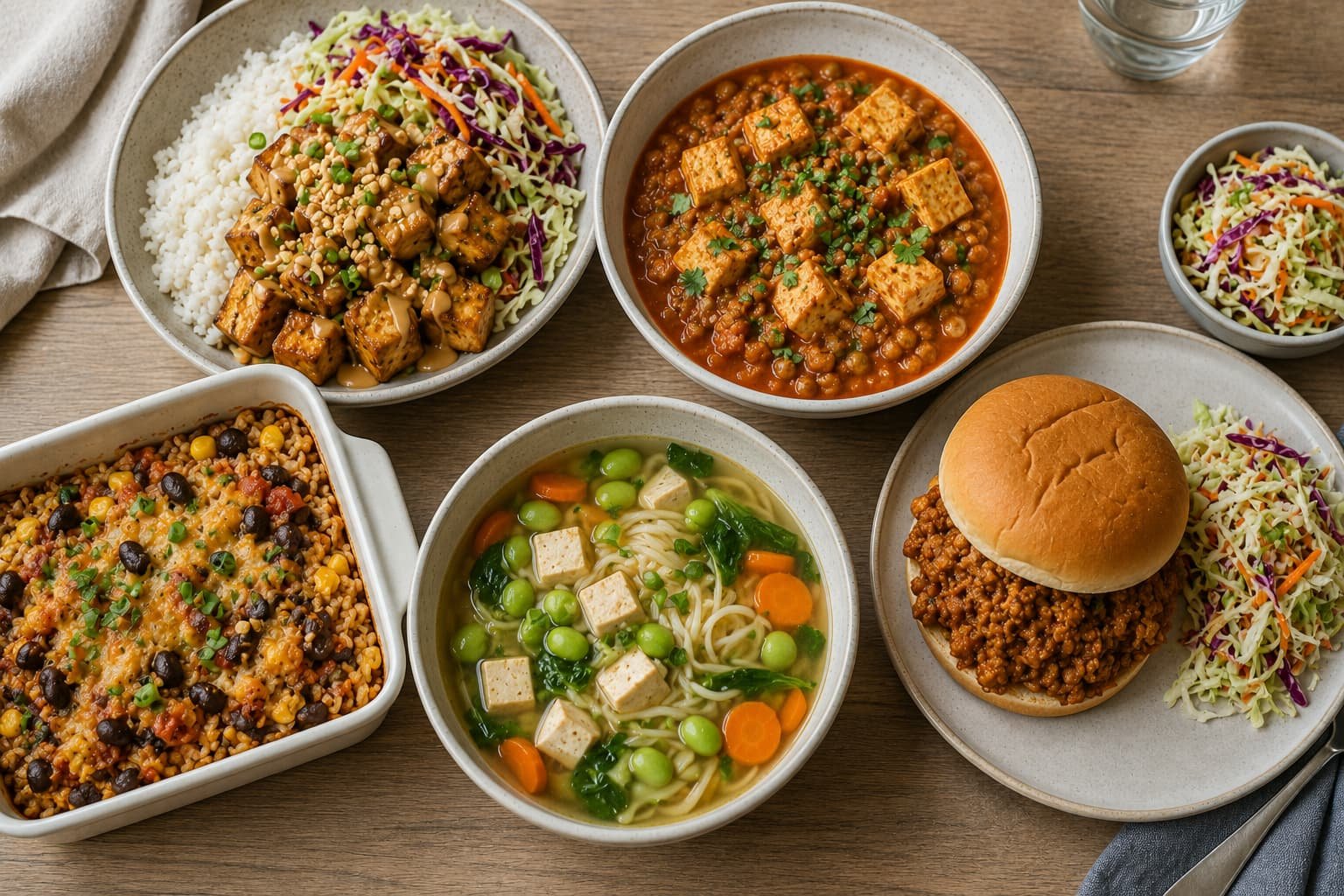
These affordable tofu and soy meals combine soy ingredients with rice, lentils, beans, noodles, and inexpensive vegetables. Each formulation is intended to provide at least 15 grams of protein per serving. Final protein, cost, time, and yield figures must be confirmed using the selected products and the measured results of recipe testing.
9. Peanut Tofu and Cabbage Rice Bowls
These peanut tofu rice bowls combine golden tofu, crisp cabbage, cooked rice, and a measured peanut sauce. Cabbage keeps longer than delicate greens and provides plenty of volume without making the bowls expensive.
For four servings, drain 24 ounces (680 g) of extra-firm tofu. Press it if it is packed in a large amount of water, then cut it into ¾-inch cubes. Prepare 2 cups of cooked rice, allowing ½ cup per serving. Depending on the rice variety, this will require approximately ⅔ cup of uncooked rice, but follow the package yield.
Whisk together ¼ cup natural peanut butter, 3 tablespoons lower-sodium soy sauce, 2 tablespoons lime juice or rice vinegar, 1 tablespoon brown sugar or maple syrup, one finely grated garlic clove, 1 teaspoon grated ginger, and 3 tablespoons warm water. Add up to 2 more tablespoons of water if needed. The sauce should be thick enough to coat a spoon but loose enough to drizzle.
Heat 1 tablespoon of neutral oil in a large nonstick skillet. Add the tofu in one layer and cook over medium-high heat for 8 to 10 minutes, turning occasionally. The tofu is ready when several sides are golden and its surface feels firmer. Cook it in two batches if the pan is crowded.
Reduce the heat and add half of the peanut sauce. Toss the tofu for about one minute, just until evenly coated. Extended cooking can make the peanut sauce overly thick.
Divide 5 cups shredded green cabbage and 1 cup shredded carrot among four bowls. Add the cooked rice and peanut tofu, then spoon the remaining sauce over the top. For softer vegetables, cook the cabbage and carrots in the empty skillet for 2 to 3 minutes before assembling the bowls.
One defined serving contains one-quarter of the tofu, ½ cup cooked rice, approximately 1½ cups vegetables, and one-quarter of the sauce. The preliminary protein estimate is approximately 22 to 27 grams per serving. Verify the final number using the tofu, peanut butter, and rice labels.
For meal preparation, refrigerate the rice, tofu, vegetables, and sauce separately. Reheat the tofu and rice before adding the cold cabbage and sauce. This protects the crunch of the vegetables and prevents them from releasing water into the bowl.
10. Tofu and Lentil Tomato Curry
This tofu and lentil curry gets protein from two main ingredients instead of using an oversized block of tofu. The lentils are cooked until nearly tender before the tomatoes are added because acidic ingredients can slow their softening.
For four servings, rinse 1 cup dry brown or green lentils. Drain one 14- to 16-ounce block of extra-firm tofu, pat it dry, and cut it into bite-sized cubes.
Heat 1 tablespoon of oil in a Dutch oven or deep skillet. Add one diced onion and cook for 7 to 8 minutes, until soft and lightly golden. Stir in three minced garlic cloves and 1 tablespoon grated ginger, then cook for 30 seconds.
Add 1 tablespoon curry powder, 1 teaspoon ground cumin, ½ teaspoon turmeric, and up to ¼ teaspoon cayenne. Stir for approximately 30 seconds to release the aroma of the spices without burning them.
Add the lentils and 3 cups of lower-sodium vegetable broth. Bring the mixture to a boil, reduce the heat, and simmer partly covered for 20 to 25 minutes. The lentils should be nearly tender but still hold their shape.
Stir in one 28-ounce can of crushed tomatoes and the cubed tofu. Simmer uncovered for another 12 to 15 minutes, stirring occasionally. Add a small amount of water if the curry becomes too thick before the lentils finish cooking.
Taste only after the lentils are tender, then adjust the salt according to the sodium in the broth and tomatoes. A small squeeze of lemon juice can brighten the finished curry if the tomato flavor tastes heavy.
Divide the finished curry into four equal portions. Measure its total cooked weight or volume before establishing the final serving size. Rice and flatbread are not included in the preliminary nutrition estimate unless they are added to the defined meal.
The tofu and lentil curry is expected to provide approximately 24 to 30 grams of protein per serving. The selected tofu label will have a significant effect on the final figure.
Refrigerate leftovers in a covered container after they have cooled. The curry will become thicker during storage because the lentils continue absorbing moisture. Add a small amount of broth or water when reheating.
11. Tofu and Black Bean Taco Casserole
This tofu and black bean taco casserole uses cooked brown rice instead of tortilla layers. That makes it clearly different from the black bean and cottage cheese enchilada casserole included earlier in the collection.
For six servings, drain and press 16 ounces of extra-firm tofu, then crumble it into small pieces. Drain and rinse two 15-ounce cans of black beans. Prepare 2 cups of cooked brown rice and thaw 1 cup of frozen corn.
Heat 1 tablespoon of oil in a large skillet. Add one diced onion and one diced bell pepper, then cook for 6 to 8 minutes. Add the crumbled tofu and continue cooking for about 8 minutes, stirring occasionally, until the visible moisture has evaporated.
Season the tofu with 2 teaspoons chili powder, 1 teaspoon ground cumin, 1 teaspoon smoked paprika, ½ teaspoon dried oregano, and ½ teaspoon salt. Stir for 30 seconds.
Add the black beans, cooked rice, drained corn, and 1½ cups of thick tomato salsa. Cook for 3 to 4 minutes, until the filling is hot. It should be moist but should not have liquid collecting at the bottom of the skillet.
Transfer the mixture to a lightly greased 9-by-13-inch baking dish. Sprinkle 1 cup shredded cheddar or Mexican-style cheese evenly over the surface.
Cover and bake at 375°F (190°C) for 20 minutes. Uncover and bake for another 10 minutes, or until the center is hot and the cheese has melted. Allow the casserole to rest for 10 minutes before dividing it into six equal portions.
The preliminary protein estimate is approximately 21 to 25 grams per serving. Calculate the final figure using the labels from the tofu, black beans, brown rice, and cheese.
A possible vegan test version can be made with 24 ounces of tofu instead of 16 ounces and no cheese. Do not present that variation as equivalent until its seasoning, texture, protein, and cost have been recalculated and tested.
12. Edamame Tofu Noodle Soup
This edamame tofu noodle soup uses tofu and shelled edamame as its primary protein sources. Whole-wheat spaghetti is selected as the base noodle because it is widely available and generally less expensive than specialty noodles.
For four servings, drain 16 ounces of extra-firm tofu and cut it into cubes. Measure 12 ounces of frozen shelled edamame and 8 ounces of dry whole-wheat spaghetti. Break the spaghetti in half so it is easier to serve in soup bowls.
Cook the noodles in a separate pot until just tender. Drain and rinse them briefly under cool water to stop the cooking. Dividing the noodles separately prevents them from absorbing too much broth.
Heat 1 teaspoon sesame or neutral oil in a large soup pot. Add 8 ounces of sliced mushrooms and cook for 5 to 7 minutes, until they release most of their moisture. Stir in three minced garlic cloves and 1 tablespoon grated ginger, then cook for another 30 seconds.
Pour in 6 cups of lower-sodium vegetable broth and bring it to a gentle simmer. Add the tofu, frozen edamame, and 3 cups chopped bok choy or napa cabbage. Simmer for 5 to 7 minutes, until the edamame is heated through and the vegetables are tender but still retain some texture.
Stir in 1 tablespoon lower-sodium soy sauce and 1 tablespoon rice vinegar. Taste the broth before adding a second tablespoon of soy sauce. Even products described as lower sodium can contain substantial amounts, so the finished sodium content must be calculated from the selected labels.
Divide the cooked noodles among four bowls. Ladle an equal amount of tofu, edamame, vegetables, and broth into each bowl.
The preliminary protein estimate is approximately 26 to 32 grams per complete serving. The figure includes the selected whole-wheat noodles. Replacing them with rice noodles, ramen, or another product will require a new calculation.
Store the noodles separately from the broth and solid ingredients. The tofu, edamame, vegetables, and broth can be frozen together, but the noodles may become excessively soft after freezing and reheating.
13. TVP Sloppy Joes With Crunchy Cabbage Slaw
Textured vegetable protein gives these vegetarian sloppy joes a substantial texture without using a refrigerated meat substitute. TVP is made from soy and is unsuitable for anyone with a soy allergy or a medical reason to avoid soy.
For four servings, weigh approximately 120 grams of dry TVP. Depending on the size of the pieces, this may equal about 1¼ cups, but weight is more reliable than volume.
Place the TVP in a heatproof bowl. Add the quantity of hot lower-sodium vegetable broth directed on its package. An equal volume of TVP and broth can be used as a starting point when the label recommends that ratio. Cover and leave it to hydrate for approximately 10 minutes.
Heat 1 tablespoon of oil in a large skillet. Add one finely diced onion and one finely diced bell pepper. Cook for 6 to 8 minutes, until softened. Add two minced garlic cloves and cook for another 30 seconds.
Stir in one 15-ounce can of tomato sauce, 2 tablespoons tomato paste, 1 tablespoon vegetarian Worcestershire sauce, 1 tablespoon yellow mustard, 1 tablespoon apple cider vinegar, 1 tablespoon brown sugar, and ½ teaspoon smoked paprika.
Check the Worcestershire sauce label carefully. Traditional Worcestershire commonly contains anchovies and is not vegetarian.
Add the hydrated TVP to the sauce. Simmer uncovered for 10 to 15 minutes, stirring regularly. If the filling becomes dry before the flavors have combined, add vegetable broth one tablespoon at a time. The finished mixture should stay on the bun without being dry or runny.
For the slaw, combine 4 cups of finely shredded cabbage with one grated carrot. Whisk together 2 tablespoons apple cider vinegar, 1 tablespoon neutral oil, 1 teaspoon sugar, ½ teaspoon yellow mustard, and a small pinch of salt. Toss the vegetables with the dressing shortly before serving.
Divide the filling among four whole-grain hamburger buns and serve each sandwich with one-quarter of the slaw. The slaw can be placed inside the bun or served alongside it.
The preliminary protein estimate is approximately 20 to 25 grams per complete serving. Because TVP products vary significantly, calculate the final amount using the gram weight and nutrition label of the product used during testing.
The TVP filling may be refrigerated or frozen separately. Keep the buns and slaw apart because freezing the assembled sandwiches would damage their texture.
A lentil sloppy joe is not a direct soy-free substitution. Lentils absorb liquid differently and provide a different amount of protein per serving. Develop it as a separate recipe rather than offering an untested ingredient swap.
Egg and Dairy-Based Budget Meals
Eggs, cottage cheese, Greek yogurt, and cheddar can provide substantial protein without depending on premium vegetarian meat substitutes. Affordability still depends on the local price, package size, and quantity used, so each meal must be cost from its complete tested formulation.
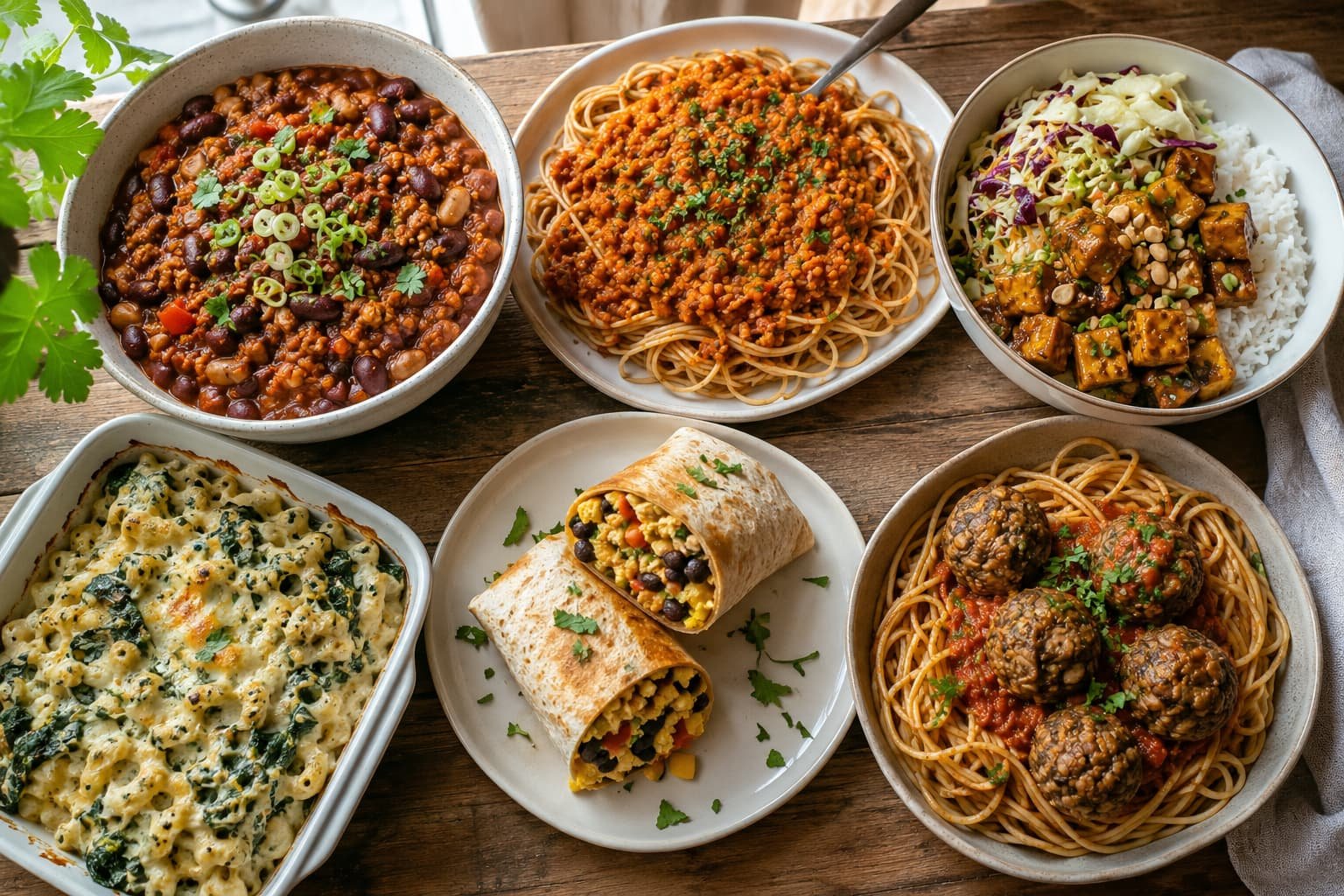
These egg and dairy-based budget meals combine accessible ingredients with beans, lentils, potatoes, spinach, and whole-wheat pasta. Every defined serving is intended to provide at least 15 grams of protein, with most meals targeting approximately 20 to 30 grams.
14. Cottage Cheese and Spinach Pasta Bake
Blending cottage cheese into the sauce gives this vegetarian pasta a creamy texture without heavy cream or a large quantity of cheese. Whole-wheat pasta, spinach, cottage cheese, and mozzarella all contribute to the protein total.
For six meal-size servings, bring a large pot of water to a boil. Cook 12 ounces of whole-wheat penne for two minutes less than the lowest time given on the package. The pasta should remain firm in the center because it will continue cooking in the oven.
Thaw one 10-ounce package of frozen chopped spinach. Place it in a clean kitchen towel and squeeze firmly until no more water drains from it. Removing this moisture is essential because cottage cheese and marinara already add considerable liquid.
Place 16 ounces of cottage cheese in a blender with 1 cup taken from a 24-ounce jar of marinara sauce. Add two minced garlic cloves, 1 teaspoon Italian seasoning, and ¼ teaspoon black pepper. Blend until mostly smooth.
Combine the drained pasta, blended cottage cheese sauce, spinach, and remaining marinara. Do not add pasta water at this stage. If the mixture is genuinely too thick to coat the pasta, add pasta water one tablespoon at a time, using no more than 2 tablespoons before testing the bake.
Transfer the mixture to a lightly greased 9-by-13-inch baking dish. Sprinkle 1 cup shredded mozzarella evenly over the surface.
Cover the dish and bake at 375°F (190°C) for 20 minutes. Remove the cover and bake for another 10 minutes, until the sauce is bubbling around the edges. Rest the pasta bake for at least 10 minutes so the sauce can settle before cutting it into six equal portions.
One serving is one-sixth of the casserole. Record the total finished weight and the weight of one portion during testing. The preliminary protein estimate is approximately 21 to 25 grams per serving, but the final figure must be calculated from the selected pasta, cottage cheese, mozzarella, spinach, and marinara.
Frozen spinach and store-brand cottage cheese may help control the cost. However, that claim should be supported with a confirmed cost per serving. Test frozen portions separately because cottage cheese sauces can release moisture after thawing.
15. Egg, Cottage Cheese and Potato Frittata
This egg, cottage cheese and potato frittata is divided into four substantial portions. Cutting a large frittata into eight small slices and calling each slice a complete high-protein meal would produce a misleading serving size.
Heat the oven to 375°F (190°C). Cut 1¼ pounds of Yukon Gold or russet potatoes into uniform ¼-inch cubes. Smaller pieces will cook more evenly and fit more naturally into each portion.
Heat 1 tablespoon of oil in a 12-inch oven-safe skillet. Add the potatoes and one diced onion. Cook uncovered over medium heat for 5 minutes, stirring several times.
Add 2 tablespoons of water and cover the skillet. Cook for another 8 to 10 minutes, stirring once or twice. Remove the cover and allow any remaining water to evaporate. The potatoes must be tender before the egg mixture is added.
Whisk 10 large eggs with 1 cup cottage cheese, ½ teaspoon salt, ¼ teaspoon garlic powder, and ¼ teaspoon black pepper. For a smoother texture, blend the eggs and cottage cheese briefly before adding the seasonings.
Spread the potatoes evenly across the skillet. Pour the egg mixture over them and cook without stirring for 2 to 3 minutes, until the outside edge begins to set.
Transfer the skillet to the oven and bake for approximately 15 to 20 minutes. The center should be firm rather than wet and should reach 160°F (71°C), the recommended minimum temperature for egg dishes such as frittatas.
Rest the frittata for 5 to 10 minutes before dividing it into four equal quarters. One quarter is the defined complete meal. If smaller pieces are served, the stated protein amount must be reduced accordingly.
The preliminary protein estimate is approximately 24 to 28 grams per portion. Confirm the finished weight and nutrition using the selected cottage cheese, eggs, and potatoes.
Refrigerated portions can be reheated gently. Do not label the frittata freezer-friendly until a frozen portion has been thawed and checked for moisture release, rubbery eggs, and changes in potato texture.
16. Black Bean and Egg Breakfast Burritos
These black bean and egg breakfast burritos are designed for make-ahead freezing. They differ from quick black bean tacos by using eggs, cheese, large flour tortillas, and a fully enclosed wrapping method.
For eight burritos, drain and rinse two 15-ounce cans of black beans. Heat 1 tablespoon oil in a skillet and cook one diced bell pepper and one small diced onion for 6 to 8 minutes.
Add the beans, 1 teaspoon ground cumin, 1 teaspoon chili powder, ½ teaspoon smoked paprika, and a small pinch of salt. Cook for 3 to 4 minutes. Lightly mash about one-quarter of the beans so the filling holds together while retaining plenty of whole beans.
In a separate bowl, whisk 12 large eggs with black pepper and a small pinch of salt. Cook them slowly in a nonstick skillet until completely set but still tender. Avoid heavily browning the eggs because overcooked eggs can become rubbery when reheated.
Spread the eggs and bean mixture in separate shallow dishes. Cool them only until they stop releasing visible steam. Assemble the burritos promptly or refrigerate the fillings rather than leaving cooked eggs at room temperature.
Warm eight 10-inch flour tortillas until flexible. Divide the eggs, beans, and 1½ cups shredded cheddar evenly among them. Each tortilla should contain approximately 1½ eggs, ⅓ to ⅜ cup beans, and 3 tablespoons cheese.
Fold the sides over the filling and roll each tortilla tightly from the bottom. Keep watery salsa out of the freezer version. Serve it after reheating so it does not make the tortilla soggy.
Wrap each burrito in freezer paper or parchment and place it in a labelled freezer-safe container. Foil may be used as an additional outer layer, but it must be removed completely before microwave reheating.
A practical starting method is to unwrap a frozen burrito, cover it with a slightly damp paper towel, and microwave it at 50% power for 2 minutes. Turn it over and continue at full power in 30- to 60-second intervals. Microwave power varies, so testing the center is more reliable than following time alone.
Allow the burrito to stand for one minute, then confirm that the center has reached 165°F (74°C), the recommended reheating temperature for leftovers.
Each burrito is expected to provide approximately 23 to 28 grams of protein. Confirm the calculation using the flour tortilla, black bean, egg, and cheddar information.
The burritos are designed for freezing but should not receive a final freezer-storage period until their quality has been checked. Evaluate tortilla cracking, trapped moisture, bean texture, and egg tenderness after reheating.
17. Greek Yogurt Chickpea Stuffed Potatoes
The Greek yogurt and chickpea mixture is the primary filling in these stuffed potatoes, not a small topping added to inflate the protein figure. Each complete serving contains one large potato and approximately three-quarters of a cup of filling.
Heat the oven to 425°F (220°C). Scrub four russet potatoes weighing approximately 10 to 12 ounces each. Pierce them several times and place them directly on the oven rack or on a baking sheet.
Bake for 50 to 65 minutes, depending on their size. The potatoes are ready when the skins feel crisp and a knife slides easily through the center.
While the potatoes bake, drain and rinse one 15-ounce can of chickpeas. Pat them dry and place them in a mixing bowl. Mash approximately half of the chickpeas, leaving the remainder whole for texture.
Add 1½ cups plain Greek yogurt, two thinly sliced scallions, one finely diced celery stalk, 1½ tablespoons lemon juice, 1 tablespoon Dijon mustard, 1 tablespoon chopped dill or parsley, ½ teaspoon salt, and black pepper.
Stir until the mixture is creamy enough to hold together while retaining pieces of chickpea and celery. Taste the filling and adjust the lemon, mustard, salt, and pepper before adding it to the potatoes.
Split each baked potato and fluff the center with a fork. Divide the filling equally, adding approximately three-quarters of a cup to each potato. The filling should be generous but should not fall continuously from the potato.
One stuffed potato is the defined serving. The expected protein content is approximately 20 to 24 grams, depending on the potato size and Greek yogurt label.
A large store-brand tub of plain Greek yogurt may cost less per ounce than individual containers, but the final affordability claim still requires a calculated cost per serving.
Do not freeze the assembled potatoes. Greek yogurt may separate after thawing, and the combination of potato and cold filling can develop a watery texture. Store the filling and baked potatoes separately in the refrigerator and assemble them shortly before serving.
18. Broccoli, Cheddar and Lentil Soup
Red lentils provide much of the protein and naturally thicken this broccoli cheddar soup. Sharp cheddar is used in a controlled quantity for flavor rather than as the primary source of protein or the most expensive ingredient.
Heat 1 tablespoon of oil or butter in a large soup pot. Add one diced onion and one diced carrot. Cook over medium heat for 6 to 8 minutes, until softened. Add three minced garlic cloves and cook for another 30 seconds.
Rinse 1¼ cups dry red lentils until the water is mostly clear. Add them to the pot with 5 cups of lower-sodium vegetable broth. Bring the soup to a boil, then reduce the heat and simmer partly covered for 15 to 20 minutes.
Cut 1 pound of broccoli into small florets and finely chop the tender parts of the stems. Add all the broccoli to the pot and simmer for 8 to 10 minutes, until the lentils have softened and the broccoli is tender.
Blend approximately one-third of the soup with an immersion blender. Leave enough broccoli intact to prevent the entire pot from becoming a uniform purée.
Reduce the heat to low and stir in 2 cups of milk, ½ teaspoon mustard powder, and ¼ teaspoon black pepper. Warm the soup gently without bringing it back to a boil.
Remove the pot from the heat. Add 1 cup freshly shredded sharp cheddar in small handfuls, stirring until each addition melts. Taste the soup only after the cheese has been added, then adjust the salt according to the broth and cheddar.
If the soup is too thick, add additional broth in ¼-cup portions. Record the total amount required so the tested recipe can provide one dependable liquid measurement instead of an open-ended instruction.
The working target is six servings of approximately 1½ cups each. Measure the finished yield before publishing this serving size.
The preliminary protein estimate is approximately 18 to 22 grams per serving. Calculate the final figure from the lentils, milk, broccoli, broth, and cheddar used in the tested batch.
The soup will thicken during refrigeration. Add a small amount of milk or broth when reheating and keep the heat gentle. Do not mark the finished dairy soup as freezer-friendly until its texture has been examined after freezing, thawing, and reheating.
Protein-Stacked Pantry Meals
Affordable pantry ingredients can provide substantial protein when they are combined thoughtfully. Lentils, chickpeas, black beans, peas, whole-wheat pasta, and modest amounts of cheese allow these meals to reach the article’s protein target without relying on protein powder or expensive vegetarian meat substitutes.
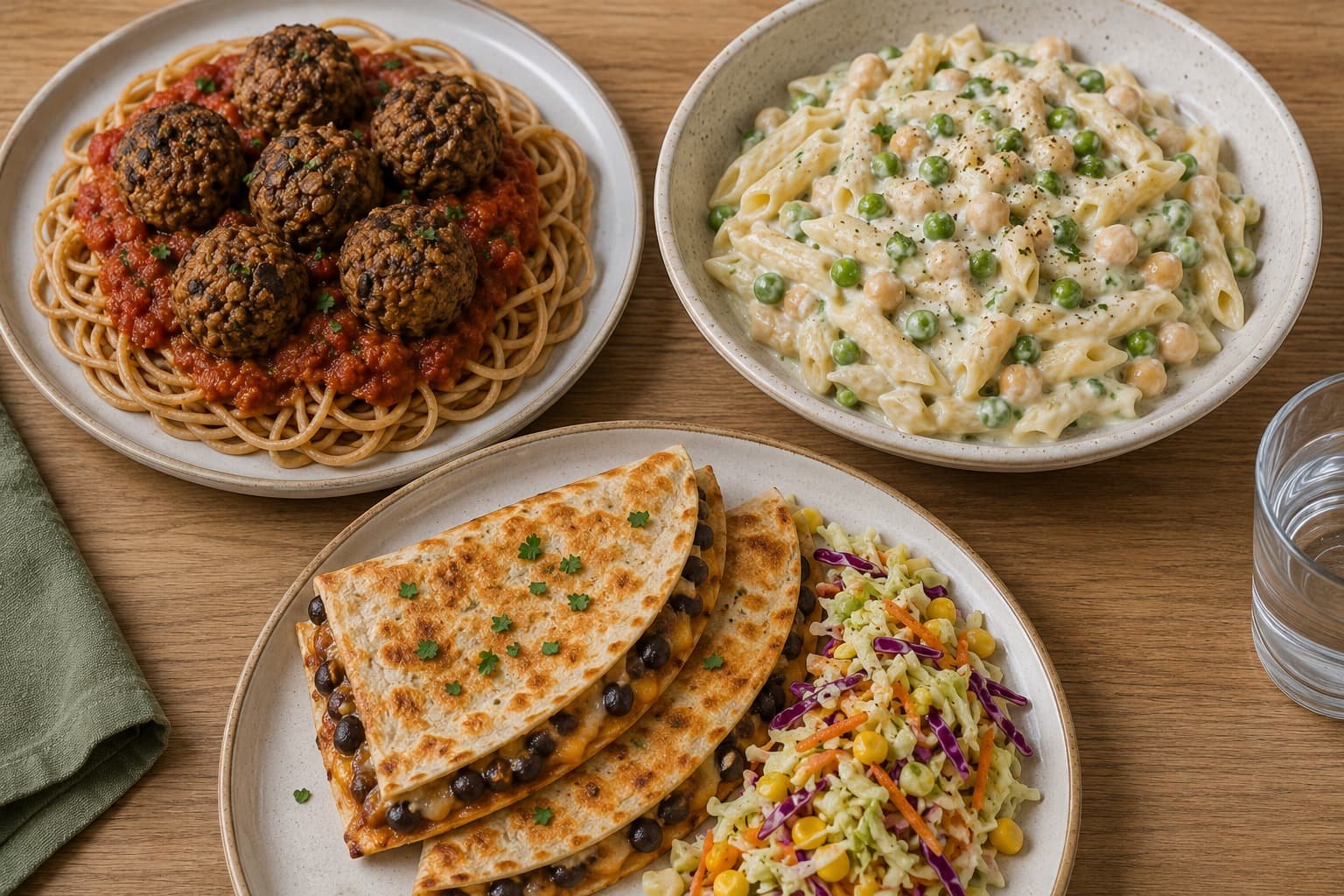
Each complete meal is formulated to contain at least 15 grams of protein per serving. The stated figures are working estimates and must be recalculated from the products and finished yields used during testing.
19. Lentil Mushroom Meatballs With Spaghetti
These lentil mushroom meatballs combine cooked brown lentils with mushrooms, Parmesan, egg, and breadcrumbs. Cooking the vegetables until dry and chilling the mixture help the meatballs retain their shape without requiring excessive breadcrumbs.
For four servings, begin with 1½ cups cooked brown lentils. Drain them thoroughly and spread them on a plate lined with a clean towel. Let them stand while the vegetables cook so excess moisture can evaporate.
Finely chop 8 ounces of cremini mushrooms and one small onion. Heat 1 tablespoon olive oil in a large skillet. Cook the onion for 4 to 5 minutes, then add the mushrooms.
Continue cooking for 8 to 10 minutes, stirring occasionally. The vegetables are ready when the mushrooms have reduced substantially and no liquid remains in the skillet. Transfer the mixture to a plate and allow it to cool before adding the egg.
Mash half of the lentils in a large bowl until they form a rough paste. Add the remaining whole lentils, cooled mushroom mixture, one large egg, ½ cup plain breadcrumbs, ½ cup finely grated Parmesan, two minced garlic cloves, 1 teaspoon Italian seasoning, ½ teaspoon salt, and ¼ teaspoon black pepper.
Mix just until combined. Leave the mixture for 10 minutes so the breadcrumbs can absorb moisture, then cover and refrigerate it for 20 to 30 minutes.
Scoop approximately 2 level tablespoons for each meatball. Form 24 compact meatballs measuring approximately 1½ inches across. Place them on lightly oiled parchment paper and brush or spray their surfaces with a small amount of oil.
Bake at 400°F (200°C) for 20 to 24 minutes. Rotate the baking sheet halfway through, but do not turn the meatballs until their exterior is firm. Because the mixture contains egg, its center should reach 160°F (71°C).
While the meatballs bake, cook 8 ounces of whole-wheat spaghetti. Heat 24 ounces of marinara in a separate saucepan.
Divide the spaghetti and marinara among four plates. Add six meatballs to each serving. Spoon sauce over them immediately before serving instead of simmering them in the sauce, which could soften their exterior.
One complete serving is expected to provide approximately 25 grams of protein. Recalculate this figure using the lentils, Parmesan, breadcrumbs, egg, pasta, and marinara used in the tested batch.
For reheating, arrange the meatballs on a baking sheet and warm them uncovered at 350°F (175°C) until hot. Add the sauce afterward. Test their refrigerated and frozen texture before marking them freezer-friendly.
20. Creamy Chickpea and Green Pea Pasta
This creamy chickpea and green pea pasta uses blended cottage cheese instead of heavy cream. Some peas are blended into the sauce, while the remaining peas and chickpeas give the meal more texture and protein.
For six servings, cook 12 ounces of whole-wheat rotini according to the package instructions. Before draining, reserve 1 cup of pasta water. Drain the pasta without rinsing it.
While the pasta cooks, simmer 2 cups of frozen green peas in a small saucepan for 2 to 3 minutes. Drain them thoroughly.
Place 1 cup of cooked peas in a blender with 16 ounces of cottage cheese, ¼ cup reserved pasta water, ½ teaspoon salt, and ¼ teaspoon black pepper. Blend for 60 to 90 seconds, until creamy and no large cottage cheese curds remain.
Do not begin with ½ cup of pasta water. Cottage cheese and cooked peas already contain moisture, and an excessively thin sauce will not cling properly to the pasta.
Heat 1 tablespoon olive oil in a large skillet over medium-low heat. Add two minced garlic cloves and cook for about 30 seconds without allowing them to brown.
Drain and rinse one 15-ounce can of chickpeas. Add them to the skillet and cook for 3 to 4 minutes. Stir in the remaining cup of peas.
Remove the skillet from direct heat. Add the cooked pasta and blended cottage cheese sauce, then toss gently until everything is evenly coated. Add more reserved pasta water one tablespoon at a time only if the sauce is too thick.
Finish the pasta with 1 teaspoon finely grated lemon zest. Add up to 1 tablespoon lemon juice after removing the pan from the heat. Taste after adding the lemon because the cottage cheese may already contribute enough salt.
Divide the complete recipe into six equal portions. The working protein estimate is approximately 22 grams per serving, but this must be recalculated from the selected pasta, cottage cheese, peas, and chickpeas.
To reheat one portion, add it to a skillet with 1 to 2 tablespoons milk or water. Warm it over low heat, stirring gently. Do not boil the sauce because high heat can make blended cottage cheese grainy.
This pasta should not be labelled freezer-friendly until its sauce has been tested after thawing. Cottage cheese sauces may separate or release water during freezing and reheating.
21.Bean and Cheese Quesadillas With Corn Cabbage Slaw
These black bean and cheese quesadillas use approximately three parts beans to one part cheese by volume. The black beans provide most of the filling and a substantial share of the protein, while the cheddar adds flavor and helps hold everything together.
For four complete meals, drain and rinse two 15-ounce cans of black beans. Measure the drained beans, which should provide approximately 3 cups.
Mash half of the beans in a large bowl. Add the remaining whole beans, 1 teaspoon ground cumin, 1 teaspoon chili powder, ½ teaspoon smoked paprika, 1 tablespoon lime juice, and ¼ teaspoon salt. Stir until the mixture holds together while retaining visible whole beans.
Prepare eight 8-inch flour tortillas and 1 cup shredded cheddar. Spread approximately ⅜ cup bean filling over one half of each tortilla, leaving a narrow border around the edge. Sprinkle 2 tablespoons cheddar over the beans and fold the empty half over the filling.
Heat a large dry skillet over medium heat. Cook the quesadillas in batches for 2 to 3 minutes on each side. Press them lightly with a spatula as they cook, but do not press hard enough to force out the filling.
Keep the heat at medium. High heat can burn the tortillas before the thick bean filling becomes hot.
For the slaw, cook 1 cup frozen corn according to its package instructions. Drain it thoroughly and allow it to cool completely.
Combine the cooled corn with 4 cups of finely shredded green or red cabbage. Whisk together 2 tablespoons lime juice, 1 tablespoon neutral oil, ¼ teaspoon ground cumin, ¼ teaspoon salt, and black pepper. Toss the dressing with the vegetables shortly before serving.
One complete serving contains two folded quesadillas and one-quarter of the corn cabbage slaw. The working protein estimate is approximately 26 grams per serving. Confirm the final amount using the selected tortillas, black beans, and cheddar.
The bean filling can be prepared ahead and reheated before assembling the quesadillas. If testing confirms that cooked quesadillas remain crisp after freezing, store them with parchment between the layers and reheat them in a dry skillet or oven. Prepare the slaw fresh because frozen cabbage loses its crisp texture.
How to Increase Vegetarian Protein Without Spending Much More
Adding more protein to a vegetarian meal does not have to mean buying protein powder, doubling the cheese, or using an oversized portion of tofu. A more economical approach is to combine modest amounts of two protein sources and calculate their contribution as part of the complete serving.
Combine Two Affordable Protein Sources
Many low-cost vegetarian ingredients provide useful protein but may not reach the article’s 15-gram standard in an ordinary portion. Pairing two sources makes it easier to build a satisfying meal without depending heavily on one ingredient.
Lentils and eggs work well together in curries because lentils provide body while eggs add concentrated protein. Beans can be paired with cottage cheese in casseroles, pasta bakes, and stuffed vegetables.
Tofu and edamame are a practical combination for rice bowls and noodle soups. Chickpeas and Greek yogurt can create a substantial filling for baked potatoes, wraps, or sandwiches.
Pasta, bread, rice, peas, and vegetables may contribute smaller amounts. Calculate the complete serving rather than counting only the main ingredient. Do not include optional toppings or side dishes unless they are consistently part of the defined meal.
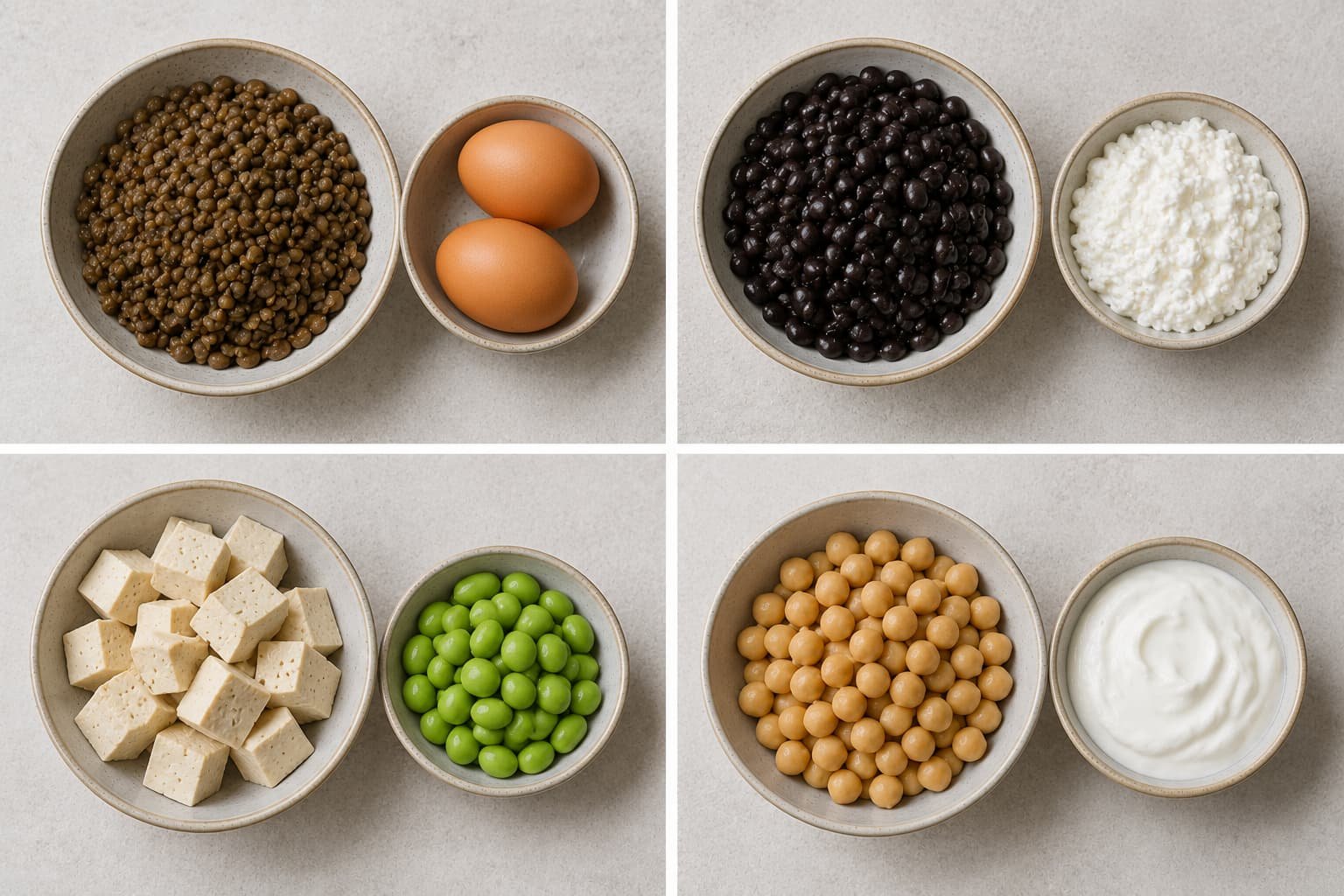
Compare Cost per Usable Ounce and Protein Provided
The cheapest package is not always the best value. A small container may have a lower shelf price but cost more per ounce than a larger store-brand product.
Begin by dividing the package price by the number of usable ounces. Usable weight excludes anything that will not enter the recipe, such as bean liquid, edamame pods, or discarded vegetable trimmings.
Price per ounce still does not show how efficiently an ingredient supplies protein. To compare protein value, divide the cost of the portion by its protein and multiply the result by 10:
This gives the estimated cost per 10 grams of protein. Use the nutrition label for tofu, TVP, Greek yogurt, cottage cheese, pasta, and meat substitutes because different products can provide noticeably different amounts.
When comparing canned and dried beans, use the drained weight of the canned beans and the measured cooked yield of the dried beans. Comparing a dry cup directly with a drained or cooked cup would give a misleading result.
Use Dried Legumes When Time Allows
Dried beans, lentils, and split peas are shelf-stable and often provide good value. Their real cost advantage depends on the local price, cooked yield, preparation time, energy use, and available storage space.
Many dried beans benefit from soaking, while lentils and split peas generally cook without an overnight soak. Always follow safe instructions for the specific legume instead of applying one method to every variety.
Dry red kidney beans require particular care. They should not be cooked from their dry state only in a slow cooker because low cooking temperatures may not destroy naturally occurring lectins. Follow tested soaking and boiling instructions before using them in a slow-cooked recipe.
Dried beans are not always the most convenient option. Canned beans may justify their higher price when time is limited or only one small portion is required.
After batch cooking, divide beans promptly into shallow, recipe-size containers. Refrigerate or freeze the portions with a small amount of cooking liquid to reduce drying. Measure the finished yield before calculating the cost of any recipe that uses them.
Use Dairy as a Supporting Ingredient
Dairy products can increase protein and improve texture, but large quantities of cheese can also increase the cost, saturated fat, and sodium, depending on the product.
Strong cheeses such as sharp cheddar and Parmesan provide noticeable flavor in smaller quantities. This allows lentils, beans, eggs, pasta, or vegetables to remain the main part of the meal.
Blended cottage cheese can create a creamy sauce for pasta bakes, casseroles, and fillings without requiring heavy cream or several cups of shredded cheese. Plain Greek yogurt can add protein to potato fillings, sauces, dressings, and savory toppings.
Protein content varies considerably among cottage cheese and Greek yogurt products. Compare both the unit price and nutrition label. Larger plain containers often cost less per ounce than individual cups, but local prices and promotions must still be checked.
Compare Specialty Products Before Buying
Protein powder, premium vegan cheese, and processed vegetarian meat substitutes can be useful for convenience, allergies, or specific dietary preferences. They are not automatically the most economical way to increase protein.
Protein powder performs best in recipes developed around its texture and flavor. Adding it to an ordinary soup or sauce may create a chalky or grainy result.
Vegan cheese can support a dairy-free meal, but it does not always match dairy cheese for protein, price, melting quality, or moisture. Replacing one with the other may require a new nutrition calculation and recipe test.
Processed meat substitutes can reduce preparation time, but compare their cost per 10 grams of protein with tofu, TVP, eggs, beans, and lentils. Convenience may justify the additional cost occasionally, but these products are not necessary for every high-protein vegetarian meal.
The best-value ingredient is not always the product with the lowest shelf price. It is the one that provides an appropriate balance of usable yield, protein, flavor, cooking performance, and convenience.
Budget Shopping List for High-Protein Vegetarian Meals
This master grocery list covers ingredients used across the 21 meals. It is not a recommendation to purchase everything at once. Choose the recipes you intend to cook, check your kitchen, and use the quantities stated in those recipes.
Compare the unit price, usable weight, protein label, and likelihood of finishing the package. A larger container is not a bargain when the unused portion eventually goes into the trash.
Pantry Staples
Dried lentils and split peas are useful for curries, soups, pasta sauces, shepherd’s pie, and vegetarian meatballs. Dried beans may also offer good value when there is enough time to soak and cook them safely.
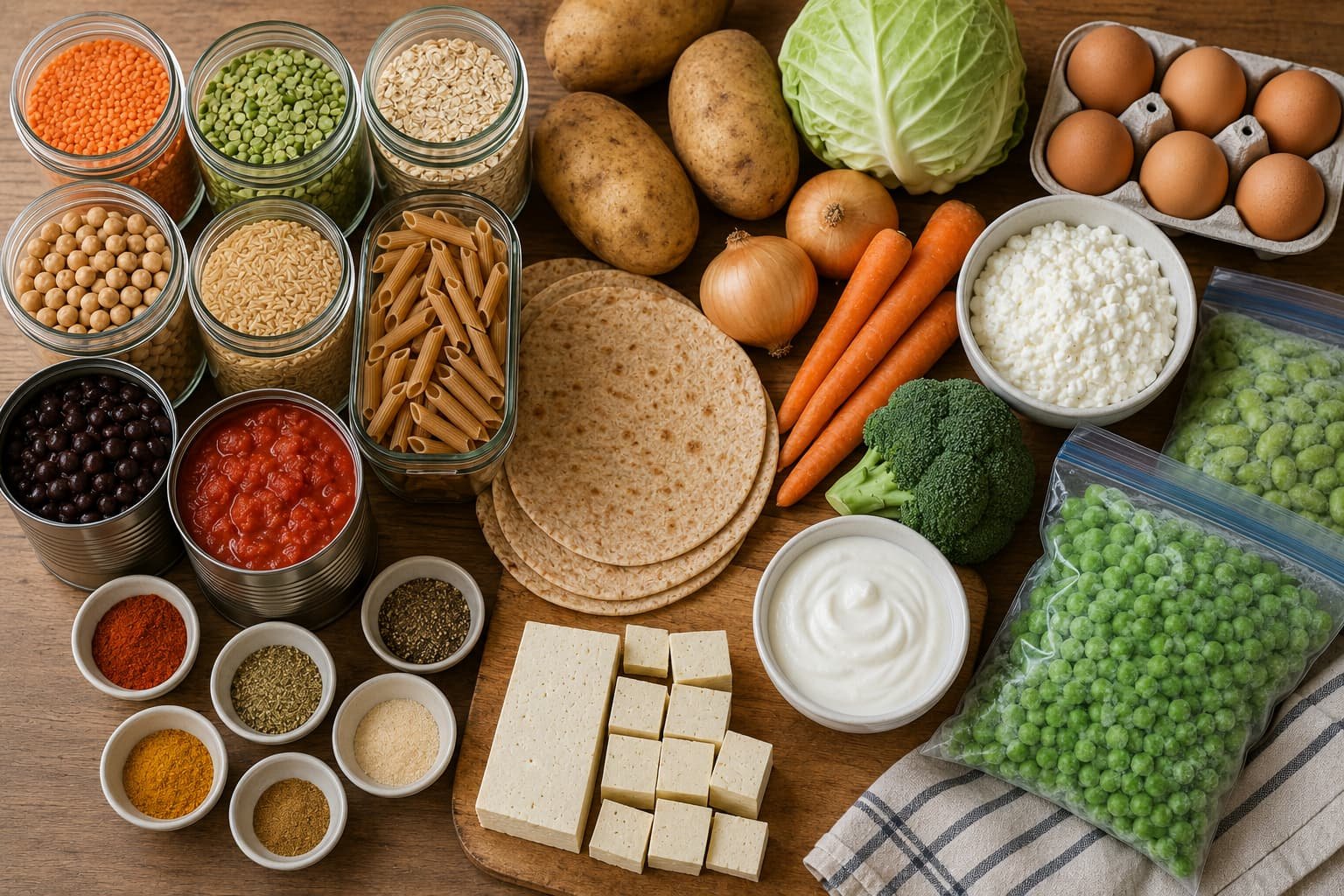
Canned black beans, chickpeas, white beans, kidney beans, and pinto beans save preparation time. They may cost more per cooked portion than dried beans, but local sales, cooking energy, and food waste can change the comparison. Buy only the varieties required by your selected meals.
Brown or white rice, whole-wheat pasta, oats, breadcrumbs, corn tortillas, flour tortillas, whole-grain bread, and hamburger buns provide the grain component in several meals. Avoid purchasing multiple similar products unless each package has a planned use.
TVP, chickpea flour, natural peanut butter, canned tomatoes, tomato sauce, and tomato paste are also used throughout the collection. Compare TVP and chickpea flour with more widely available protein sources because specialty-store prices can vary considerably.
Bouillon cubes, broth powder, and concentrated vegetable base may cost less per prepared cup than cartons of broth. They can also reduce waste when a recipe requires only a small quantity. Check the sodium before adding additional salt.
Store whole potatoes and onions separately in suitable cool, dry conditions. After an onion has been cut, cover it and move it to the refrigerator.
Refrigerator Ingredients
Eggs, tofu, cottage cheese, plain Greek yogurt, milk, cheddar, Parmesan, and mozzarella are the main refrigerated protein sources in these meals. Do not buy every cheese or dairy product unless the selected recipes require them.
Check both the unit price and protein label. Tofu, Greek yogurt, cottage cheese, tortillas, and cheese can provide noticeably different amounts of protein between products of the same package size.
Cabbage, carrots, and celery are practical budget vegetables because they can be used in soups, slaws, casseroles, bowls, and fillings. They also generally provide more opportunities for using leftovers than delicate salad greens.
Mushrooms, broccoli, bell peppers, scallions, fresh spinach, and herbs have shorter practical storage windows. Buy them when one recipe uses the complete package or when the remainder has another planned use.
Lemons and limes support yogurt sauces, pasta, curries, bean fillings, and slaw. Bottled juice can be practical for occasional cooking, but compare its price, flavor, and refrigerated life after opening before assuming it is the cheaper option.
Freezer Staples
Frozen shelled edamame, green peas, corn, chopped spinach, and broccoli allow readers to use a measured portion without finishing the complete package immediately. Plain vegetables are normally more versatile than products containing prepared sauces or seasonings.
Follow the package instructions before using frozen vegetables. A product intended to be cooked should not be added directly to an uncooked slaw merely because it has thawed. Cook and cool frozen corn before combining it with raw cabbage.
Cooked beans and lentils can be divided into recipe-size freezer containers. Add a small amount of cooking liquid to reduce drying and label each portion with its type, quantity, and preparation date.
Bread, buns, and tortillas can also be frozen when the package will not be finished promptly. Place parchment between tortillas before freezing so individual pieces can be removed without thawing the entire package.
Use the storage guidance provided with each meal before freezing prepared burritos, casseroles, soups, sauces, or pasta. Noodles, dairy sauces, potatoes, and raw slaws do not maintain the same quality after freezing.
Flavor-Building Staples
A basic group of cumin, chili powder, curry powder, Italian seasoning, black pepper, and salt can support many of the meals in this collection. Smoked paprika, turmeric, thyme, and oregano are useful additions, but they do not need to be purchased before a recipe requires them.
Garlic, lower-sodium soy sauce, vinegar, mustard, neutral cooking oil, and vegetable broth concentrate can build flavor across curries, rice bowls, soups, slaws, casseroles, and sandwich fillings.
Check Worcestershire sauce before purchasing it. Traditional Worcestershire commonly contains anchovies, so a product specifically labelled vegetarian is required for these meatless meals.
Buying a complete spice collection at the beginning can erase part of the savings from budget meal planning. Start with seasonings shared by the first few selected recipes and expand the collection gradually.
Buy Perishable Ingredients Only With a Clear Use Plan
A perishable ingredient does not need to appear in several meals if one recipe uses the entire package. The important point is to know what will happen to the remaining quantity before buying it.
| Perishable ingredient | Possible planned uses | Longer-lasting alternative |
| Tofu | Peanut rice bowls, curry, casserole or noodle soup | No direct substitute; freeze only if the texture change suits the recipe |
| Cottage cheese | Pasta bake, frittata, enchilada casserole or creamy sauce | Buy the smallest container that covers the selected meals |
| Greek yogurt | Pancake sauce, stuffed potatoes, dressings or toppings | Use one large plain tub across several recipes |
| Mushrooms | Lentil Bolognese, shepherd’s pie or lentil meatballs | Buy only the recipe quantity |
| Spinach | Pasta bake, soup or frittata | Frozen chopped spinach for cooked meals |
| Broccoli | Lentil soup, pasta or vegetable side | Plain frozen broccoli |
| Fresh herbs | Yogurt sauce, slaw or finishing garnish | Dried herbs when fresh texture is not essential |
| Scallions | Pancakes, potatoes, bowls or burritos | A small amount of finely diced onion when suitable |
This collection contains common allergens, including soy, dairy, eggs, peanuts, and wheat. Check labels carefully when cooking for someone with an allergy because TVP, tofu, edamame, soy sauce, tortillas, bread, sauces, and meat substitutes may contain additional allergens.
A useful high-protein vegetarian grocery list should reduce waste as well as control spending. The best purchase is an ingredient that fits the planned meals, provides useful protein, and can be stored safely until it is needed.
How to Meal Prep These Vegetarian Meals
Successful vegetarian meal prep depends on storing each component according to its texture and ingredients. Chili, lentil fillings, tomato sauces, and bean casseroles usually tolerate freezing better than cooked noodles, raw slaw, dairy sauces, and assembled stuffed potatoes.
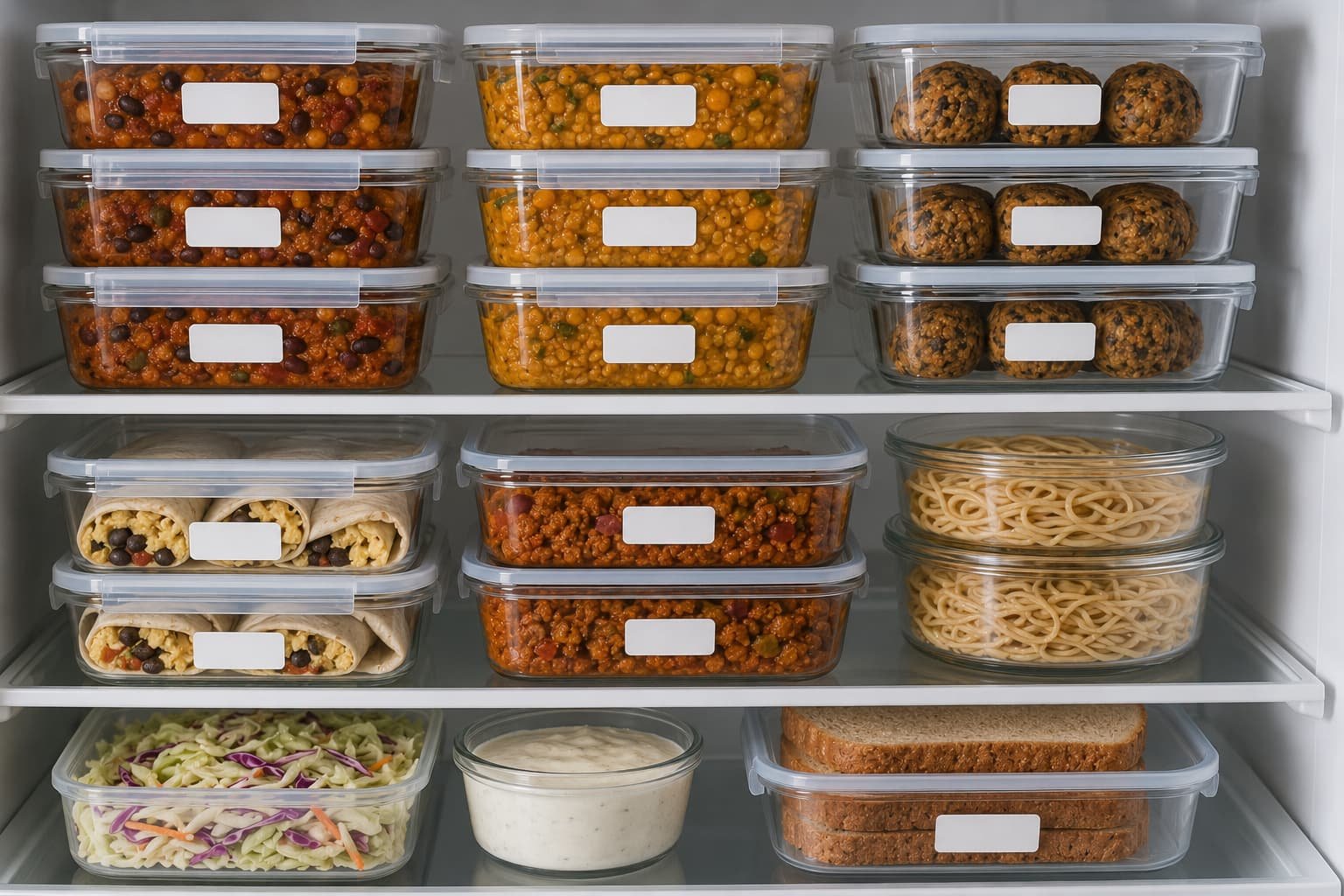
Do not apply one five-day storage claim to all 21 meals. Safe storage depends on cooling speed, refrigerator temperature, handling, ingredients, and how long the food remained at room temperature.
Best Potential Freezer Candidates
The following meals have components that normally tolerate freezing reasonably well. Final freezer-quality periods should be published only after testing confirms the texture and flavor.
| Meal | Component to freeze | Thawing and reheating approach |
| Three-Bean TVP Chili | Complete meal-size portions | Thaw in the refrigerator or reheat from frozen, stirring until the center reaches 165°F |
| Lentil and Egg Curry | Lentil curry base without eggs or rice | Reheat the base, then add freshly cooked eggs and separately stored rice |
| Tofu and Lentil Tomato Curry | Complete portions | Thaw in the refrigerator and reheat gently; expect firmer tofu |
| Tofu and Black Bean Taco Casserole | Individual baked portions | Thaw overnight, reheat covered, then uncover briefly to dry the surface |
| TVP Sloppy Joe Filling | Filling without buns or slaw | Reheat in a saucepan, adding a small amount of broth if dry |
| Lentil Shepherd’s Pie | Individual baked portions | Thaw overnight and reheat covered until hot throughout |
| Black Bean and Egg Burritos | Individually wrapped burritos | Reheat from frozen or thawed until the center reaches 165°F |
| Lentil Mushroom Meatballs | Baked meatballs without pasta or sauce | Reheat uncovered to preserve the exterior, then add warm marinara |
| Chickpea Flour Pancakes | Cooled pancakes separated by parchment | Reheat in a skillet or oven; prepare the yogurt sauce fresh |
Spread burrito fillings in shallow dishes so they cool quickly. Assemble and freeze the burritos promptly instead of leaving cooked eggs and beans at room temperature until completely cold.
Black bean enchilada casserole and cottage cheese pasta bake may also be suitable for freezing, but dairy can release moisture after thawing. Confirm their quality with a test portion before assigning a freezer-friendly label.
Store Sauces, Noodles and Fresh Components Separately
Keeping wet, crisp, and starchy components apart prevents many common meal-prep texture problems.
| Meal | Store or freeze | Keep separate |
| Red Lentil Bolognese | Lentil tomato sauce | Whole-wheat spaghetti |
| Split Pea and Potato Soup | Soup | Cottage cheese and toast |
| White Bean Shakshuka | Tomato and bean sauce | Eggs and bread |
| Peanut Tofu Rice Bowls | Cooked tofu and rice | Cabbage and peanut sauce |
| Edamame Tofu Noodle Soup | Broth, vegetables, tofu and edamame | Cooked noodles |
| Chickpea Flour Pancakes | Cooked pancakes | Greek yogurt sauce |
| TVP Sloppy Joes | TVP filling | Buns and cabbage slaw |
| Lentil Mushroom Meatballs | Baked meatballs | Marinara and spaghetti |
| Bean and Cheese Quesadillas | Bean filling | Tortillas and corn cabbage slaw |
Cooked noodles continue absorbing liquid during storage. Keeping them outside soup or tomato sauce prevents them from becoming swollen and excessively soft.
Raw cabbage should also remain undressed until shortly before serving. Salt and acidic dressings draw out moisture, reducing its crunch and creating liquid at the bottom of the container.
Meals That Are Better Refrigerated
Greek yogurt chickpea stuffed potatoes are best stored as separate baked potatoes and filling. Freezing the assembled meal may cause the yogurt to separate and the potato to become watery.
Creamy chickpea and green pea pasta is also better refrigerated. Its blended cottage cheese sauce may become grainy after freezing or when reheated over high heat. Warm it gently with a small amount of milk or water.
Egg and cottage cheese potato frittata can be refrigerated in individual portions. Freezing may make the eggs release moisture and alter the potatoes, so test one portion before freezing a full batch.
Finished broccoli cheddar lentil soup may separate because it contains milk and cheese. If preparing it specifically for freezing, freeze the cooked lentil and broccoli base before adding the dairy. Add the milk and cheddar after reheating.
Cooked quesadillas may lose their crispness during frozen storage. Preparing the bean filling ahead and cooking fresh quesadillas usually produces a better result. Never freeze the cabbage slaw.
Prepare Beans, Lentils and Rice in Batches
Batch-cooked beans and lentils can reduce preparation time across several recipes. Black beans can be divided among burritos, casseroles, and quesadillas, while lentils can support curry, Bolognese, shepherd’s pie, soup, and vegetarian meatballs.
Keep the initial seasoning light when one batch will be used in several flavor profiles. Measure each portion by weight or volume and label the container so only the required amount needs to be thawed.
Cooked rice should be transferred promptly into shallow meal-size containers. Do not leave a deep pot of rice on the counter to cool slowly. Store the rice separately from wet curry or peanut sauce when possible, as this makes reheating more even.
Do not assume one neutral tomato sauce will work interchangeably in chili, curry, Bolognese, shakshuka, casseroles, and sloppy joe filling. These meals require different consistencies and seasoning stages. Prepare their sauces separately unless a tested master sauce provides exact conversion quantities.
Dairy sauces and yogurt mixtures are better made in smaller batches until their refrigerated and reheated texture has been confirmed.
Follow Safe Refrigerator and Freezer Guidance
Place leftovers in shallow containers and refrigerate or freeze them within two hours of cooking. When the surrounding temperature is above 90°F (32°C), reduce that period to one hour. Keep the refrigerator at 40°F (4°C) or below and the freezer at 0°F (-18°C) or below.
Most cooked leftovers should be eaten or frozen within three to four refrigerated days. The same general refrigerator period applies to soups and stews. Certain recipes or handling conditions may require a shorter period.
If a prepared portion will not be eaten within that period, freeze it promptly rather than waiting until the final safe refrigerator day. Label the container with the meal name, number of servings, and preparation date.
Thaw prepared meals in the refrigerator or reheat them directly from frozen when the cooking method allows. Never thaw meal-prep containers on the counter.
Stir food during reheating to eliminate cold areas, especially in thick chili, rice, casseroles, soup, and bean fillings. Reheated leftovers should reach 165°F (74°C) in several places.
A safe freezer period does not guarantee acceptable quality. Texture, moisture, flavor, and reheating performance should be tested before assigning a final freezer-storage recommendation to each meal.
Common Mistakes That Make Vegetarian Meals Expensive or Low in Protein
A vegetarian meal is not automatically affordable, filling, or high in protein. Its value depends on the complete serving, ingredient quantities, protein sources, and how the cost and nutrition are calculated.
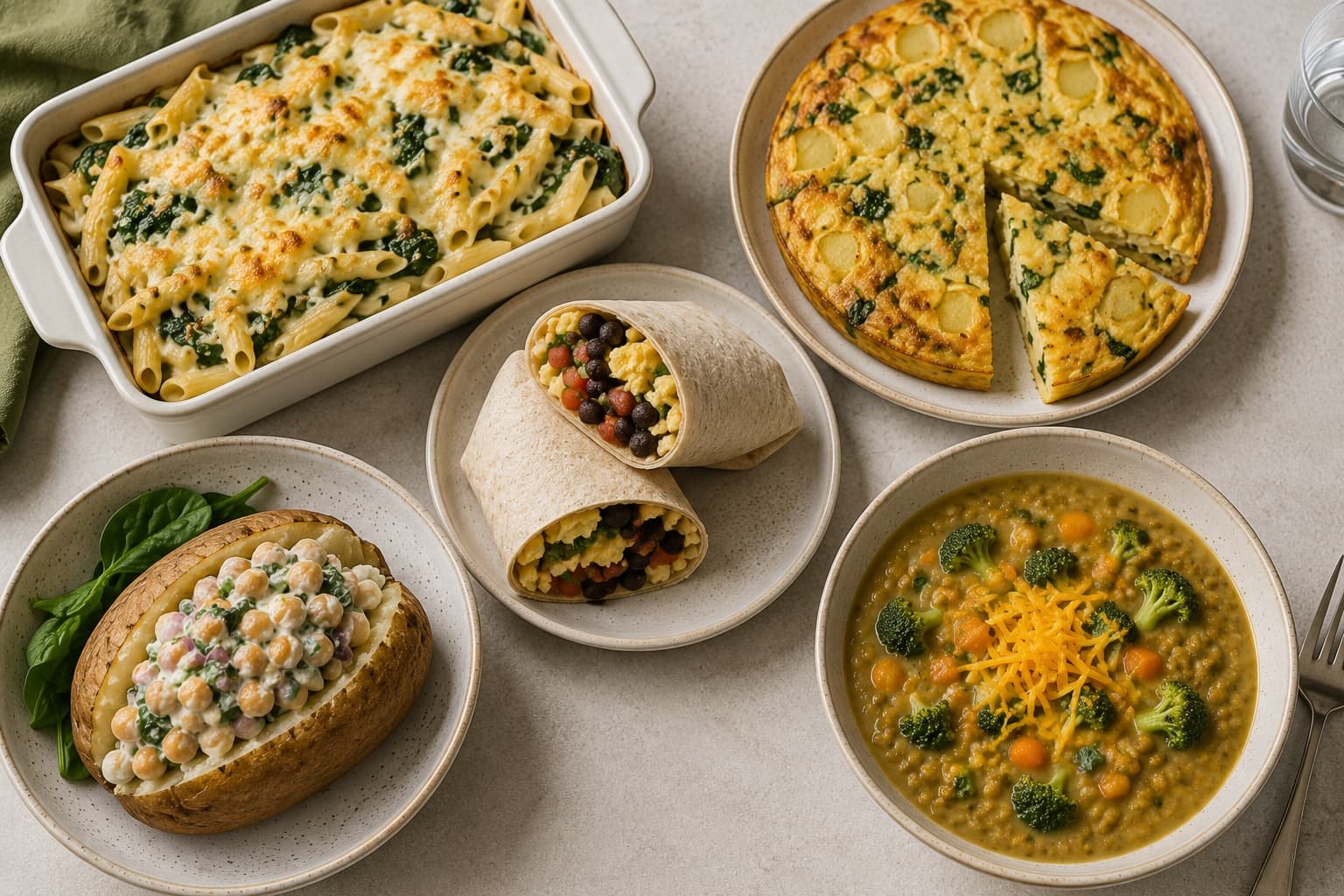
Avoiding the mistakes below helps produce realistic high-protein vegetarian meals without tiny portions, unsupported nutrition claims, or unnecessary specialty ingredients.
Building the Meal Mostly Around Pasta or Rice
Pasta and rice are useful budget ingredients, but they should not dominate a meal described as high protein. A large bowl of rice with only a small spoonful of beans is still mainly a rice dish.
Use a measured grain portion and add a substantial protein source. Rice can be paired with tofu and edamame, while pasta can be combined with lentils, chickpeas, cottage cheese, or vegetarian lentil meatballs.
Whole-wheat pasta can contribute useful protein and fiber, but the amount varies between products. Check the selected label instead of assuming that changing the pasta automatically makes the complete meal high in protein.
Counting Vegetables as the Main Protein Source
Broccoli, spinach, mushrooms, potatoes, and other vegetables contribute to the recipe’s total protein. Their contribution should be counted, but most ordinary portions do not provide enough to become the main protein source.
Build the meal around a defined quantity of lentils, beans, tofu, TVP, eggs, cottage cheese, Greek yogurt, or another substantial source. Vegetables can then add volume, flavor, fiber, and smaller amounts of protein.
Peas and edamame generally contribute more protein than many common vegetables because they are legumes. Even then, calculate the actual amount used. A handful of peas does not make an otherwise low-protein meal high in protein.
Using Tiny or Inconsistent Serving Sizes
Dividing a casserole into too many portions can produce an unusually low cost per serving, but it also reduces the protein and food contained in each portion. A serving should represent the amount a person would realistically eat as a complete meal.
Measure the finished weight or volume and divide it into practical portions. Do not use six servings for the protein calculation and eight servings for the cost calculation.
Required components must remain part of the defined meal. If cottage cheese toast helps split pea soup reach the 15-gram protein minimum, the same toast must be included in the serving description, nutrition calculation, and cost.
This rule also applies to rice, pasta, eggs, yogurt sauce, tortillas, bread, and other components required to support the meal’s protein claim.
Depending on Expensive Meat Substitutes
Processed vegetarian meat substitutes can save time and may work well in specific recipes. However, they are not required to make substantial vegetarian chili, casseroles, taco filling, pasta sauce, or sloppy joes.
Compare the cost per 10 grams of protein with tofu, TVP, eggs, lentils, beans, edamame, cottage cheese, and Greek yogurt. Use the product as prepared because ingredients such as TVP absorb water and may have different dry and prepared serving weights.
A higher price may be reasonable when convenience matters. The mistake is assuming that a premium substitute is always more nutritious or useful than a simpler ingredient.
Check the serving size, protein, sodium, allergens, and cooking instructions. Products designed for different textures or methods may not work as direct replacements for one another.
Ignoring Sauces, Toppings and Pantry Costs
Oil, broth, flour, spices, condiments, sauces, cheese, and garnishes still cost money when they are already in the pantry. Excluding them from every calculation can make the meals appear artificially cheap.
Assign each required ingredient a proportional cost based on the amount used. Optional garnishes should remain outside the standard serving cost unless they are consistently included with the meal.
Usable value matters more than package size alone. A large jar may cost less per ounce but create waste when the remaining sauce has no planned use. A smaller container or resealable product may provide better value even when its unit price is higher.
Confusing Vegetarian With Automatically Healthy
“Vegetarian” means that the meal contains no meat, poultry, fish, or seafood. It does not automatically describe the meal’s fiber, sodium, saturated fat, added sugar, processing level, or overall balance.
Cheese, refined grains, oil, and prepared products can all fit into a vegetarian meal. The mistake is treating the vegetarian label itself as proof of a broad health benefit.
Evaluate the complete serving. Include an appropriate protein source, useful vegetables, a measured grain or potato portion, and enough flavor to make the meal satisfying. Avoid promising health outcomes the recipe was not developed to support.
Claiming Protein Without Calculating the Complete Recipe
Add the protein supplied by every required ingredient and divide that total by the confirmed number of servings:
Use nutrition information that matches the ingredient’s measured state. If lentils are measured dry, use a dry lentil entry. If beans are measured after cooking, draining, or rinsing, use the corresponding cooked or drained entry. Mixing dry and cooked values can create a serious error.
Use the selected product label for tofu, TVP, pasta, yogurt, cottage cheese, bread, tortillas, and meat substitutes. For generic ingredients, use a documented source such as.
Do not include optional toppings or suggested side dishes unless they are part of every defined serving. When an ingredient is replaced, calculate the protein again rather than assuming the substitute is nutritionally equivalent.
The final figure is still an estimate because brands, ingredient weights, and finished yields vary. A transparent rounded estimate based on a documented method is more credible than an unsupported number presented with false precision.
Frequently Asked Questions
What Is the Cheapest High-Protein Vegetarian Meal?
There is no universal cheapest meal because ingredient prices vary by store, region, and date. In this collection, dried-legume meals such as split pea soup and lentil curry are likely to be among the lowest-cost options.
The final winner should be the meal with the lowest verified cost per realistic serving while still providing at least 15 grams of protein. Pantry ingredients, required sides, and toppings must be included in that calculation.
What Are the Cheapest Vegetarian Protein Sources?
Lentils, split peas, beans, eggs, tofu, and TVP are often among the most affordable vegetarian protein sources. The best value depends on local prices, package size, usable yield, and protein content.
Compare the cost per usable ounce and per 10 grams of protein rather than looking only at the package price. Dried legumes may cost less per cooked portion, while canned beans can save preparation time and cooking energy.
How Can I Get 20 Grams of Protein in a Vegetarian Meal?
Combine two affordable protein sources rather than depending on one oversized portion. Useful pairings include lentils with eggs, beans with cottage cheese, tofu with edamame, and chickpeas with Greek yogurt.
For example, two large eggs and approximately ¾ cup cooked lentils commonly provide around 25 grams of protein before rice, vegetables, or sauce are counted. Exact values vary, so use the selected product label or a documented source such as USDA FoodData Central.
What Are Some Cheap High-Protein Vegetarian Meals Without Tofu?
Tofu-free options include Lentil and Egg Curry With Rice, Black Bean and Cottage Cheese Enchilada Casserole, Split Pea and Potato Soup With Cottage Cheese Toast, Black Bean and Egg Breakfast Burritos, and Egg, Cottage Cheese and Potato Frittata.
Other choices include Lentil Mushroom Meatballs With Spaghetti, Creamy Chickpea and Green Pea Pasta, White Bean Shakshuka With Eggs, TVP Sloppy Joes, and Bean and Cheese Quesadillas. TVP does not contain tofu, but it is made from soy.
Are Beans Enough Protein for a Complete Meal?
Sometimes, but not always. Beans provide meaningful protein, but the amount depends on the bean type, portion size, recipe yield, and other ingredients in the meal. A modest serving may not reach this article’s 15-gram minimum by itself.
Here, “complete meal” means a realistic meal-size serving that reaches the stated protein target. It does not refer to the separate term “complete protein.” Beans can be combined with eggs, cottage cheese, TVP, cheese, or another measured protein source.
Can These High-Protein Vegetarian Meals Be Made Vegan?
Some can. Three-Bean TVP Chili, Tofu and Lentil Tomato Curry, and Peanut Tofu and Cabbage Rice Bowls can be vegan when the broth, sauces, sweeteners, and other packaged ingredients contain no animal-derived ingredients.
Meals containing eggs, cottage cheese, yogurt, milk, or regular cheese require reformulation. Vegan substitutions may change the protein, cost, moisture, structure, and flavor, so they are not always direct replacements.
Lentil Shepherd’s Pie is vegan only when its dairy-based topping is replaced with a tested plant-based version. Buns, tortillas, pasta, broth, and Worcestershire sauce should also be checked individually.
Are High-Protein Vegetarian Meals Good for Meal Prep?
Several are practical for meal preparation. Three-Bean TVP Chili, Tofu and Lentil Tomato Curry, TVP Sloppy Joe Filling, Lentil Shepherd’s Pie, and Black Bean and Egg Breakfast Burritos are among the strongest freezer candidates when their tested storage instructions are followed.
Red Lentil Bolognese sauce, White Bean Shakshuka sauce, and Edamame Tofu Noodle Soup maintain better texture when pasta, eggs, and noodles are stored separately. Raw slaw, yogurt sauce, and bread should also remain separate until serving.
Do I Need Protein Powder for These Vegetarian Meals?
No. These meals are built around lentils, beans, split peas, tofu, TVP, eggs, cottage cheese, Greek yogurt, edamame, grains, and other ordinary ingredients.
Protein powder is unnecessary when the complete formulation already provides at least 15 grams of protein per realistic serving. Protein should still be calculated from the exact ingredient quantities and confirmed recipe yield rather than assumed from the meal’s name.